
Smart home tech used to feel like a high-tech gamble—clunky hubs, dropped Wi-Fi signals, and apps that refused to talk to each other. In 2026, the landscape is entirely different. Matter and Thread have made it easier to build interoperable smart-home ecosystems across compatible platforms and devices. Whether you are upgrading a suburban family home or setting up a modern apartment, picking the best smart home products ensures your home runs seamlessly across every room.
Executive Summary: Top Picks by Category
Application Domain | Top Recommended Model | Supported Standard | Standout Advantage | Target Utility |
Central Ecosystem Hub | HomePod mini (Apple) / Echo Hub (Amazon) | Thread / Matter / Wi-Fi | Localized automation handling across diverse ecosystem platforms | Main command bridge for residence-wide smart setups |
Connected Lighting | Hue Smart Series (Philips) | Matter / Zigbee | High-CRI spectrum fidelity supported by an isolated radio topology | Mood illumination and custom timing schedules |
Smart Lock & Entry | Schlage Encode Plus | Apple HomeKey / Wi-Fi | Hands-free tap unlock feature combined with a traditional mechanical key backup | Front door entry security and contactless keyless access |
Environmental Climate | SmartThermostat Premium (Ecobee) | Matter / Wi-Fi | Indoor air diagnostics combined with multi-room sensor nodes | Energy management and room-by-room thermal balancing |
Appliance Power Control | Kasa Matter Plug KP125M (TP-Link) | Matter over Wi-Fi | Live electrical load telemetry with rule-based power timing | Adding smart features to traditional household devices |
Core Framework: How We Evaluate Smart Hardware
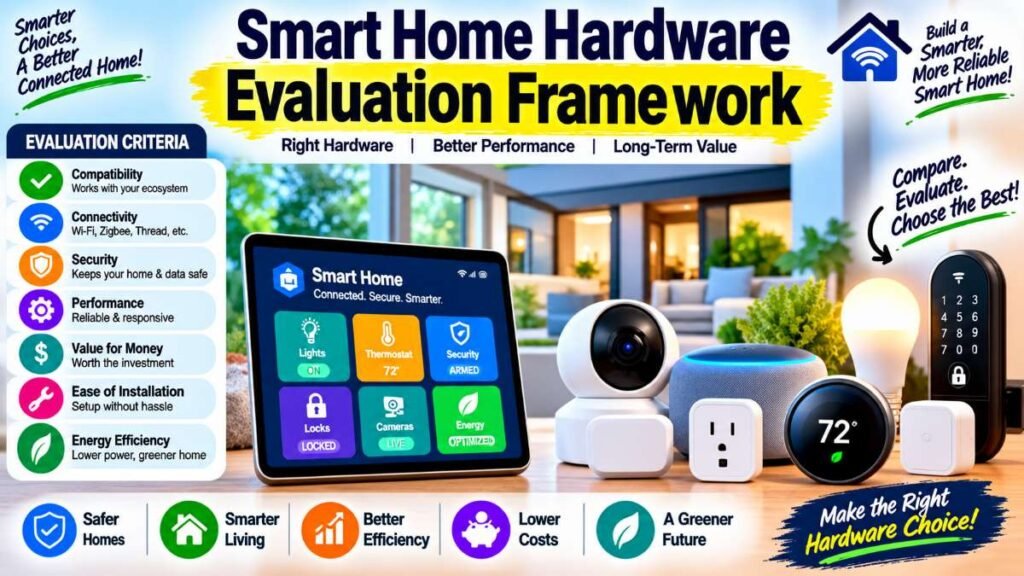
Buying smart devices without a plan leads to hub bloat, app clutter, and privacy risks. Before adding hardware to your cart, evaluate devices against four essential criteria:
[ Local Control & Speed ] —> [ Protocol Native Support ] —> [ Security & Encryption ] —> [ Energy Efficiency ]
- Local Execution Capability: Priority is given to hardware that executes routines directly on your local network, minimizing unnecessary cloud hops for essential daily functions.
- Protocol Native Support: Selecting the best smart home products requires choosing devices that support Matter over Thread, Wi-Fi, or Zigbee to ensure long-term cross-platform compatibility across Apple Home, Amazon Alexa, Google Home, and Samsung SmartThings.
- Privacy & Security: For smart devices, look for strong device authentication, encrypted communications, secure firmware practices, and clear access controls across local endpoints.
- Power Scaling & Efficiency: Battery life should be considered based on the device type, battery capacity, reporting frequency, and manufacturer specifications, while mains-powered nodes should act as signal repeaters without consuming excessive standby power.
Best Smart Hubs & Ecosystem Controllers
A smart home is only as dependable as the central controller managing its routines. A solid hub manages device states, coordinates automations, and may also act as a Thread Border Router.
Apple HomePod mini
HomePod mini can serve as a smart-home hub and Thread-enabled home controller for compatible accessories. It executes automation routines smoothly over your local network, keeping your smart routines running reliably.
Amazon Echo Hub
Designed specifically for wall-mounted smart control, the Echo Hub offers a responsive touch interface alongside native support for Zigbee, Sidewalk, Bluetooth, and Matter. It allows family members who prefer physical controls to manage routines without opening a smartphone app.
To learn more about optimizing central placement and avoiding wireless interference, check out our in-depth guide on smart home installation. If you are evaluating core ecosystem controllers, read our roundup of the best smart home hub options available today.
Best Smart Lighting Solutions
Smart lighting forms the visual foundation of any automated home. Modern setups focus on local mesh stability, custom schedules, and natural circadian rhythm alignment.
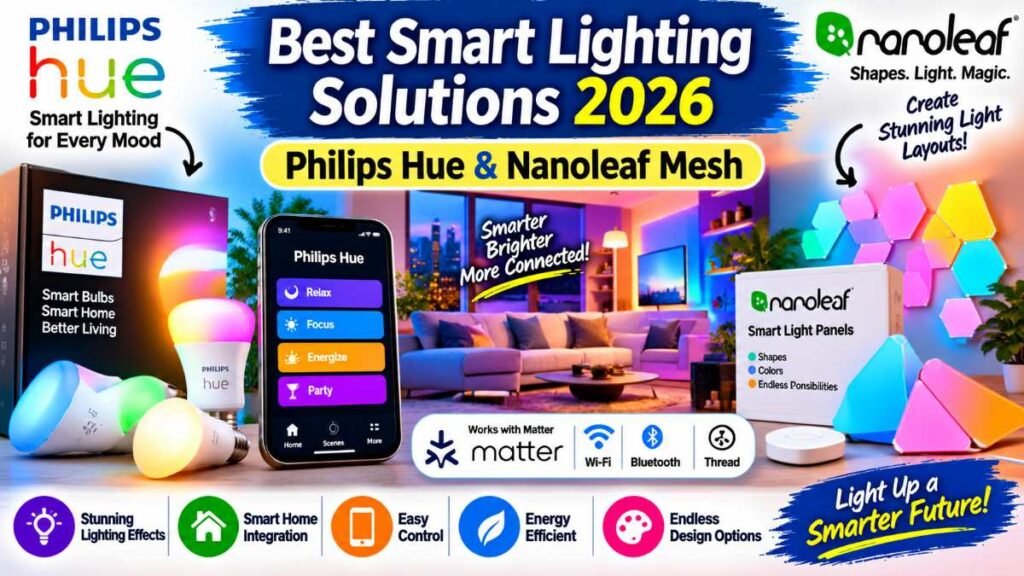
Philips Hue Smart Lighting
Philips Hue remains the gold standard for color rendering index (CRI), smooth dimming curves, and responsive local mesh performance. Hue bulbs can communicate through the Hue Bridge’s dedicated Zigbee-based network, reducing reliance on your primary Wi-Fi network and keeping your bandwidth free for streaming and gaming.
+——————+ Zigbee Mesh +——————-+
| Philips Hue Hub | ———————–> | Smart Bulbs |
+——————+ +——————-+
| |
| Local IP Bridge | Signal Repeater
v v
+——————+ +——————-+
| Matter Controller| | Smart Lightstrip |
+——————+ +——————-+
Nanoleaf Essentials Matter Bulbs
For those seeking a bridge-free setup, Nanoleaf offers Matter-compatible Thread bulbs designed to work with a compatible Matter controller and Thread Border Router. They deliver fast execution times without requiring a proprietary bridge.
Top Smart Locks & Entry Security Gear
Securing your home’s entry points requires hardware that balances physical toughness with fail-safe digital encryption. Modern smart locks prioritize touchless entry, keypads, and local audit logs.
Schlage Encode Plus Smart WiFi Deadbolt
The Schlage Encode Plus is widely recognized among the best smart home products for home entry security. Featuring Apple HomeKey support, you can unlock your door simply by tapping your iPhone or Apple Watch against the lock housing. It also includes an illuminated keypad, a traditional keyway, and built-in Wi-Fi.
For smart locks, look for strong device authentication, encrypted communications, secure firmware practices, and a physical key or other backup entry method to prevent unauthorized access.
Eufy Video Doorbell Dual
Eufy provides dual-camera coverage—one camera facing forward for head-to-toe visitor views and a second facing downward to monitor package deliveries. The Eufy Video Doorbell Dual supports local storage through compatible Eufy hardware, reducing the need for a mandatory monthly cloud-storage subscription.
For a comprehensive evaluation of physical deadbolts and smart keyless access, review our hands-on guide to the best smart locks. You can also compare video entry features in our best smart doorbell overview.
Best Smart Thermostats & Climate Control
Heating and cooling account for a large share of household energy use, making climate control an important area for reducing energy waste while maintaining precise comfort levels.
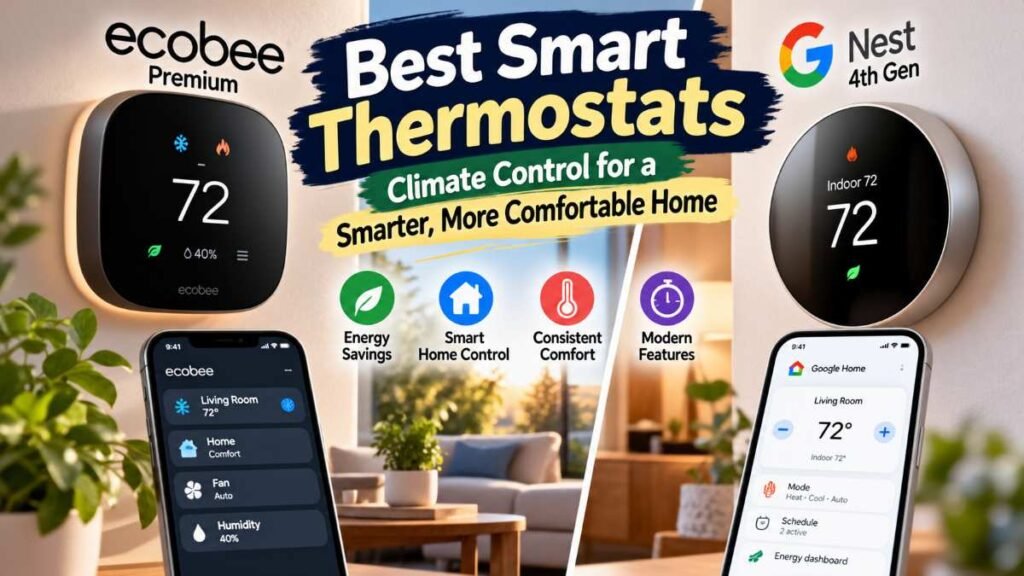
Ecobee Smart Thermostat Premium
The Ecobee Premium stands out with its zinc body, crisp glass display, and built-in indoor air-quality monitoring. Its included SmartSensor monitors temperature and occupancy in remote bedrooms or home offices, eliminating hot and cold spots across multi-story homes.
+——————————–+
| Ecobee Thermostat (Main Hall) |
+——————————–+
^
Wireless Sensor Link
+———————————-+
| Remote SmartSensor (Bedroom) |
+———————————-+
Nest Learning Thermostat (4th Gen)
Google’s flagship thermostat uses machine learning to adapt to your daily schedule automatically. It adjusts temperatures when you leave the house and features native Matter support for seamless integration into non-Google ecosystems.
According to residential energy data from the U.S. Energy Information Administration (EIA), more than half of energy use in According to U.S. Energy Information Administration (EIA) data, more than 50% of household power consumption is driven by HVAC systems. Utilizing adaptive climate hardware helps minimize wasted energy when rooms are unoccupied. Utilizing adaptive climate hardware helps minimize wasted energy when rooms are unoccupied.
To compare top climate controllers side-by-side, check out our guide to the best smart thermostats.
Best Smart Plugs & Power Management
Smart plugs turn everyday appliances—like coffee makers, standing lamps, and humidifiers—into automated devices. They are the most affordable entry point when collecting the best smart home products for a new build.
TP-Link Kasa Matter Smart Plug (KP125M)
Compact enough to leave adjacent wall outlets unobstructed, this plug offers native Matter support alongside real-time energy usage tracking. You can monitor power draw in kilowatt-hours and create schedules and automation rules to reduce unnecessary standby consumption.
To learn how compatible mains-powered smart devices can strengthen a Thread or Zigbee mesh network, explore our comprehensive smart plug guide.
Head-to-Head Protocol Comparison
Understanding how your hardware communicates helps avoid connectivity bottlenecks. Here is how the primary smart home protocols stack up in 2026:
Feature / Metric | Matter over Thread | Zigbee 3.0 | Wi-Fi (2.4 GHz / 5 GHz) |
Network Architecture | Self-Healing IP Mesh | Low-Power RF Mesh | Star Network (Hub/Router) |
Hub Requirement | Matter Controller + Thread Border Router | Dedicated Proprietary Bridge | Standard Wi-Fi Router |
Cloud Dependency | Local Control (Cloud for Cloud Services/OTA) | Typically local through a compatible bridge/hub | Depends on Manufacturer |
Multi-Platform Support | Native Multi-Admin | Requires Bridge Translators | Ecosystem / Skill Based |
Power Draw | Low (Ideal for sensors) | Low (Battery-friendly for many sensors) | High (Requires mains power) |
Execution Speed | Low-Latency Local Communication | Low-Latency Local Communication | Variable |
Cybersecurity & Local Privacy Blueprint
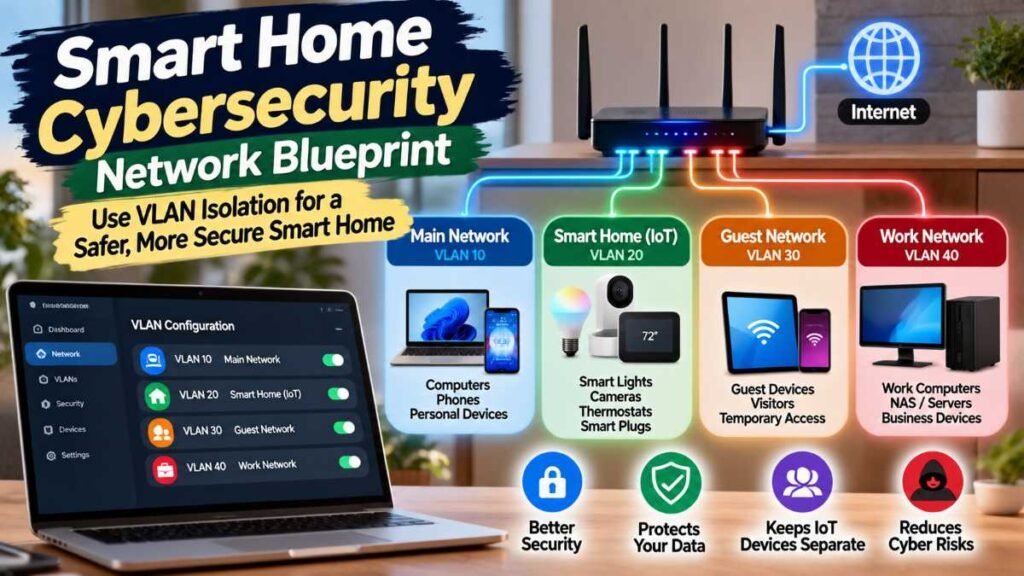
As you add more connected hardware to your residence, protecting your private local network becomes paramount. A compromised device should never provide access to your personal computers or financial records.
+——————————————————————-+
| Secure Household Network|
| (Laptops, Smartphones, Financial Devices) |
+——————————————————————-+
|
Isolated Guest Gateway
v
+——————————————————————-+
| Isolated IoT Smart Network |
| (Thermostats, Cameras, Smart Plugs, Bulbs) |
+——————————————————————-+
- Network Segmentation (VLANs): Where supported by your router, use a dedicated IoT VLAN or properly isolated guest network for smart-home devices. This prevents compromised hardware from accessing personal devices.
- Disable Universal Plug and Play (UPnP): Turn off UPnP on your main Wi-Fi router to block smart devices from automatically opening exposed inbound ports to the internet.
- Prioritize Strong Encryption: Select hardware that enforces strong encrypted communication and device authentication rather than unencrypted clear-text protocols. General guidelines from cybersecurity authorities like the National Institute of Standards and Technology (NIST) emphasize the importance of changing default passwords, isolating IoT hardware, and enabling automatic firmware updates.
If you want to step up your network defenses and prevent unauthorized access, review our full guide on smart home cybersecurity. For broad automation strategies, check out our practical tips on smart home automation.
Strategic Buying Framework
Selecting the best smart home products depends on your living situation, budget, and technical experience:
For Apartment Renters
- Focus on non-invasive, plug-and-play devices like Matter smart plugs, portable Thread lightstrips, and wireless smart buttons.
- Avoid hardwired smart switches or full lock replacements that alter door hardware.
For Suburban Homeowners
- Invest in hardwired smart thermostats, in-wall light switches, and smart deadbolts with physical key overrides.
- Build out a robust mesh network using mains-powered Thread nodes or Zigbee routers to extend coverage to your garage, back patio, and basement.
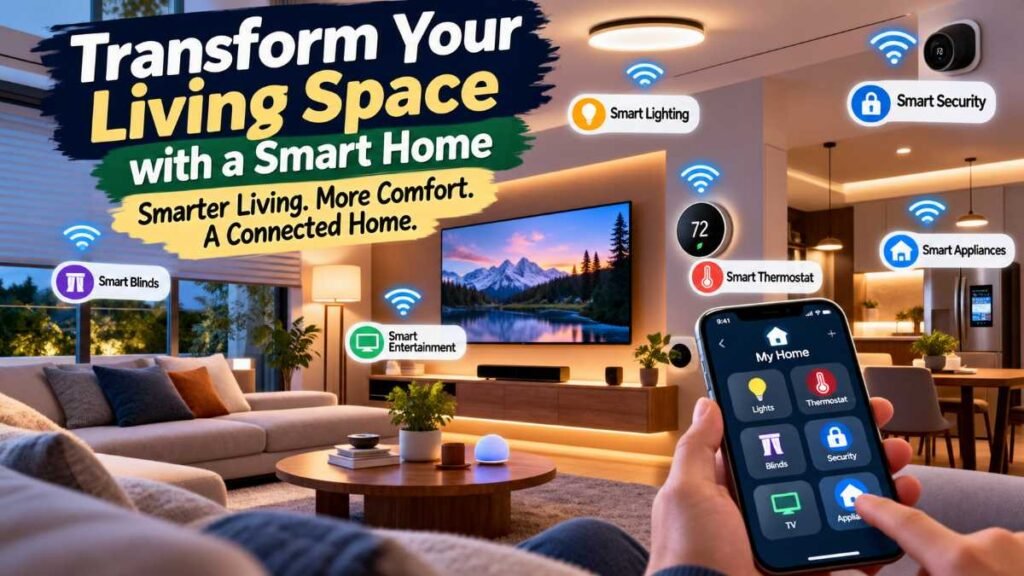
Ready to Transform Your Living Space?
Don’t wait for network lag or hub headaches to slow you down! Take charge of your space today by selecting one reliable Matter controller, exploring the best smart home products for your budget, and building a fast, secure home ecosystem that works effortlessly for your entire family.
Frequently Asked Questions
1. What are the best smart home products for beginners? Smart plugs and smart bulbs are the best smart home products to start with because they require zero hardwiring and offer quick app control.
2. Do I need a central hub for all my devices? A dedicated hub like an Apple HomePod or Echo Hub optimizes network performance and runs local automations smoothly.
3. Which protocol should I look for in 2026? Always choose Matter over Thread hardware when picking the best smart home products to guarantee fast, cross-platform compatibility.
4. Are smart home devices safe from hackers? Yes, as long as you enable two-factor authentication, set up an isolated guest VLAN, and keep firmware updated.
5. How do I choose the best smart home products for my space? Focus on your living situation: renters should prioritize plug-and-play accessories, while homeowners can invest in hardwired thermostats and deadbolts.
Editorial Disclaimer
This guide is compiled independently for educational and informational purposes. Product specifications, protocol standards, and firmware features change over time; always verify physical door dimensions, wiring compatibility, and hub specifications before purchasing new hardware for your home network.
About the Author
Dambar C.Rajbanshi. is a home optimization writer and space analyst passionate about creating functional, comfortable living environments. He shares practical spatial layouts, ergonomic setups, and smart automation strategies to help homeowners build efficient, secure spaces without compromising daily comfort.