
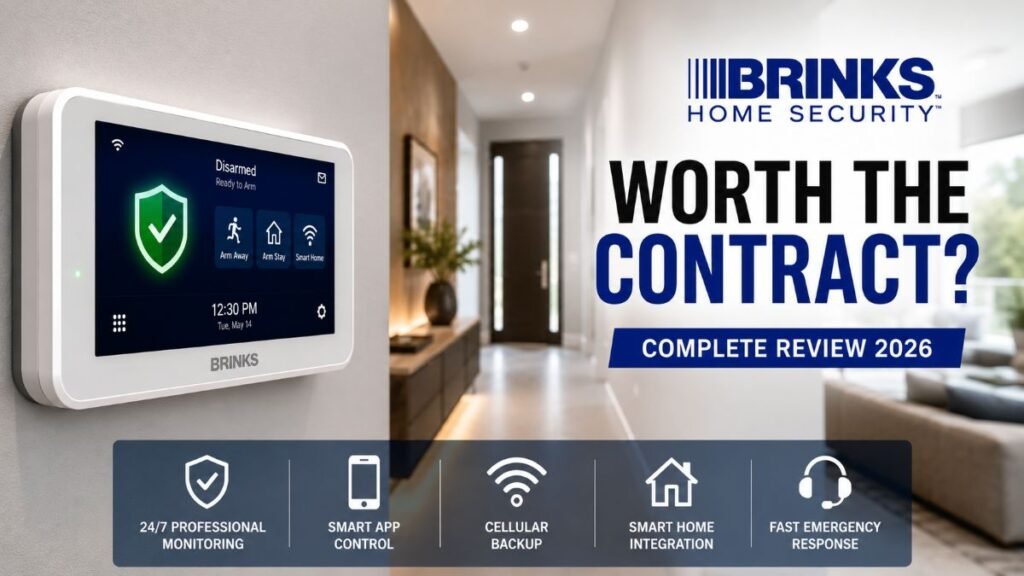
Securing your home shouldn’t feel like stepping into a trap of hidden fees and rigid commitments. If you are weighing professional monitoring against DIY flexibility, this in-depth Brinks Home Security Review strips away the marketing hype to expose real equipment tiers, verified pricing, and terms that depend entirely on your signed agreement. Discover whether this popular U.S. provider truly deserves a spot on your wall—or if you should look elsewhere before investing.
Brinks Home Security Overview & Core Architecture
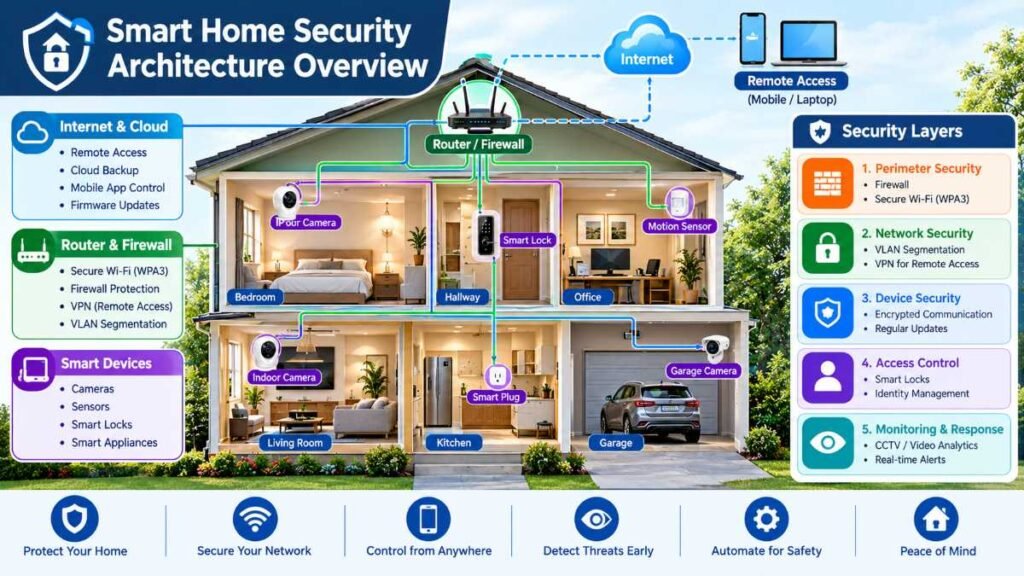
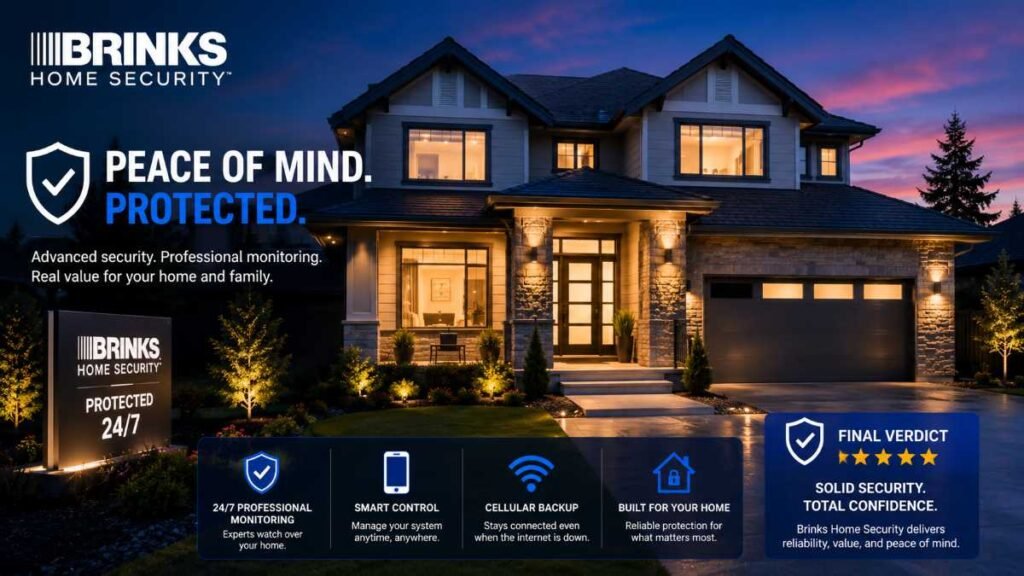
Brinks Home operates on a reliable hybrid model that combines professional 24/7 monitoring with modern, smart-home-compatible equipment. Brinks builds its security framework around Alarm.com technology and Qolsys touch screen panels; however, available features, app capabilities, and automation integrations can vary depending on the specific equipment tiers and monitoring plans you choose. This integration allows many homeowners to manage security, automated lighting, smart locks, and temperature controls through a single mobile interface, supporting convenient property management whether you are inside the house or miles away.
The architectural backbone relies heavily on cellular communication with battery backup, helping protect your property even if power or internet lines are compromised. To secure your connected ecosystem against digital vulnerabilities, read our technical analysis on smart home cybersecurity.
Package-Specific Equipment Pricing & Hardware Inclusions
Transparent pricing is crucial when evaluating security providers. Based on official baseline listings verified directly on the Brinks Home Shop (prices checked on October 16, 2026; listed offers may change by location, promotion, and eligibility), here is a direct comparison of two core equipment packages and their exact hardware inclusions:
Package Tier | Equipment Cost (Upfront) | Monthly Monitoring Fee | Exact Included Hardware & Sensors |
Starter Package | $449.00 | $39.99 / month | Touchscreen panel, 3 door/window sensors, and 1 motion sensor. |
Smart Home Package | $899.00 | $54.99 / month | Touchscreen panel, 3 door/window sensors, 1 motion sensor, video doorbell, and smart thermostat. |
Calculating Your Total 36-Month Financial Commitment
When calculating your long-term investment, you must combine your upfront equipment purchase with your recurring 36-month monitoring obligations. Please note that these figures serve as illustrative examples based on standard listed retail package prices, assuming that your monthly monitoring fee remains constant throughout the term. Actual totals will vary according to promotional eligibility, installation charges, regional taxes, and any applicable add-on services:
- Starter Package 36-Month Total: $449.00 (Equipment) + ($39.99 × 36 months = $1,439.64) = Approximately $1,888.64 (plus applicable taxes and fees).
- Smart Home Package 36-Month Total: $899.00 (Equipment) + ($54.99 × 36 months = $1,979.64) = Approximately $2,878.64 (plus applicable taxes and fees).
Installation & Setup Process
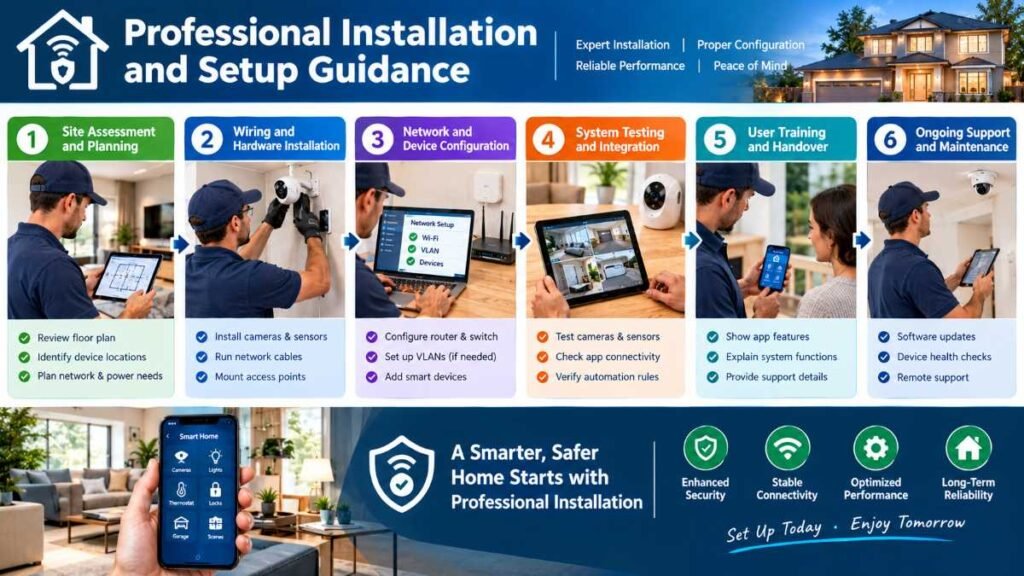
Understanding how your security hardware is physically integrated into your home is crucial for preventing unexpected deployment hurdles. Brinks emphasizes professional installation and technician-guided setups to help ensure sensors and panels are properly configured.
- Deployment Process: While current promotions frequently highlight professional installation options (subject to specific contract terms and package eligibility), coordinating with customer support helps ensure proper zone configuration and avoids connectivity errors.
- Evaluating Technical Requirements: Before purchasing, verify whether your layout requires specialized mounting or hardwired integration, as professional assistance helps confirm that life-safety sensors meet local building guidelines.
Contracts, Financing, and Cancellation Terms
Before signing any residential security agreement, scrutinizing the legal and financial binding terms is vital:
- Contract Duration: Many standard monitoring agreements are structured around a 36-month commitment term, though specific durations depend heavily on the exact promotional package and signed subscriber contract.
- Equipment Financing: Hardware can often be purchased outright or financed through approved lending partners over time, subject to credit approval.
- Cancellation Policies: Terminating your service agreement prior to the completion of your contracted term may incur financial liabilities. Early cancellation obligations and potential penalties vary depending entirely on the specific subscriber agreement you execute upon signup. Always request, read, and retain a copy of your written agreement before activation.
Independent Competitor Comparison & Market Positioning
How does this Brinks Home Security Review stack up against other major U.S. security providers? Review this side-by-side comparison to evaluate market alternatives, focusing on plan structures rather than fixed rates:
Provider | Core Monitoring Focus | Standard Contract Length | Primary Control Panel |
Brinks Home | Cellular monitoring and smart home integration | Typically 36 Months (dependent on agreement) | Qolsys / Alarm.com Touch Panel |
ADT Security | Established national service and professional installation | Varies by agreement type (Verify current plans via ADT Security) | ADT Command Touchscreen |
SimpliSafe | Modular, do-it-yourself hardware with adaptable protection tiers. | Operates on flexible, cancel-anytime month-to-month terms (verify current details directly on SimpliSafe Plans) | SimpliSafe Physical Keypad & Base Station |
For broader residential safety insights when comparing systems, explore our guides on smart home automation and our recommendations for the best smart home devices.
Consumer Feedback & Sentiments
Evaluating public sentiment requires examining independent expert analysis alongside real user reviews:
- Expert Test Evaluations: According to professional evaluations by industry analysts via the Security.org Brinks Review, Brinks is often noted for its high-end Qolsys hardware and monitoring infrastructure options.
- Verified Customer Feedback: Real-world user reviews compiled on platforms like the ConsumerAffairs Brinks Reviews and consumer advocacy notes on the Better Business Bureau highlight a mix of praised dispatch response times alongside occasional customer grievances regarding billing cycle questions and contract misunderstandings. Recognizing that public complaints reflect individual disputes underscores why reading your fine print matters.
Additionally, adhere to safety guidelines published by the National Fire Protection Association regarding proper placement of interconnected smoke and carbon monoxide detectors.
Long-Term Value & Ownership Considerations
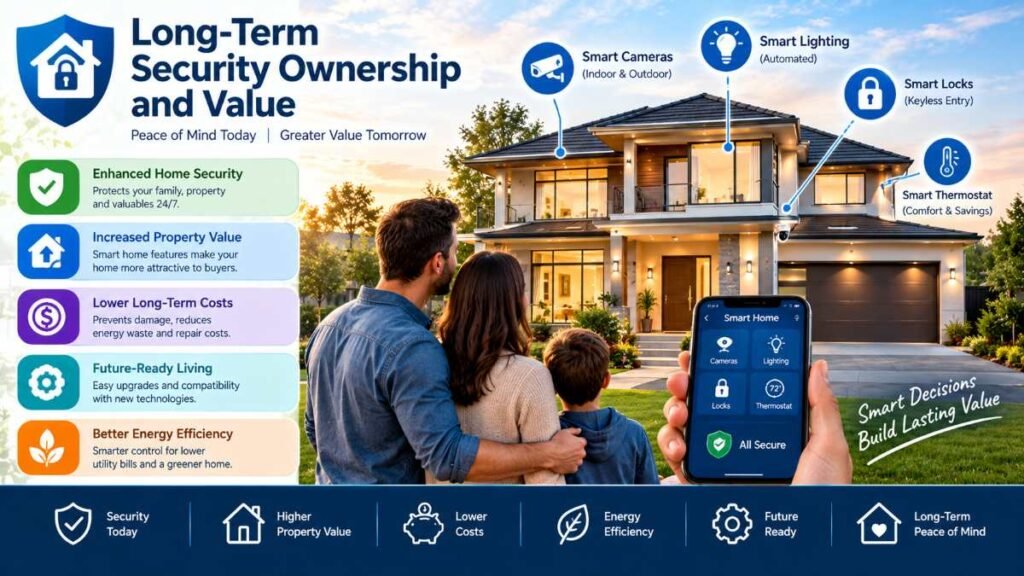
When investing in residential security infrastructure, looking beyond the initial contract window is essential for assessing true ownership value.
- Hardware Compatibility & Lock-In: Prospective buyers should explicitly ask providers what functionality remains if monitoring is eventually canceled. Because proprietary firmware or backend cloud limitations can apply, physical sensors may or may not be easily reprogrammed for use with a different monitoring provider.
- Transferability: Security agreements do not automatically transfer to new property owners upon selling a home, meaning relocation or cancellation clauses must be reviewed carefully if you anticipate moving during your contract term.
Real-World Buying Scenarios & Smart Decision-Making
Different housing situations require different security approaches. Here is how Brinks fits into various lifestyles:
- For Suburban Family Homes: The Smart Home package is frequently selected here, offering essential door/window coverage, video doorbell integration, and smart thermostat control for families managing busy schedules.
- For Renters or Frequent Movers: Because standard contracts often span 36 months and involve permanent or semi-permanent hardware setups, renters or those anticipating a relocation within a year should carefully weigh the moving transfer policies against potential cancellation fees.
Essential Decision-Point: Before signing any contract or providing payment information, insist on receiving a fully itemized written breakdown. Specifically, ask the provider to separate equipment costs, monthly monitoring fees, installation charges, applicable regional taxes, and potential early-termination penalties so you can evaluate the true total cost of ownership.
Detailed Pros and Cons of Brinks Home Security
To provide a balanced perspective for your purchasing decision, evaluate these distinct operational advantages and potential drawbacks:
- Pros:
- High-definition Qolsys touchscreen panels that deliver clear graphics and responsive touch inputs.
- Robust integration with the Alarm.com ecosystem, allowing supported automation of smart locks, lighting, and thermostats.
- Established 24/7 professional cellular monitoring options backed by internal emergency battery backups.
- Cons:
- Many standard monitored packages may require a 36-month commitment; check your signed agreement.
- Higher upfront equipment costs on advanced smart home tiers compared to pure DIY alternatives.
- Strict early-termination and cancellation guidelines that require careful advance review of your specific agreement.
Practical Buyer Checklist Before Signing
Before committing your household budget, walk through this actionable pre-purchase verification checklist to ensure complete alignment with your security goals:
- Are you fully comfortable committing to a multi-year monitoring agreement without wanting month-to-month flexibility?
- Have you carefully reviewed all equipment financing terms and verified your upfront hardware costs ($449 for Starter vs. $899 for Smart Home)?
- Does your selected plan tier include live mobile video streaming, push notifications, and remote app control via your smartphone?
- Have you examined the exact relocation and cancellation provisions in case your housing situation changes during your contract window?
Conclusion: Securing Your Peace of Mind
Choosing the right security partner is a vital step toward protecting your household and property. By carefully evaluating equipment costs, contract obligations, and monitoring tiers, you can make a confident, well-informed investment. Take control of your home defense strategy today, audit your entry points, and choose a verified security plan that empowers you to live securely without second-guessing.
Frequently Asked Questions
Q1: Is Brinks a reliable home security choice?
Yes, dependable cellular backup and Qolsys touchscreen panels make it a strong contender for household safety.
Q2: How much does Brinks charge monthly?
Standard professional monitoring plans typically range between $39.99 and $54.99 per month.
Q3: What are common customer complaints?
Users occasionally report billing questions and strict early-termination contract terms.
Q4: Is ADT better than Brinks?
ADT offers broader national service coverage, whereas Brinks focuses on streamlined Alarm.com smart integration.
Q5: Why read this Brinks Home Security Review?
This Brinks Home Security Review breaks down upfront equipment costs and contract obligations so you can decide with complete confidence.
External Resources & Authoritative References
This independent review is supported by data and insights from these trusted U.S. platforms:
- Brinks Home Shop: Official catalog for equipment tiers and baseline pricing.
- Security.org Brinks Review: Independent expert analysis and hardware testing.
- ConsumerAffairs Brinks Reviews: Verified customer satisfaction trends.
- Better Business Bureau: Public consumer feedback and dispute resolutions.
- National Fire Protection Association: Official residential life-safety standards.
- ADT Security: Professional monitoring comparison platform.
- SimpliSafe Plans: Contract-free DIY alternative reference.
Editorial Disclaimer
This comprehensive Brinks Home Security Review is researched and written to provide objective guidance for U.S. homeowners. The insights reflect current market data, public consumer feedback, and technical evaluations, free from external advertising influence. Pricing, equipment availability, and promotional terms are subject to change by the provider.
About the Author
Dambar C.P.Rajbanshi is an independent technology researcher and smart home systems editor specializing in residential automation, consumer protection, and security infrastructure evaluations across the United States.