
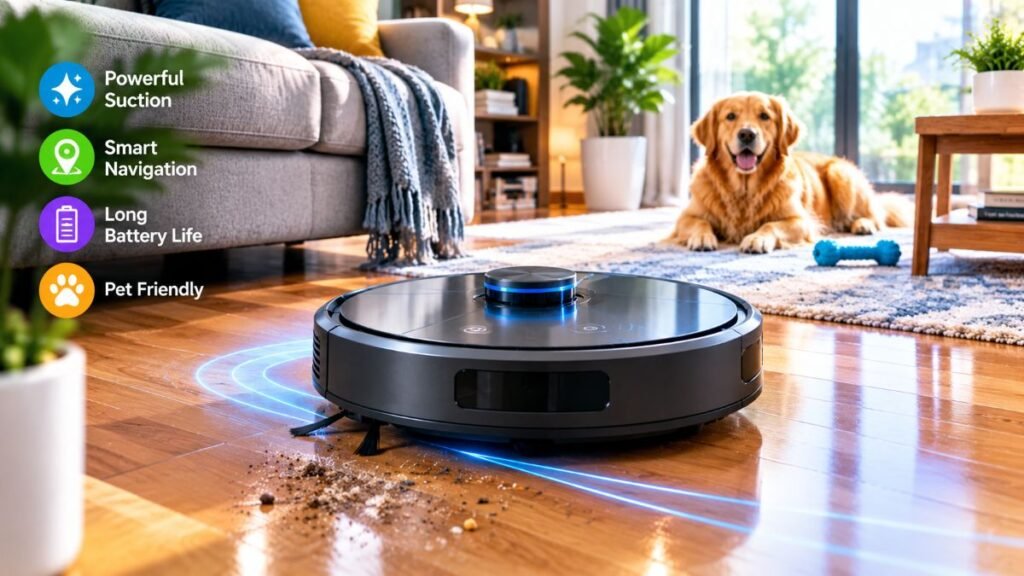
Finding a reliable automated floor cleaner shouldn’t feel like a gamble with your hard-earned money. When you invest in a robot vacuum, you expect it to handle daily grit, pet hair, and crumb accumulation without getting permanently wedged under the living room sofa or missing half the hallway.
Modern automated floor care requires looking past flashy marketing metrics and understanding how sensor arrays, suction ratings, and maintenance demands align with your actual living space.
Demystifying Autonomous Navigation Mechanics
The operational efficiency of any robotic floor care appliance stems directly from its onboard orientation mechanics. Opting for an inadequate pathfinding approach inevitably causes constant furniture collisions, skipped zones, and a tedious overall cleaning experience.
- Random Bounce & Infrared Units: Suited primarily for compact studio apartments or straightforward, single-room footprints. These entry-level machines rely on physical contact, infrared drop detectors, and unpredictable directional shifts without generating digital room layouts.
- Gyroscope-Guided Straight-Line Cleaners: A functional step up for budget-conscious buyers, these units incorporate internal gyroscopes to steer in orderly, parallel passes, substantially minimizing missed areas compared to random-bounce devices.
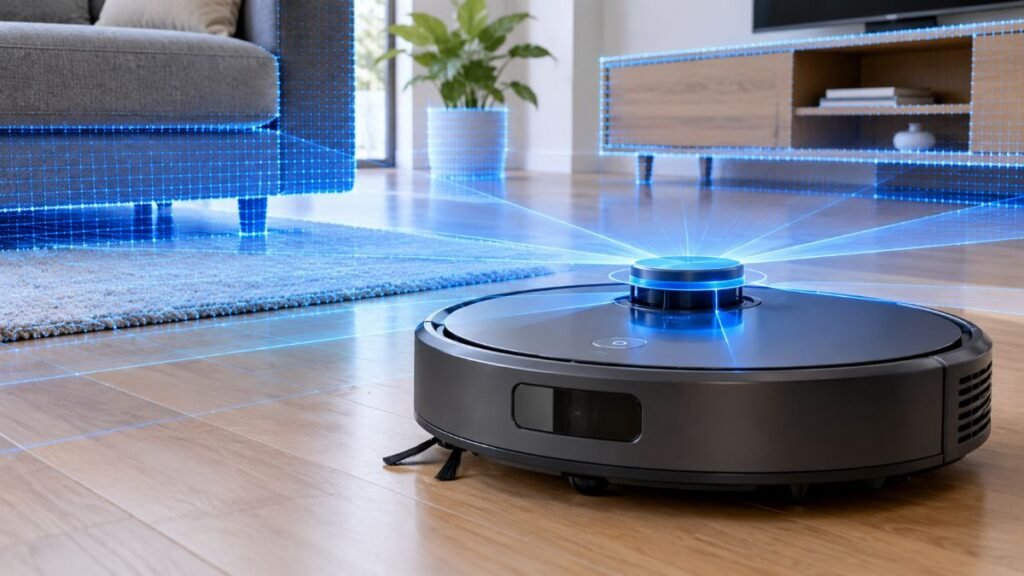
- LiDAR Laser Scanning: The gold standard for sprawling or multi-room residences. Utilizing active laser telemetry, these automated vacuums construct precise spatial blueprints in real time, executing methodical, row-by-row sweeps.
- Optical Camera & AI Recognition: Ideal for active households prone to everyday floor messes, including scattered shoes, pet chew items, and loose wires. These intelligent floor care systems leverage integrated optical hardware and computer vision to navigate around floor-level barriers dynamically, though operating performance can decrease in pitch-dark conditions.
Integrating your automated floor cleaner into a centralized smart home framework ensures that your recurring cleaning cycles trigger smoothly alongside complementary hardware routines—such as coordinating automated lighting via your smart home hub or securing perimeter access points with best smart locks.
Model Specifications & Best Fit Summary
Appliance spec sheets frequently boast massive Pascal (Pa) ratings, but raw suction power only tells part of the story. Evaluating verified market benchmarks helps clarify what different price tiers deliver based on technical specifications and manufacturer documentation.
Buying note: Specifications describe manufacturer-reported features, not a guarantee of cleaning performance in every home. Carpet pickup, obstacle avoidance, noise, and battery performance can vary with flooring, room layout, debris type, and operating conditions. Compare independent test results when available before making a final purchase.
Verified Model / Tier | Navigation & Obstacle System | Suction Specification / Manufacturer Claim | Best For / Ideal Use Case | Limitations & Trade-offs |
Eufy RoboVac 11S Max (Budget Entry) | Bounce Navigation with Infrared and Drop Sensors | 2,000 Pa (Nominal) via Eufy | Low-profile hard floors and simple, uncluttered studio apartments. | Lacks room mapping; prone to random cleaning patterns; no smart zoning. |
Roborock Q5+ (Mid-Range) | LiDAR Laser Navigation | Single-story homes and mixed low-pile rugs needing systematic pathing. | May be less suitable for some dense or high-pile carpets; check independent carpet-cleaning tests before buying. | |
iRobot Roomba j7+ (Flagship Vacuum-Only) | PrecisionVision AI Optical Vision | Proprietary Multi-Stage Cleaning System via iRobot | Homes with frequent stray cables or shedding pets requiring trusted automated debris disposal. | Vacuum-only unit (no built-in mopping); higher initial investment. |
How We Evaluated These Models
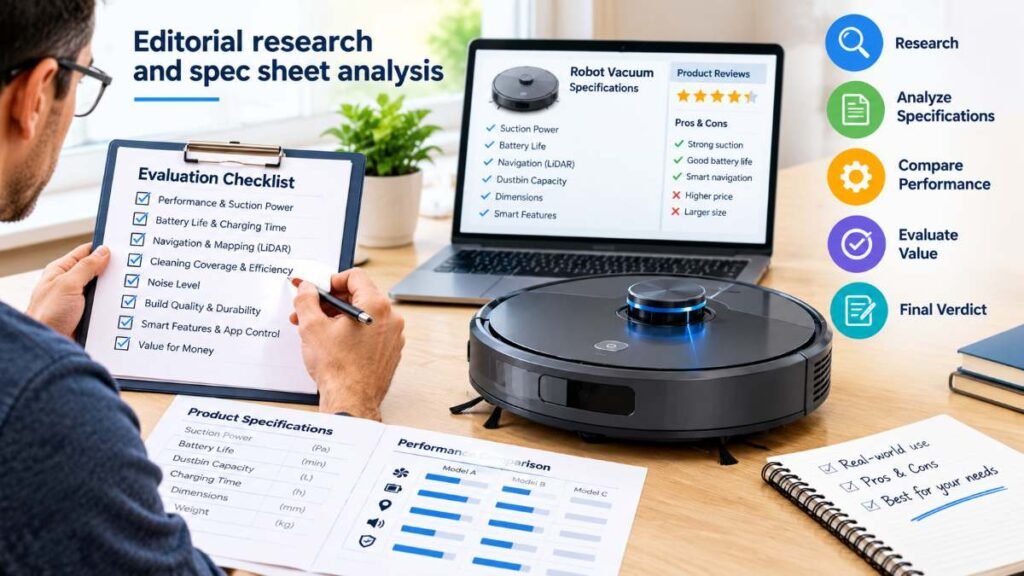
To deliver transparent and reliable guidance, our editorial analysis focuses on product specifications, manufacturer user manuals, and published technical evaluations. Rather than claiming proprietary multi-month laboratory testing, our methodology relies on cross-referencing technical spec sheets and manufacturer documentation from brands like iRobot, Roborock, and Eufy to help you understand how different models behave in real-world residential environments.
Upright vs. Automated Care
Deciding between an automated helper and a manual upright vacuum depends entirely on your lifestyle and cleaning frequency.
- Cleaning Capacity & Maintenance: Conventional upright vacuums remain unmatched for deep-cleaning heavy carpets, whereas a robot vacuum excels at automated routine maintenance. Regular scheduled cycles proactively remove everyday dust and shedding hair, though cleaning efficiency ultimately adapts to your home’s flooring surfaces and hardware specs.
- Time Investment: Automated cleaners free up hours each week by managing routine floor upkeep in the background. If you want to integrate broader automation habits, coordinating your cleaning schedule alongside your smart home installation routines keeps your entire property operating smoothly.
Illustrative Budget Examples & Ownership Costs
Owning a robot vacuum involves ongoing operational expenses beyond the initial retail price. Because replacement frequencies and consumable pricing fluctuate, here are illustrative budget examples rather than guaranteed fixed totals:
- Budget Tier (e.g., Eufy 11S Max): Focuses on low initial unit investment with periodic replacements of side brushes and filters.
- Mid-Range Tier (e.g., Roborock Q5+): Balances automated LiDAR navigation with recurring consumable expenses for self-emptying dust disposal bags and HEPA filters.
- Flagship Tier (e.g., Roomba j7+): Higher initial commitment accompanied by ongoing purchases of high-capacity disposal bags and dual multi-surface rubber rollers.
Note: Actual ownership costs vary widely by purchase price, cleaning frequency, replacement intervals, and local consumable pricing. Always verify current model-specific prices and replacement schedules directly on manufacturer storefronts such as Eufy US.
Home Type Matching
Matching your appliance to your specific floor plan prevents buyer’s remorse:
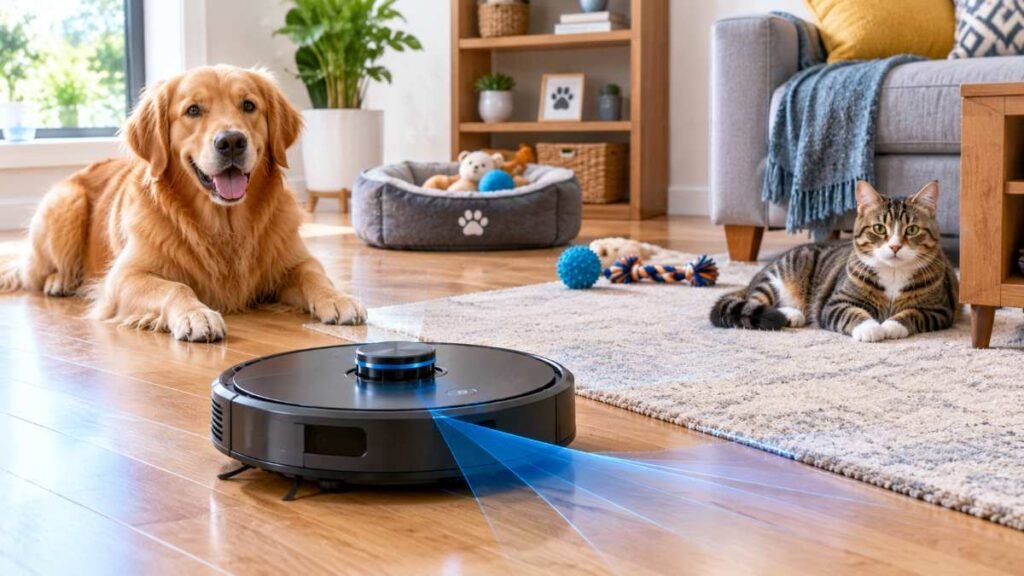
- Pet Owners: Prioritize anti-tangle rubber rollers and obstacle avoidance technology (such as PrecisionVision technology found on models like the Roomba j7+) to help dodge unexpected pet messes, keeping in mind that standard cameras can occasionally fail to recognize obstacles in low-light conditions.
- Apartments & Small Homes: Compact units with reliable reactive navigation or basic LiDAR mapping keep small footprints clean without bulky charging docks.
- Multi-Story Homes: Select models with multi-floor mapping capabilities and robust battery management so the device can transition cleanly between levels.
Routine Maintenance Protocols
Even the most advanced floor care appliances require routine upkeep to maintain peak suction and navigation accuracy:
- Weekly Optic Care: Wipe down drop sensors, camera lenses, and charging contacts with a clean microfiber cloth to prevent navigation errors caused by dust buildup.
- Filter Care: Check the manufacturer’s manual before cleaning a filter. Only rinse filters explicitly labeled washable, following the specified cleaning method, and allow them to dry completely before reinstalling. Replace non-washable filters according to the manufacturer’s schedule.
- Brush & Roller Inspection: Check your cleaner’s rotating brush ends every week for stubborn clumps of human or animal hair. Snip these wrapped fibers away gently to prevent friction buildup and keep the motor running smoothly.
- Dock Service: Periodically clear charging ramps and replace dust collection bags based on manufacturer guidelines before they become over-compressed.
Who Should Avoid Buying?
While automated cleaners transform daily chores for most households, certain environments make robotic floor care inefficient or frustrating:
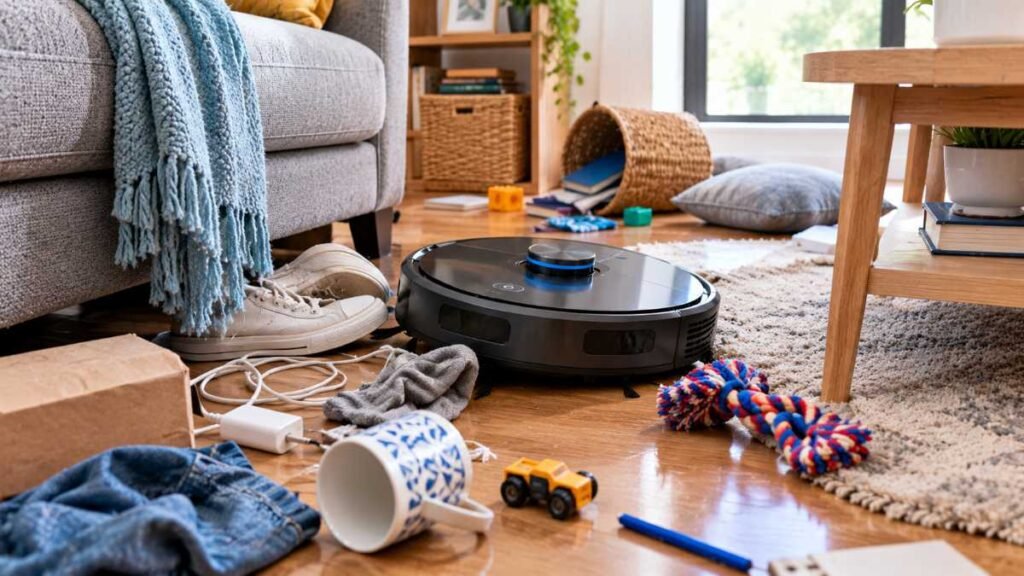
- Heavily Cluttered Floors: Homes with chronic floor clutter (piles of clothes, loose charging cables, and numerous small toys) will cause even advanced models to get stuck repeatedly.
- Challenging Threshold Heights: Raised room dividers or thick decorative transitions exceeding a specific model’s verified climbing clearance (always check individual manufacturer spec sheets) will trap the unit in a single room.
- Unprotected Pet Accidents: Standard optical cameras can occasionally fail to recognize unexpected pet waste in dark rooms, resulting in cleaning complications.
Essential Buying Checklist
Before pulling the trigger on any automated cleaner, run through this essential evaluation matrix to ensure total compatibility with your living space:
- Furniture Clearance: Measure the gap between your sofa/bed bottoms and the floor to ensure the unit can slide underneath.
- Threshold Heights: Always cross-reference your residence’s floor transition strips against the exact climbing clearance limits provided in the official manufacturer documentation to prevent the unit from getting stuck.
- Pet Presence: Prioritize anti-tangle rubber rollers if you live with heavy-shedding dogs or cats.
- Ongoing Consumable Costs: Factor in recurring replacement expenses for filters, side brushes, dust bags, and manufacturer-approved cleaning solutions.
Practical Troubleshooting
Even premium units encounter operational hiccups. Quick troubleshooting keeps maintenance simple:
- Mapping Drift & Navigation Errors: When your robot starts losing its path or missing rooms, check the official troubleshooting manual. Lightly clean the sensor windows and LiDAR housing per instructions, and remove any physical obstructions blocking the robot or its charging dock.
- Wi-Fi Connectivity: Check your router’s band settings. While many models connect easily over standard network frequencies, consult your product documentation during setup to verify network requirements.
- Weak Suction Performance: Check for clogs in the intake port and clear wrapped hair strands from the main brush roll ends.
Frequently Asked Questions
FAQ 1: How often should a robot vacuum run in a typical home?
Most homeowners run their automated cleaners 3 to 4 times a week to control daily dust and pet hair effortlessly before it accumulates.
FAQ 2: Can an automated floor cleaner replace a traditional upright vacuum?
Not completely. While robotic units excel at daily upkeep, heavy carpets and deep-seated dirt still require occasional manual upright vacuuming.
FAQ 3: What network requirements are needed for app setup?
Most smart cleaners pair via standard Wi-Fi router frequencies. Always verify network compatibility in your product manual during initial setup.
FAQ 4: Why does my automated cleaner get stuck under low furniture?
This happens when the unit’s height exceeds the gap beneath your sofa or bed. Measure your furniture clearance beforehand to avoid trapping.
FAQ 5: Are automated floor cleaners really worth the investment for Indian households?
Investing in a reliable robot vacuum is completely worth it to beat daily dust and pet shedding. While a manual device offers heavy suction, a modern robot vacuum handles everyday maintenance smoothly, ensuring spotless floors with a quality robot vacuum saving you hours of effort.
Final Buying Decision
When narrowing down your options, focus strictly on features that deliver everyday value:
Essential Upgrades: LiDAR mapping and self-emptying docks can reduce routine manual intervention and are well worth the investment for multi-room layouts.
Optional Splurges: Advanced auto-wash/hot-air-drying mop stations are fantastic for heavy multi-surface homes, but unnecessary for apartments with mostly hardwood flooring. Assess your layout, choose the exact feature set you need, and upgrade your robot vacuum cleaning routine today.
For consumer product safety standards, refer to guidance from the U.S. Consumer Product Safety Commission.
External Resources & Official Standards
- Safety Compliance: Review baseline electrical safety regulations via the U.S. Consumer Product Safety Commission.
- Performance Testing: Read structured evaluation methods at Consumer Reports and RTINGS.com.
- Manufacturer Data: Verify technical specs and maintenance schedules through iRobot Support and Roborock Support.
Editorial & Safety Policy
At Smart Home Zenith, our recommendations rest on real-world usability, structural design evaluation, and safety compliance. We independently review products using manufacturer technical documentation, independent safety standards, and long-term performance tracking.
- Independence: Our guides are completely independent. We never accept payment for positive ratings or guaranteed product placements.
- Safety & Reliability: We cross-check electrical components and lithium battery standards against official regulations from the U.S. Consumer Product Safety Commission (CPSC) and ENERGY STAR.
- Accuracy: Appliance specs change over time. We routinely update our guides to reflect new firmware updates, manufacturer hardware revisions, and verified user feedback.
About the Author
Dambar C.P. Rajbanshi is a home automation researcher and chief editor at Smart Home Zenith, specializing in technical specification analysis, hardware research, and structured product documentation reviews for automated home appliances across the United States.