
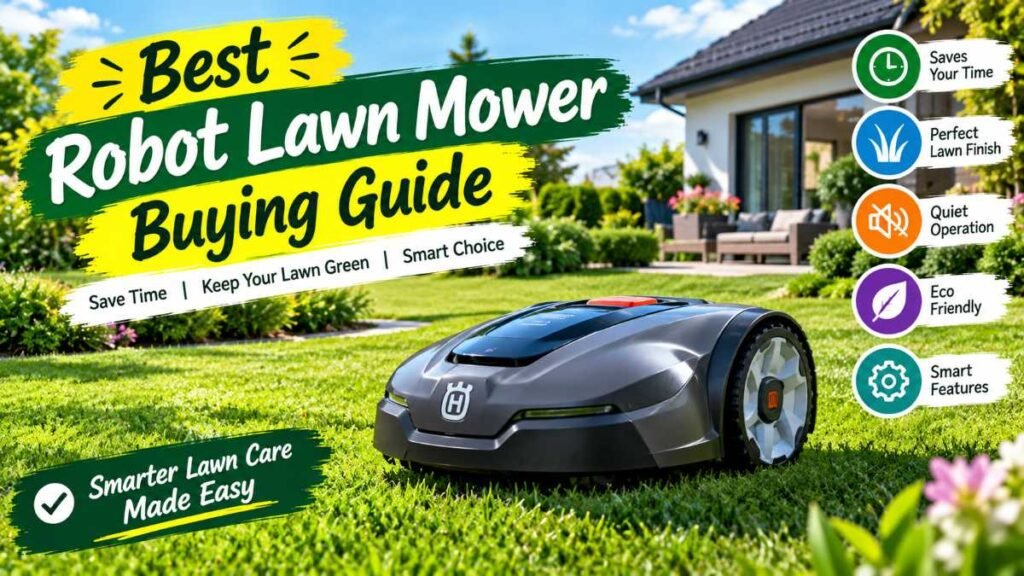
Imagine stepping onto your back patio on a Saturday morning with a fresh cup of coffee, looking out at a clean lawn, and realizing you didn’t have to push a heavy gas mower to get it that way. No yank-starting engines, no smelling like fuel, and no sweating under the midday summer sun. Investing in a robot lawn mower turns ongoing yard care into an automated background routine, keeping your grass looking consistently maintained throughout the season.
Automated Yard Care Essentials
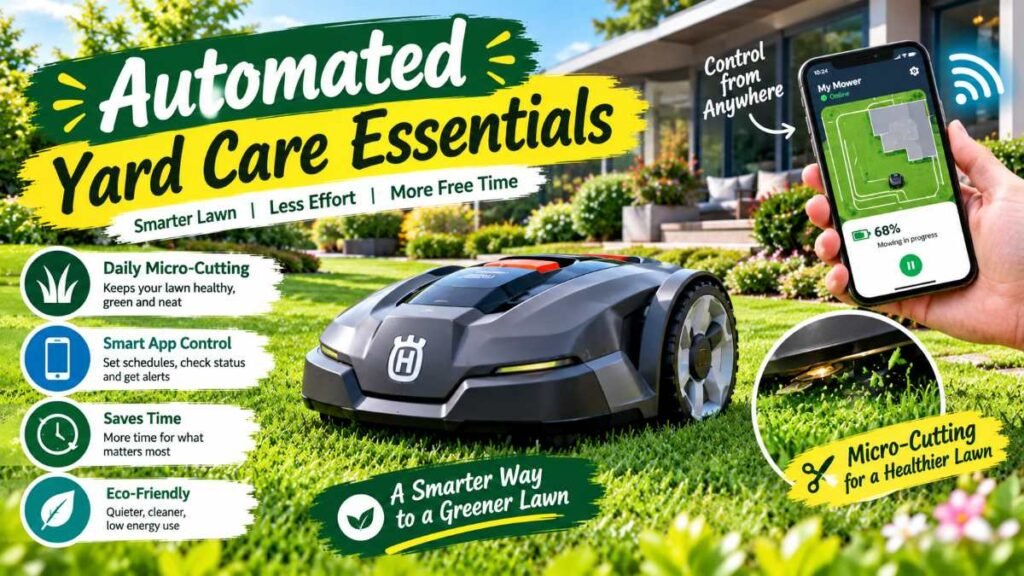
Traditional lawn care relied on heavy gas machinery and bi-weekly cutting schedules that left heaps of dead grass clippings across your yard. Modern autonomous mowers, like a smart robot lawn mower, operate under a different approach: regular micro-cutting. By trimming small fractions off grass blades every day or two, fine clippings drop directly into the soil to decompose, returning valuable organic matter back into the turf.
System Component | Role in Yard Automation | Operational Impact |
Smart Hub Setup | Schedules routine passes & syncs triggers | Controls yard schedules without manual intervention |
Autonomous Mower | Performs micro-cutting passes daily | Maintains a uniform height across all zones |
Micro-Clippings | Decomposes quickly at soil level | Adds organic material back to root systems |
Integrating an automated mower into your home management plan fits naturally alongside upgrading your best smart home devices controlled via a central smart home hub. Building smart home routines isn’t just about indoor appliances—it extends straight into your outdoor maintenance strategy.
Primary Operational Benefits:
- Time Savings: Can reduce the amount of time spent on routine mowing during the peak growing season.
- Natural Mulching: Fine grass clippings decompose quickly, helping return key nutrients to the soil.
- Zero Direct Emissions: Battery-powered electric motors operate quietly without burning gasoline or producing exhaust fumes.
- Height Management: Regular mowing can help keep grass at a consistent height and may reduce the chance of some weeds producing mature seed heads.
Homeowner Tip: Schedule your mower to operate during early morning hours or late afternoon when your lawn is dry to ensure clean blade cuts and prevent wet clump buildup under the deck.
Navigational Choices: Perimeter Wire vs. Satellite Navigation
The single biggest technological decision when selecting a robot lawn mower is deciding how the machine defines boundaries and navigates your property.
Navigation System | Core Technology | Primary Advantage | Main Constraint |
Perimeter Wire | Low-voltage buried or pegged wire | Boundary-wire systems are generally less affected by satellite visibility or tree cover | Requires upfront manual wire installation |
Wire-Free RTK GPS | Satellite positioning & antenna hub | No physical wire required; quick digital boundary mapping | Requires clear line-of-sight to satellites |
Hybrid Vision/LiDAR | RTK paired with AI cameras or LiDAR | Some newer models combine RTK positioning with cameras, LiDAR, or other sensors | Generally found in higher price tiers |
Perimeter Wire Systems
Traditional robotic mowers use a low-voltage wire installed around the perimeter of your yard and flowerbeds. The machine detects the electromagnetic signal and turns around whenever it reaches the boundary. While installation requires time to peg or bury the line, the signal operates reliably without relying on open sky access.
Boundary-Free RTK GPS & Sensor Technology
Next-generation wire-free mowers utilize Real-Time Kinematic (RTK) GPS paired with outdoor positioning hubs. Some newer models combine RTK positioning with cameras, LiDAR, or other sensors to assist with obstacle avoidance and signal interruptions. You simply drive the unit around your lawn using a smartphone app to build a digital map.
Homeowner Tip: If your property has dense, heavy tree cover hugging property lines, check manufacturer signal recommendations before buying a satellite-based system.
Key Specifications to Evaluate
Navigating specs across different brands requires evaluating your property’s physical terrain against machine capabilities.
Slope Capability & Terrain Handling
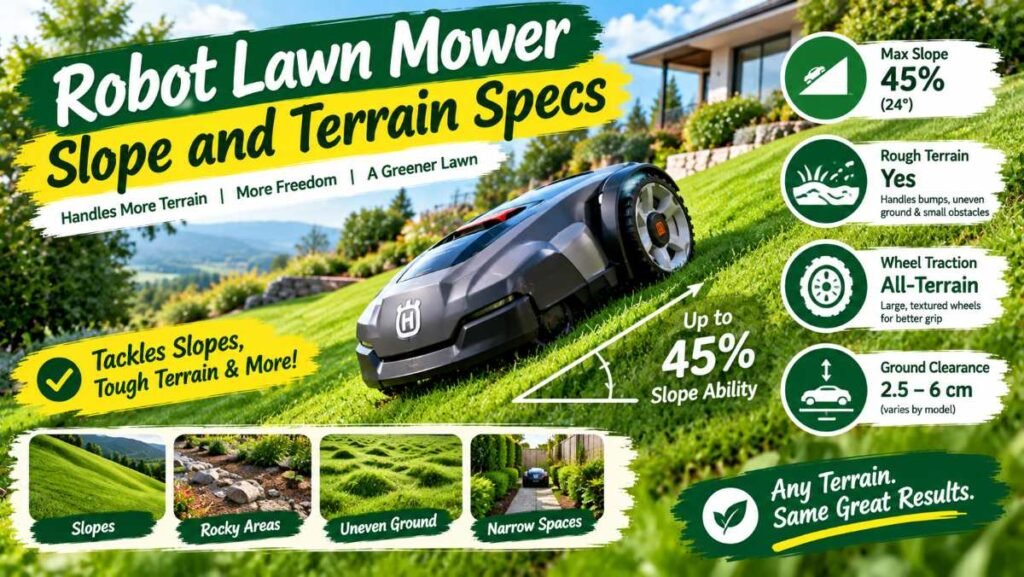
Slope handling is measured in degrees or percentages. Basic units handle mild inclines, whereas specialized all-wheel-drive (AWD) units tackle steeper hills without losing traction or sliding down banks. Advertised slope capabilities vary by model and ground conditions.
Cutting Width and Height Adjustments
Grass species across North America require different maintenance approaches. Typical mowing ranges vary by grass type and local growing conditions, with cool-season grasses generally needing higher cuts than warm-season turf. Choose a model with an adjustable cutting deck that matches your lawn’s recommended height.
Smart Connectivity & Security Controls
Look for mowers equipped with Wi-Fi, Cellular, or Bluetooth connectivity. Cellular options allow real-time tracking, remote start/stop controls, and anti-theft GPS geo-fencing alerts if the mower is moved off your property.
Homeowner Tip: Pair your outdoor smart setup with automated yard features like smart backyard privacy ideas to create a seamless, low-maintenance outdoor space.
Feature Overview Across Tier Levels
Comparing specifications across tiers helps align machine capabilities with your home’s needs and budget.
Capability | Entry Tier | Mid-Tier | Premium Flagship Tier |
Typical Yard Size | Up to 0.25 Acre | 0.25 to 0.5 Acre | 0.5 to 1.5+ Acres |
Boundary Method | Physical Perimeter Wire | RTK GPS / Vision Assist | Multi-Sensor RTK + LiDAR |
Slope Handling | Mild Inclines (Typical) | Moderate Slopes (Typical) | Steep Slopes / AWD (Model Dependent) |
Cutting Pattern | Random Paths | Structured Lines | Smart Custom Grids |
Downpour Handling | Surface Rain Sensor | Meteorological Data Sync | Live Forecast Sync & Moisture Hold |
Security Controls | Passcode Protection & Buzzer | GPS Boundary Alerts | 4G/LTE Tracking & Video Guard |
Obstacle Avoidance | Mechanical Bumper | Ultrasonic Sensors | AI Vision Object Detection |
Yard Preparation: Slopes, Landscaping, and Gates
Getting reliable performance from your robot lawn mower requires preparing your yard layout for autonomous navigation.
Managing Trees, Roots, and Borders
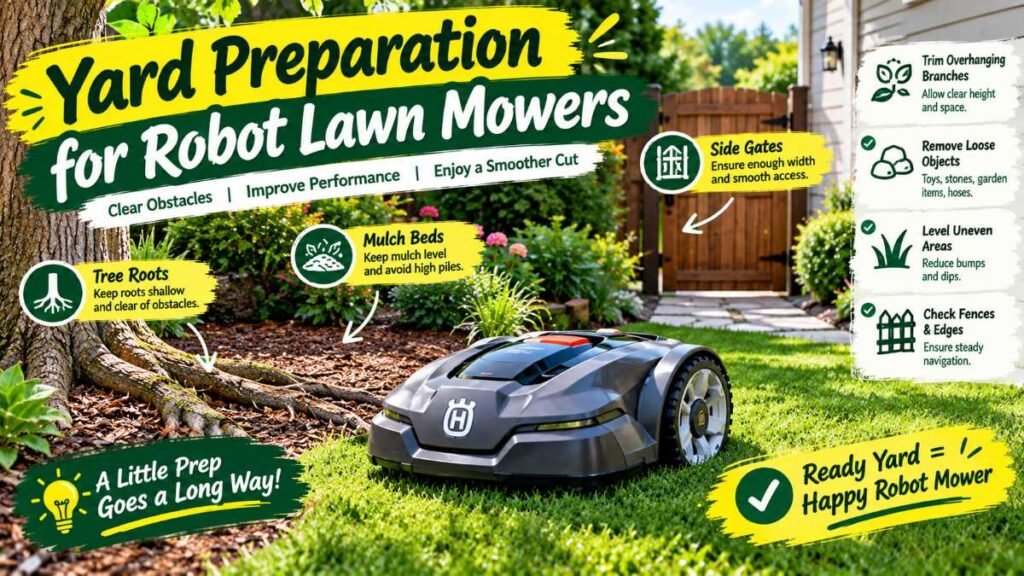
Exposed tree roots, decorative stones, and open flower beds can trap smaller wheels. Creating smooth transitions around mulch beds or defining clear virtual keep-out zones stops the unit from getting stuck. Combining proper yard setup with good lawn care habits keeps your turf looking clean and consistent season after season.
Navigating Narrow Passages and Gates
If your yard is divided into front and back sections connected by a narrow side path, ensure the mower supports multi-zone routing. Wire-free units navigate narrow paved walkways as long as the digital path is mapped correctly within the app.
Yard Clearance and Debris
Before launching an automated cycle, pick up fallen branches, garden hoses, and pet toys. High-end vision models can steer around scattered objects, but keeping lawn areas clear ensures even cutting coverage.
Homeowner Tip: Inspect your yard’s perimeter every spring. Fill in deep divots or soft soil patches along fence lines to prevent your mower’s drive wheels from spinning out.
Routine Care and Seasonal Storage
Robotic mowers require far less upkeep than gas-powered engines, but simple routine maintenance extends component lifespan.
Frequency | Maintenance Task | Practical Action |
Bi-Weekly | Blade Inspection | Check pivoting razor blades for wear; replace dull edges as needed |
Monthly | Under-Deck Cleaning | Turn off safety switch and brush away dry grass buildup |
End of Season | Winterization | Store according to the manufacturer’s temperature and winter-storage instructions |
Maintenance Guidelines:
- Blade Inspection: Robotic mowers use lightweight pivoting razor blades. Inspect blades regularly to maintain clean cuts rather than tearing grass tips.
- Under-Deck Cleaning: Turn off the main safety switch and brush away grass clippings from the cutting disc using a plastic brush. Avoid using high-pressure power washers unless explicitly rated by the maker.
- Winter Storage: When grass growth stops for the season, clean the unit and store it according to the manufacturer’s temperature and winter-storage instructions to preserve battery life.
Outdoor Power & Cybersecurity
Connecting your mower base to your home’s electrical setup requires outdoor-rated weather protection. Installing dedicated GFCI outlets and protecting main panel circuits with a whole house surge protector shields charging docks and circuitry from electrical surges during summer storms.
Maintaining cybersecurity across outdoor smart devices is just as vital as protecting indoor hardware. Practicing proper smart home cybersecurity keeps your home Wi-Fi network secure when connecting weather sensors and yard automation hubs.
Homeowner Tip: Keep extra replacement blades and screws in your garage so you can swap out dull edges immediately without waiting for shipments.
Simple Operational Checks
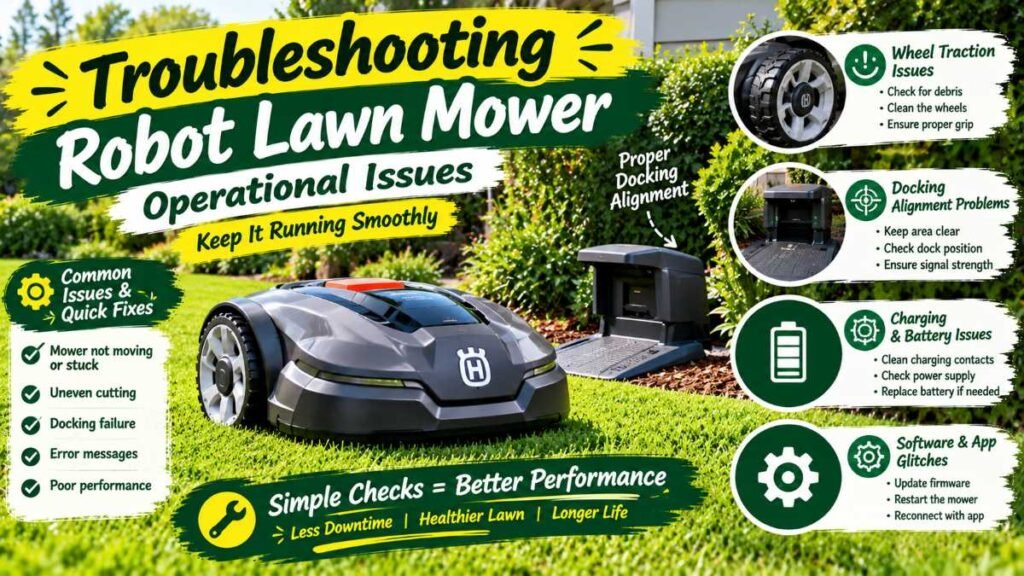
Use this quick troubleshooting guide to resolve common operational hurdles:
- Mower Departs Boundary: Check for wire breaks on traditional systems using a wire tracer, or clean debris off camera lenses on wire-free RTK units.
- Tearing or Yellowing Grass Tips: Dull cutting blades tear grass rather than slicing it cleanly. Replace the razor blades to restore sharp cutting edges.
- Traction Loss on Inclines: If drive wheels slip on steep hills, install terrain wheel attachments if supported, or adjust the virtual boundary away from steep drop-offs.
- Docking Station Alignment Errors: Verify that the charging base sits completely level on flat ground and that docking contacts are clean and free of mud or corrosion.
How We Research Outdoor Equipment
Our product analysis combines technical specification evaluations, manufacturer documentation reviews, and aggregated consumer feedback tracking. We evaluate outdoor smart devices based on design, specifications, maintenance requirements, and practical usability across diverse residential yard layouts.
For official guidance on electrical safety, battery guidelines, and outdoor equipment standards, refer to resources provided by the U.S. Consumer Product Safety Commission (CPSC), energy efficiency standards via the U.S. Department of Energy ENERGY STAR Program, and environmental management practices from the U.S. Environmental Protection Agency (EPA).
Frequently Asked Questions
FAQ 1: Is there an American-made robot lawn mower?
Yes, companies like RC Mowers manufacture industrial-grade, commercial units right here in the USA. However, most residential smart options are engineered globally.
FAQ 2: Are robot lawn mowers worth buying?
Absolutely. Investing in a robot lawn mower saves dozens of hours each season, lowers energy costs, and improves turf health through continuous micro-clipping.
FAQ 3: Does Costco sell robot lawn mowers?
Yes, Costco frequently carries popular wire-free models seasonally, both in-warehouse and online, often bundled with extra blades and extended warranty coverage.
FAQ 4: What is the best brand of robot lawn mower?
Top-rated brands include Segway Navimow, Husqvarna, and Worx Landroid, known for precise RTK GPS mapping, obstacle avoidance, and reliable slope handling.
Final Decision: Choosing the Right Mower
Selecting a reliable robot lawn mower helps simplify outdoor chores and keeps your yard looking well-maintained throughout the growing season. By matching boundary technology, slope handling, and cutting capacity to your property’s unique terrain, you can let automated technology handle routine lawn maintenance.
Assess your lawn layout, select the features that fit your home’s routine, and upgrade your yard care strategy today. The right model should fit your terrain, grass type, budget, and outdoor lifestyle preferences.

About the Author
Dambar C.Rajbanshi is a home automation researcher and chief editor at Smart Home Zenith. With over five years of experience analyzing connected devices, outdoor smart equipment, and automated home gear, he translates technical specifications into simple, practical buying advice. When he isn’t evaluating smart sensors or lawn equipment trends, Dambar focuses on home network optimization and real-world smart home workflows.
Editorial & Safety Policy
At Smart Home Zenith, our recommendations rest on practical usability, structural design evaluation, and safety compliance. We independently review products using manufacturer technical documentation, independent safety standards, and user feedback analysis.
- Independence: Our guides are completely independent. We never accept payment for positive ratings or guaranteed product placements.
- • Safety & Reliability: We cross-check outdoor electrical components, charging bases, and battery guidelines against official regulations from the U.S. Consumer Product Safety Commission (CPSC) and ENERGY STAR.
- Accuracy: Hardware specs and app firmware change over time. We routinely update our guides to reflect new software releases, manufacturer hardware revisions, and verified user feedback.