
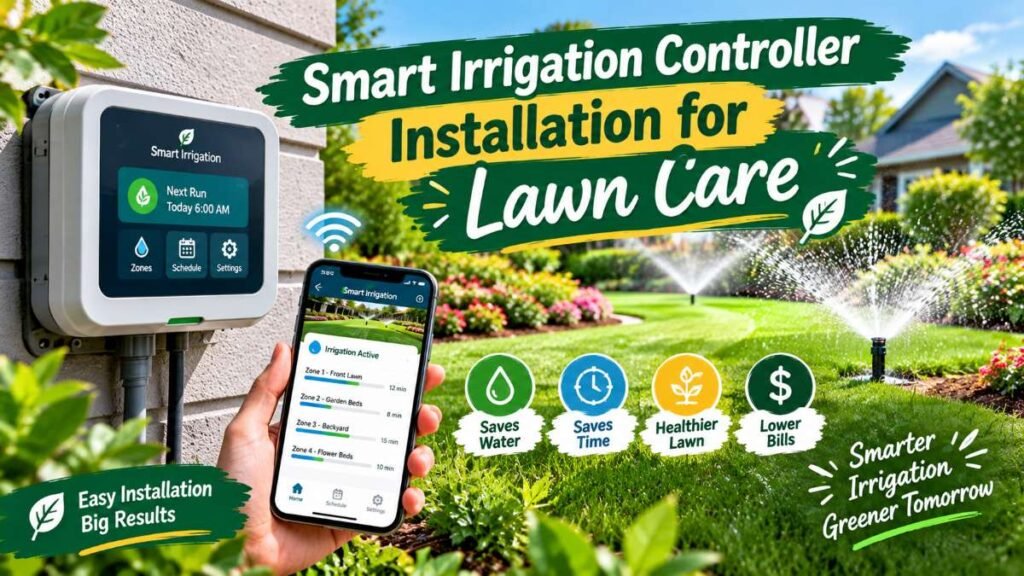
Every summer, millions of homeowners in the U.S. literally pour money down the drain. You set a traditional timer, go to sleep, and wake up to see sprinklers blasting the lawn during a torrential downpour. It is frustrating, wasteful, and expensive. Upgrading your yard setup with a modern smart irrigation controller changes everything by adjusting schedules based on live weather patterns, microclimates, and actual soil conditions—helping reduce unnecessary outdoor watering and lower overall water use.
Understanding Smart Irrigation Tech
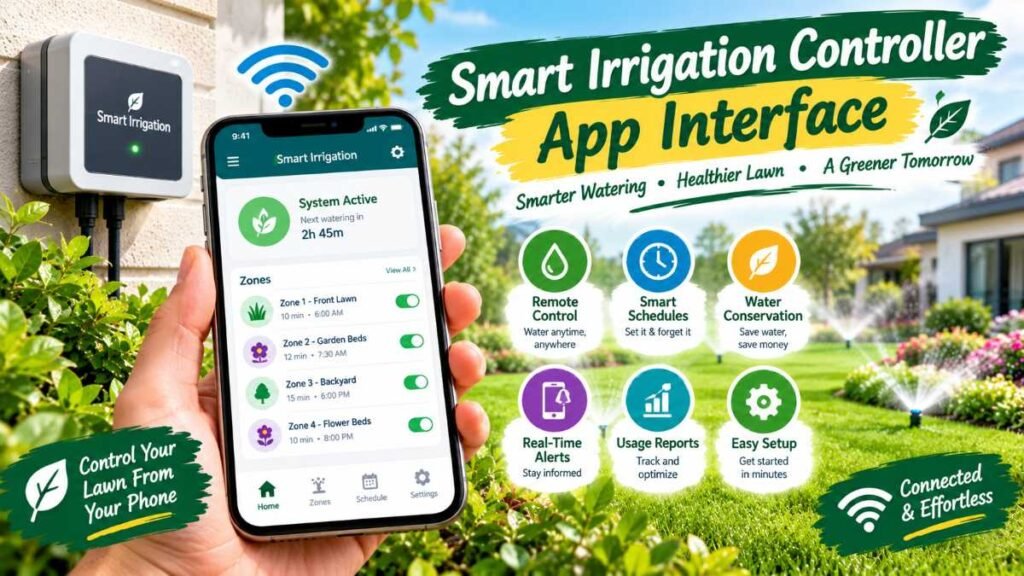
A smart irrigation controller is an automated, internet-connected replacement for your legacy sprinkler timer. Instead of executing a fixed schedule year-round, these devices connect to local weather stations via Wi-Fi to dynamically adjust watering duration, frequency, and timing based on real-time climate telemetry.
Core Technologies Driving Modern Systems
- Weather-Based (ET) Controllers: These systems utilize Evapotranspiration (ET) data—a calculation combining solar radiation, wind speed, relative humidity, and air temperature. By calculating how much moisture is evaporating from your soil and transpiring from plant leaves, the system delivers the exact volume of water lost.
- Soil Moisture Sensor-Based Systems: Physical probes inserted into your lawn measure volumetric water content directly at the root zone. Sprinklers only activate when soil moisture drops below a specific target threshold.
- Local Weather-Based Scheduling: Systems pull regional meteorological updates, automatically skipping cycles if rain, freeze conditions, or high winds are detected within your zip code.
Why Legacy Timers Fail
Traditional electromechanical timers run on rigid schedules regardless of seasonal shifts or rainfall. Overwatering creates shallow root systems, promotes turf fungal diseases like brown patch, and leaches critical nitrogen from the soil profile.
According to the U.S. Environmental Protection Agency WaterSense Program, residential outdoor watering across the United States uses nearly 8 billion gallons of water per day, with up to 50% lost to wind, evaporation, and runoff caused by inefficient systems.
Upgrading to an EPA WaterSense-labeled system helps eliminate unnecessary runoff, drastically reducing waste while supporting sustainable lawn care habits.
Top U.S. Controllers Compared
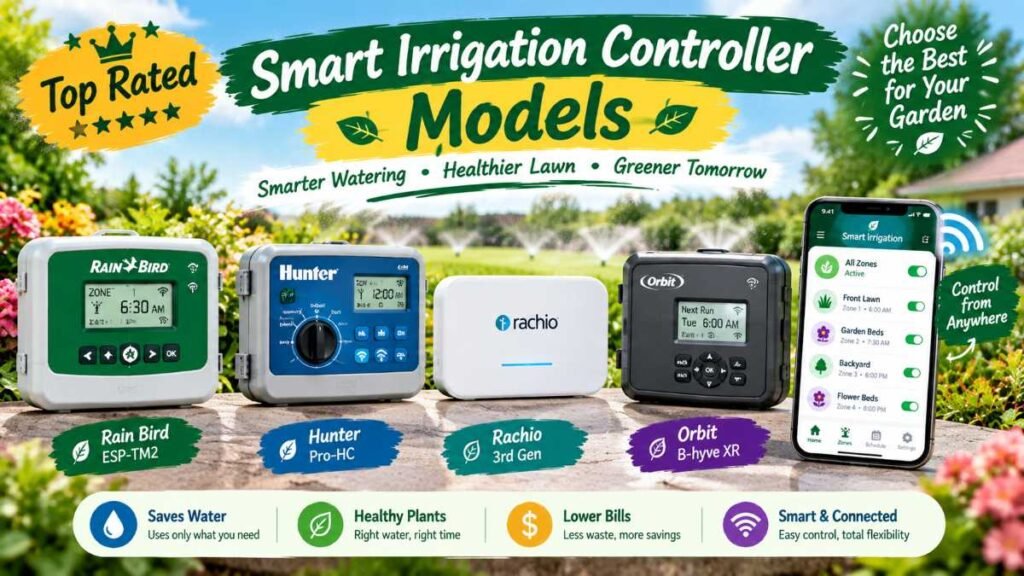
Choosing the right unit depends on your yard size, zone count, existing home ecosystem, and local water restrictions. Below is a breakdown of top-performing models in the U.S. market.
Rachio 3
- Supported Zones: Flexible setups for 4, 8, or 16 individual watering lines
- Climate Monitoring: Powered by Weather Intelligence Plus for precise hyper-local forecasting
- Smart Home Connectivity: Works seamlessly with Amazon Alexa, Google Assistant, and Apple HomeKit
- Standout Capability: Advanced predictive skip algorithms that prevent watering right before or during rain
- Ideal User Profile: Everyday smart home enthusiasts looking for simple DIY installation and full ecosystem harmony
Hunter Hydrawise Pro-C
- Supported Zones: Base unit starts smaller but scales smoothly up to 16 zones
- Climate Monitoring: Utilizes Predictive Watering technology based on live sensor updates
- Smart Home Connectivity: Compatible with Amazon Alexa and custom Control4 home automation systems
- Standout Capability: Built to support professional-grade flow meters for instant leak detection
- Ideal User Profile: Owners of extensive lawns, multi-zone gardens, or professional irrigation contractors
Crucial Features to Consider
When selecting your system, ensure it satisfies these technical requirements:
- Dual Wi-Fi Band Support: Opt for units supporting 2.4 GHz for maximum range through garage walls and exterior cladding.
- Flow Meter Compatibility: Connecting a flow meter alerts your smartphone immediately if a pipe bursts or a valve sticks open, preventing catastrophic yard erosion.
- Multi-Zone Customization: Every lawn section has distinct needs. Your smart irrigation controller must support custom soil profiles, slope angles, sun exposure parameters, and sprinkler head types (rotors vs. drip emitters).
- Local Rebate Eligibility: Many municipal water authorities across California, Texas, Arizona, and Florida offer rebates up to 100% of the purchase price for certified units.
For seamless connectivity, integrate your unit into a centralized platform like a best smart home hub to sync outdoor management with your broader home automation network.
Step-by-Step DIY Installation
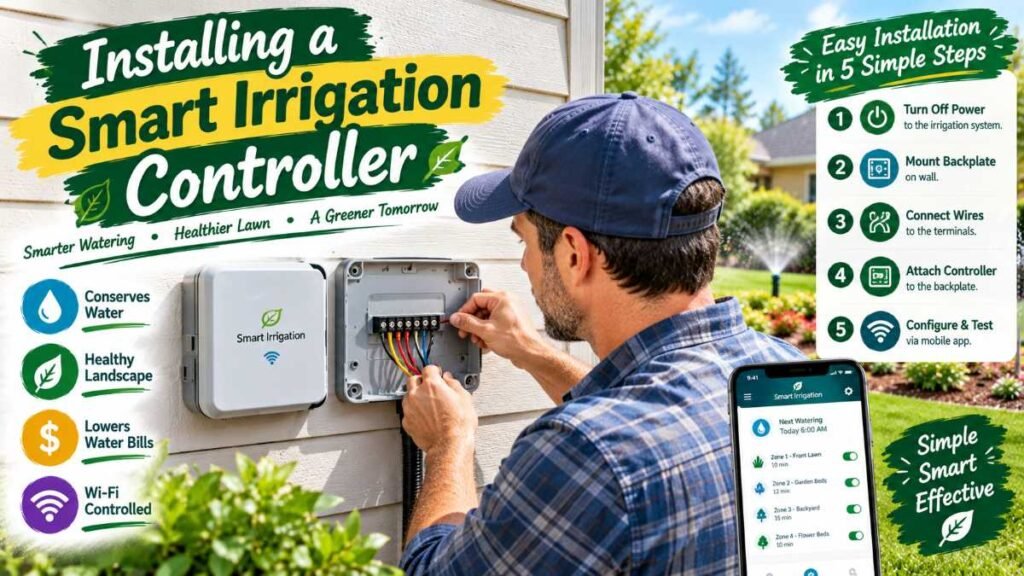
Many compatible installations can be completed as a DIY project, but installation time varies depending on the existing wiring and irrigation setup.
Safety Warning: If your setup requires running new electrical wiring or installing exterior power sources, consult a licensed professional to ensure compliance with local electrical codes.
Step | Phase | Action Required |
Step 1 | Preparation | Take a high-resolution photo of your legacy terminal setup before removing any wires. |
Step 2 | Power Down | Unplug the old power transformer and unmount the legacy timer from the wall. |
Step 3 | Mounting | Secure the new backplate housing into drywall or wall studs using wood screws or anchors. |
Step 4 | Wiring | Insert the Common (C) wire and individual zone wires into their corresponding terminal blocks. |
Step 5 | Calibration | Pair the app via Wi-Fi, map zones, specify soil/grass types, and execute a manual test run. |
- Safety First: Unplug your old controller’s power adapter from the outlet.
- Label Zone Wires: Take a clear photograph of the existing terminal block. Identify your Common wire (usually white) and numbered zone wires.
- Mount the Backplate: Secure the new smart unit base to the wall using drywall anchors or wood screws. If mounting outdoors, install a weatherproof enclosure.
- Connect Terminal Wires: Insert the Common wire into the ‘C’ terminal and matching zone wires into their corresponding ports (1, 2, 3, etc.).
- App Commissioning: Download the manufacturer app, pair the device over Wi-Fi, and configure zone properties (turf grass type, clay vs. sandy soil, shade levels).
If your installation requires running new outdoor power lines or low-voltage runs across exterior structures, review proper methods through an expert smart home installation guide to prevent electrical safety hazards.
Real-World Water and Financial Savings
According to the EPA, an average U.S. home equipped with an EPA WaterSense-labeled smart irrigation controller can save up to 15,000 gallons of water annually.
Actual financial savings will vary depending on your local utility rates, seasonal weather conditions, yard size, and how much outdoor water your property currently uses. In regions with higher water pricing or strict conservation surcharges, efficiency gains translate quickly into measurable monthly bill reductions.
Beyond utility bill reductions, precise moisture management protects expensive landscaping assets, prevents hardscape structural erosion, and complements other outdoor upgrades like outdoor kitchen ideas and specialized patio setups.
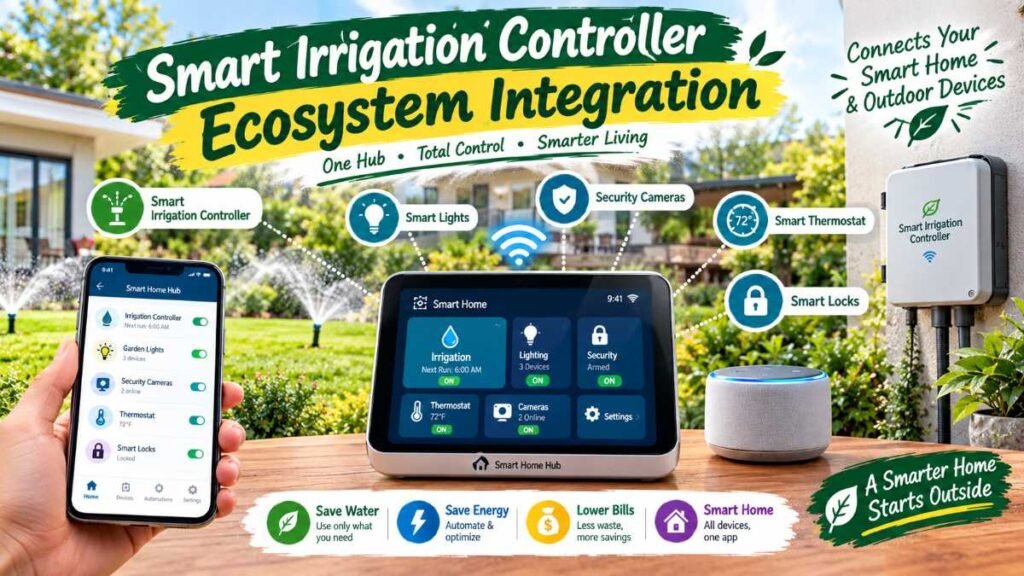
Smart Home Ecosystem Integration
A modern smart irrigation controller does not operate in isolation. It forms a critical line of defense in holistic home management.
- Security Integration: Syncing your irrigation system with outdoor motion sensors allows systems to deter wild animals or trespassers by triggering specific zone bursts.
- Freeze Protection: Cold snaps ruin expensive valves. Smart systems read local temperature trends and initiate auto-purge routines to prevent line ruptures.
- Home Security Ecosystems: Pair your system alongside a best smart doorbell to visually verify sprinkler head clearance, check for clogged nozzles, and ensure driveway zones aren’t spraying parked vehicles.
For complete control over outdoor living spaces, connect your irrigation setup into a broader ecosystem of best smart home devices for seamless management via voice or automation scripts.
Essential Indoor Smart Upgrades
While smart irrigation handles exterior grounds, applying automation principles indoors optimizes comfort, safety, and energy costs. Consider extending your home’s intelligence with these practical updates:
- HVAC Efficiency: Balance outdoor climate responses by pairing your yard controls with best smart thermostats to regulate indoor energy consumption year-round.
- Structural Upgrades: Protect your house envelope against weather damage by reviewing an updated basement waterproofing guide alongside exterior lawn drainage improvements.
- Power Security: Ensure critical smart hubs, Wi-Fi routers, and valve controllers stay online during regional storms by installing a comprehensive whole house surge protector.
Frequently Asked Questions
FAQ 1: Is a smart irrigation controller worth it?
Yes. Upgrading to a smart irrigation controller saves thousands of gallons of water annually, lowers utility bills, and keeps your turf healthy by adjusting schedules to real-time weather changes.
FAQ 2: How does a smart irrigation controller work?
It replaces traditional timers by connecting to local weather stations via Wi-Fi, automatically skipping cycles during rain, freeze conditions, or high wind events.
FAQ 3: Can I install a smart irrigation controller myself?
Most homeowners complete the DIY installation in under 30 minutes by swapping existing zone wires to the new unit using a simple app setup.
FAQ 4: Do smart irrigation controllers work with smart home hubs?
Yes, top models integrate seamlessly with Amazon Alexa, Google Assistant, and Apple HomeKit for easy voice control and central automation.
FAQ 5: Are there local utility rebates for smart irrigation controllers?
Many U.S. municipal water providers offer rebates covering up to 100% of the cost for EPA WaterSense-labeled devices.
Take Action for a Better Lawn
Stop overpaying for wasted water and let smart technology handle your lawn’s moisture needs automatically. Upgrading to a smart irrigation controller saves money, conserves precious water resources, and helps maintain a healthy, vibrant yard with less manual effort throughout the year. Explore your local utility rebate options, pick the controller that fits your ecosystem, and upgrade your system today for a greener lawn and lower utility bills.
About the Author
Dambar C.Rajbanshi is a smart home automation specialist with over five years of hands-on experience optimizing outdoor living systems, energy-efficient tech, and eco-friendly lawn care. He tests and reviews real-world smart technology to help U.S. homeowners lower utility bills, eliminate waste, and build fully automated home ecosystems.