
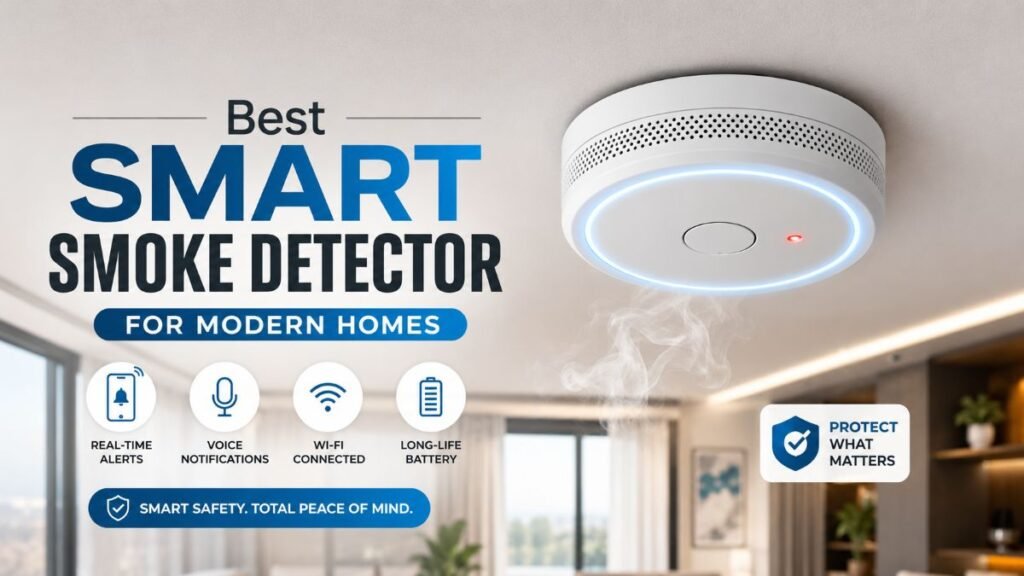
A smoke alarm is easy to ignore—until it suddenly becomes the most important device in your home. One late-night chirp is annoying; actual smoke at 2 a.m. is a different story. So, which smart smoke detector is best for an American home when every second can matter? The answer isn’t simply the alarm with the flashiest app. Detection, certification, placement, power, and reliable interconnection come first. Here’s what smart-home shoppers should know before choosing one.
Put Life-Safety Features Before Smart Features
A Wi-Fi connection doesn’t make a smoke alarm safer by itself. Its most important job is still simple: detect danger and give people a warning they can hear. Smart models can add useful extras such as phone notifications, battery warnings, device-health checks, voice alerts, testing reminders, and smart-home integration. Those features can be genuinely helpful, especially when nobody is home.
But when comparing alarms, start with the fundamentals:
Feature | Why It Matters | Priority |
Smoke detection | Provides the core fire warning | Essential |
Safety certification | Helps verify applicable safety requirements | Essential |
Interconnection | Allows compatible alarms to warn together | Very important |
CO detection | Adds carbon-monoxide protection | Important |
Reliable power | Keeps the alarm ready to work | Essential |
Smartphone alerts | Adds awareness when you’re away | Useful |
Test and hush controls | Makes routine use easier | Useful |
Smart-home integration | Adds convenience to connected homes | Optional |
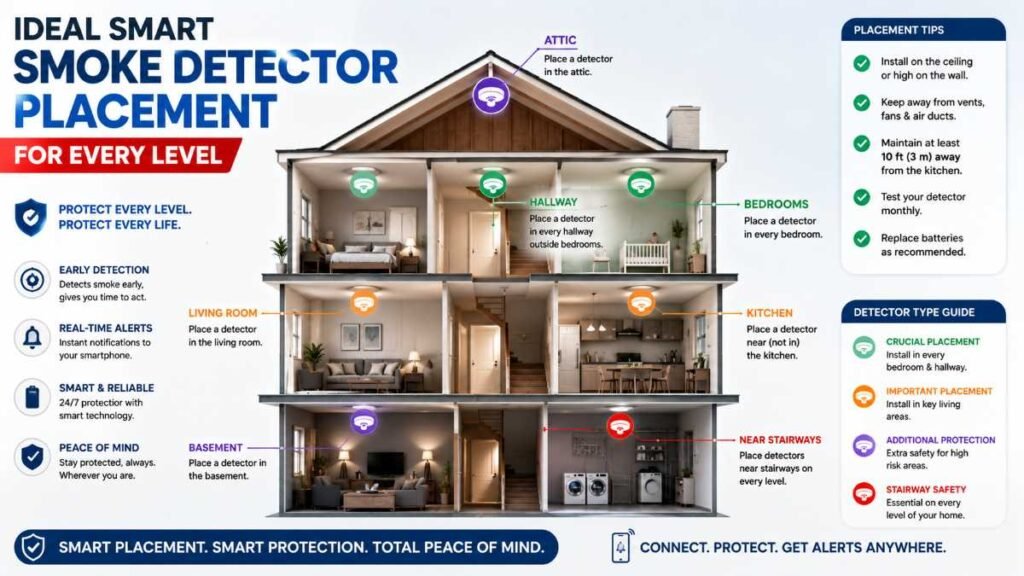
The U.S. Fire Administration’s smoke-alarm guidance recommends smoke alarms inside every bedroom, outside each separate sleeping area, and on every level of the home, including the basement. It also recommends interconnected alarms.
If you’re building a wider connected-home system, our smart home installation guide can help you think through device placement and compatibility. The simple rule: buy the safety system first and the smart features second.
Understand the Smoke-Sensing Technology
Before comparing apps, voice assistants, or subscription features, look at what is actually doing the detecting inside the alarm.
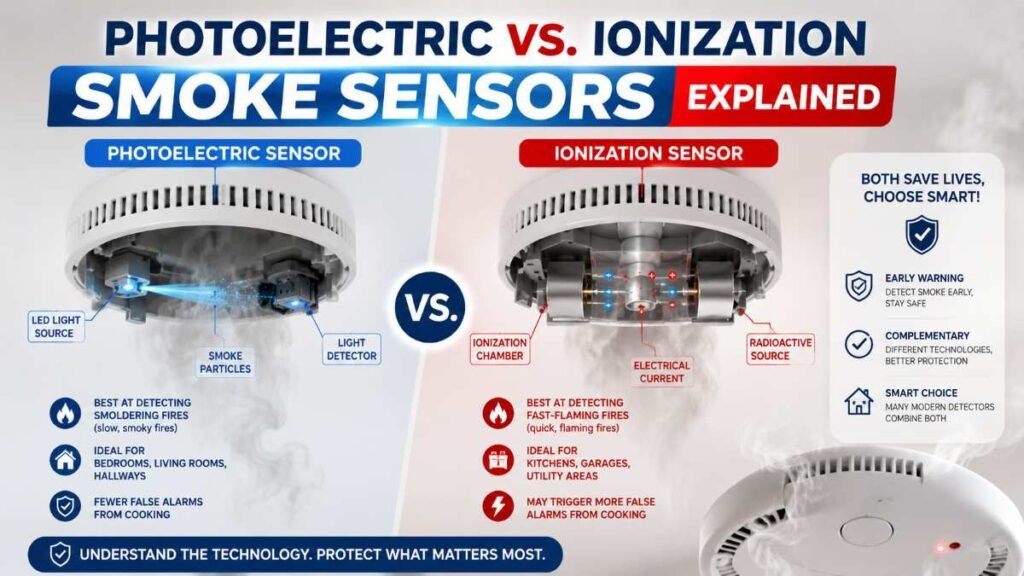
Residential smoke alarms commonly use photoelectric or ionization sensing. They can respond differently depending on how a fire develops.
Photoelectric Smoke Detection
Photoelectric alarms use a light-based sensing method and are generally more responsive to slow, smoldering fires.
Think about a couch cushion, mattress, or piece of furniture beginning to smolder. Smoke may build before you ever see a large flame.
That’s where this type of detection can be particularly useful.
Ionization Smoke Detection
Ionization alarms use an electrical sensing chamber and are generally more responsive to rapidly developing flaming fires.
The important point is that homeowners cannot predict what kind of fire might start. That’s why the USFA recommends that homes use both ionization and photoelectric alarms, or dual-sensor alarms containing both technologies.
When deciding which smart smoke detector is best, don’t let the word “smart” distract you from the technology responsible for detecting the smoke.
Which Smart Features Are Actually Worth Paying For?
Smart technology is most useful when it solves a problem you might actually have.
Remote Notifications
You’re at work. You’re away for the weekend. Maybe you’re simply out picking up groceries.
If a compatible alarm detects smoke or CO, a phone notification can give you an important extra layer of awareness.
But your phone should never be considered the primary alarm. Wi-Fi can fail, the internet can go down, and a phone can be switched off or out of battery.
The physical alarm still has to do its job.
Interconnected Alarms
For a larger home, interconnection may be more valuable than a sophisticated app.
Imagine smoke being detected downstairs while everyone is asleep upstairs. With compatible interconnected alarms, the warning can reach the other parts of the home as well.
That’s why interconnection deserves serious attention when comparing which smart smoke detector is best.
Just don’t assume that wireless means universal compatibility. Interconnection normally depends on the manufacturer’s supported models and system. Check the compatibility information before replacing one alarm in an existing network.
App and Voice Controls
A useful app may provide:
- Smoke and CO notifications
- Battery or power warnings
- Device-health information
- Testing reminders
- Multiple-alarm monitoring
- Voice notifications on supported systems
If you’re connecting several devices around the house, our smart home automation guide can help you think about the broader ecosystem while keeping life-safety devices at the top of the priority list.
Placement Can Matter More Than the Brand
Even an excellent smoke alarm can’t protect a home properly if it’s installed in the wrong place.
USFA guidance recommends smoke alarms:
- Inside every bedroom
- Outside each separate sleeping area
- On every level of the home
- In the basement
- On the ceiling or high on a wall, following manufacturer instructions
The exact location should always follow the product instructions and applicable local fire or building requirements.
Keep Kitchen Placement in Mind
Cooking naturally produces heat, steam, smoke, and airborne particles. Put an alarm too close to the cooking area and nuisance alarms can quickly become frustrating.
The important part is not to solve that frustration by removing the battery.
USFA specifically advises against taking the battery out when an alarm sounds during cooking or heavy steam. Instead, use the hush function when appropriate, clear the air, and consider whether the alarm needs to be moved farther from the source.
A Simple Placement Check
Location | Main Consideration |
Bedrooms | Smoke alarm coverage |
Outside sleeping areas | Early warning |
Every floor | Whole-home coverage |
Basement | Appropriate coverage |
Kitchen | Avoid nuisance-alarm locations |
Bathroom | Keep away from heavy steam |
Garage | Follow product and local requirements |
Placement is one reason there isn’t a single winner for every home when asking which smart smoke detector is best.
The right alarm still needs the right location.
Battery or Hardwired: Match the Existing Home
Power isn’t the feature that gets the most attention on a product page, but it matters every day.
Battery-Powered Alarms
Battery-powered models are often convenient in existing homes because they usually don’t require new electrical wiring.
They’re also practical for renters and finished rooms where installing new wiring would be disruptive.
The trade-off is straightforward: someone still needs to make sure the power source remains reliable.
Hardwired Alarms
Hardwired alarms connect to the home’s electrical system and commonly have battery backup.
They make particular sense when you’re replacing an existing compatible hardwired system or installing alarms during new construction.
For hardwired installations, use a qualified electrician where required. USFA states that only qualified electricians should install hardwired smoke alarms.
Sealed Long-Life Batteries
Sealed 10-year batteries can make ownership easier because there is less routine battery changing.
But the alarm itself still has a service life.
USFA says smoke alarms should be replaced 10 years from the manufacture date.
So check the date printed on the alarm rather than assuming a long-life battery makes the device permanent.
Choose the Alarm Around Your Home
There isn’t one perfect alarm for every property.
A renter may care most about easy installation. A two-story home may benefit more from interconnection. A home with fuel-burning appliances may need particular attention to carbon-monoxide protection.
Home Situation | What to Prioritize |
Apartment or rental | Simple installation + dependable power |
Multi-story home | Coverage + interconnection |
Existing hardwired system | Compatible replacement |
Home with fuel-burning appliances | Smoke + CO protection |
Large connected home | Whole-home alerts + compatibility |
Basic setup | Reliable alarm + easy maintenance |
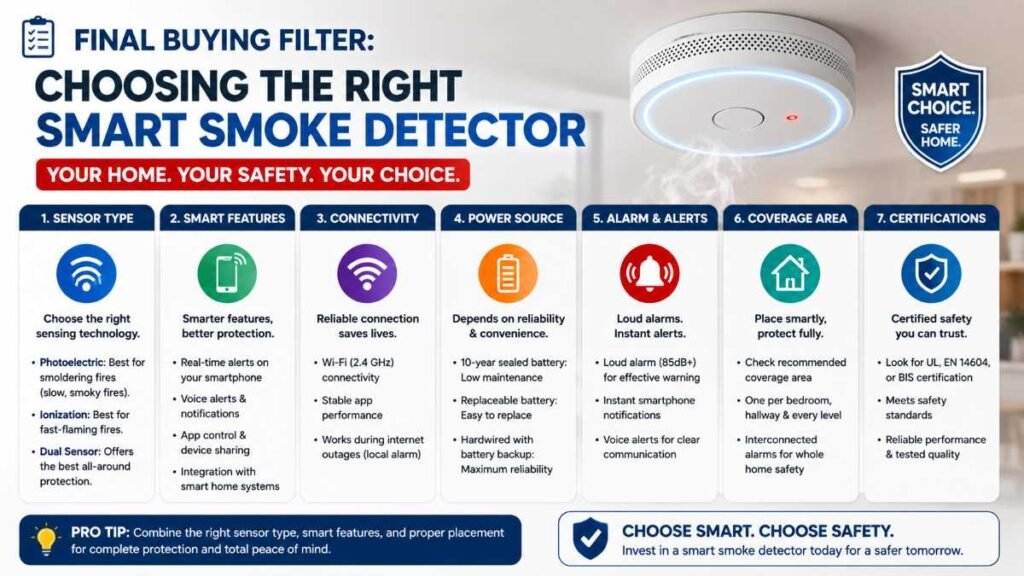
A practical buying filter is:
Detection → Certification → Placement → Interconnection → Power → CO Protection → Smart Features
That order keeps marketing from making the decision for you.
Don’t Treat CO Protection as an Afterthought
Carbon monoxide is invisible and odorless, which makes a working CO alarm especially important in homes with potential sources such as fuel-burning appliances, fireplaces, or attached garages.
The CPSC’s CO alarm guidance recommends CO alarms on each level of the home and outside sleeping areas. It also notes that combination smoke and CO alarms are available.
If you’re building a wider connected-home setup, our best smart home devices guide can help with the bigger picture. Just remember that a smoke or CO alarm is a life-safety device first.
Maintenance Still Determines Reliability
A smart smoke alarm is still a smoke alarm.
An app can tell you that the device is connected, but it can’t replace testing the physical alarm.
USFA recommends testing smoke alarms monthly and replacing them according to their service-life guidance. For standard battery-powered and hardwired alarms, USFA says the entire alarm should generally be replaced every 10 years.
CPSC also recommends monthly testing and regular battery maintenance.
A simple routine is enough:
Maintenance Task | Recommended Approach |
Test alarm | Monthly |
Check power | Regularly |
Inspect device | Follow manufacturer instructions |
Review app alerts | Periodically |
Replace batteries | Follow product guidance |
Replace alarm | Follow end-of-life guidance |
Pay attention to unexplained chirping, warning lights, or end-of-life alerts. A low-battery warning isn’t necessarily the same thing as an alarm reaching the end of its service life.
And never disable an alarm simply because it is annoying.
If cooking or steam repeatedly triggers it, fix the placement issue rather than removing the power source.
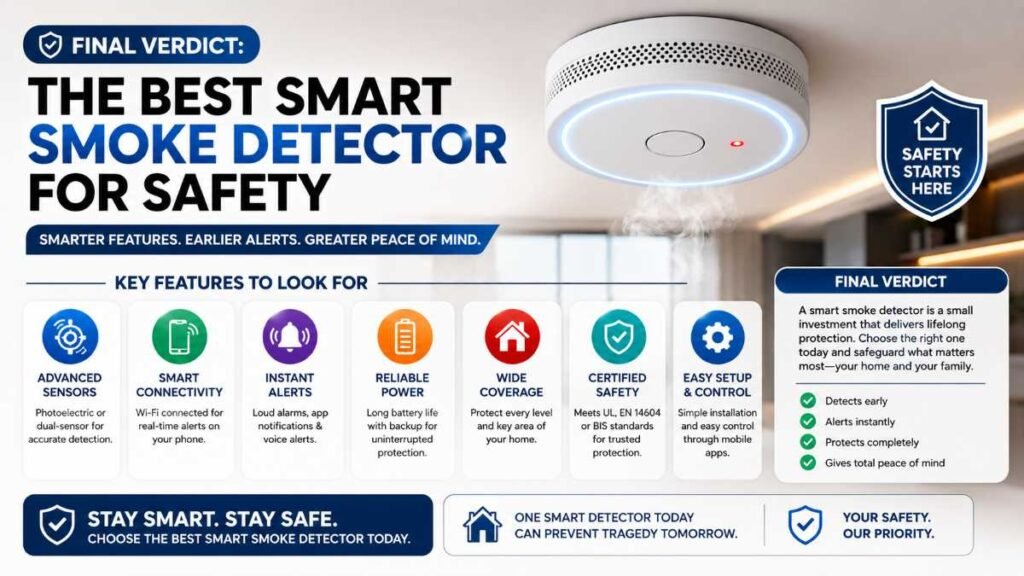
Final Verdict: What Should You Buy?
So, which smart smoke detector is best?
For most homes, choose the one that gets the fundamentals right: reliable detection, proper placement, dependable power, compatible interconnection, and appropriate CO protection. Then choose the smart features that actually make your life easier.
The smartest smoke alarm isn’t the one with the biggest feature list. It’s the one that’s ready when your home needs it.
Safety Note
This article provides general home-safety information and isn’t a substitute for professional fire-code, electrical, or installation advice. Follow the manufacturer’s instructions and applicable local requirements. For hardwired installations, use a qualified professional where required.
Author By: Dambar C. Rajbanshi About: A renovation strategist and home improvement enthusiast. Dambar specializes in budget-smart planning and functional kitchen design. He is dedicated to helping homeowners create spaces that perfectly balance beauty and practicality