
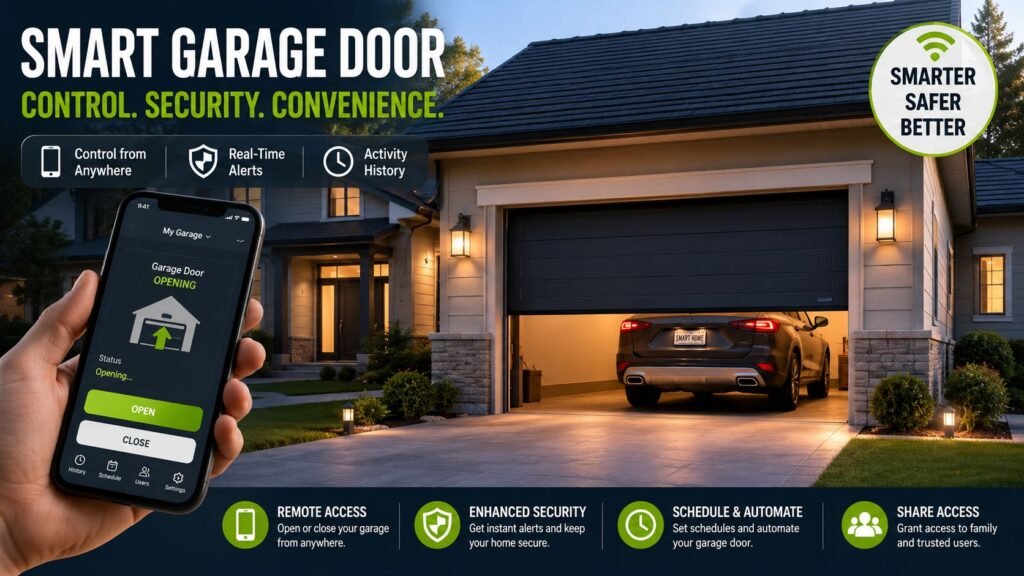
Did you accidentally leave your garage wide open to the neighborhood while rushing out this morning?
Upgrading to a smart garage door opener turns your property’s largest moving barrier into a secure, fully monitored access point. Whether you are building a custom home, replacing a rattling legacy unit, or syncing automated routines with your smart home installation, this guide covers everything U.S. homeowners need to know.
Why Your Traditional Garage Door Opener Needs an Upgrade
Traditional openers lack real-time accountability. If someone leaves the door open at midday, your tools, vehicles, and direct interior home access remain completely vulnerable.
Modern automation solves this with live status logs, instant push notifications, and automated closing rules. If your garage sits attached to your living quarters, ensuring your electrical network can handle modern smart tech safely is critical. Pairing these system upgrades with a whole house surge protector safeguards your sensitive smart electronics against regional power fluctuations and lightning strikes.
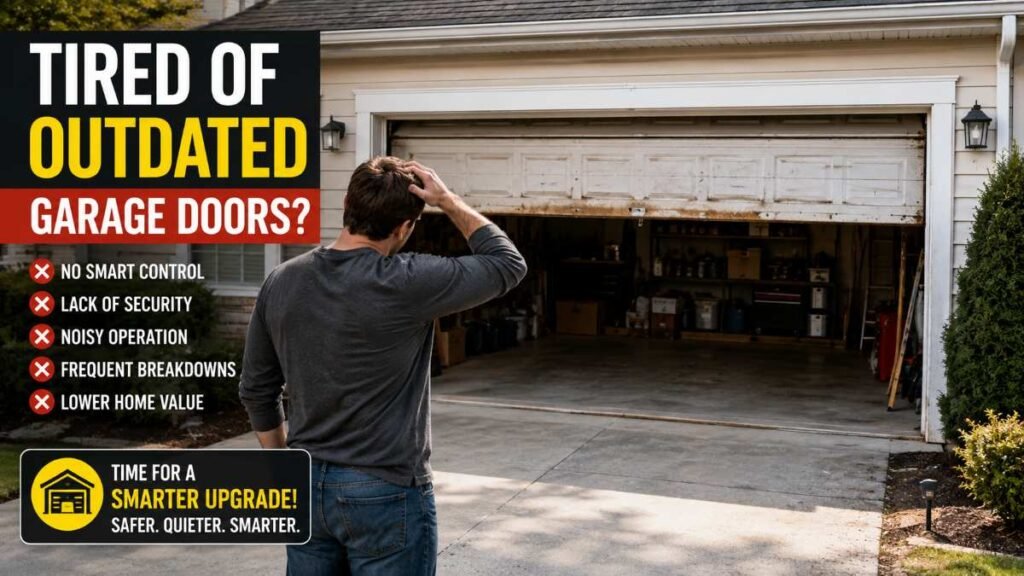
Key Benefits of Going Smart: Security, Convenience, and Control
Transitioning to a connected garage system solves everyday friction points with tangible daily benefits:
- Remote Access Anywhere: Forgot your keys or need to let a service provider in while you are across town? Open or close the door directly from your mobile app.
- Secure Package Delivery: Trusted delivery services allow drivers to drop boxes securely inside your garage, stopping porch piracy.
- Geofencing Automation: Set your system to open as your vehicle pulls up the driveway and close once you depart.
Real-Time Alerts: Receive instant push notifications if the door stays open past a custom time threshold.
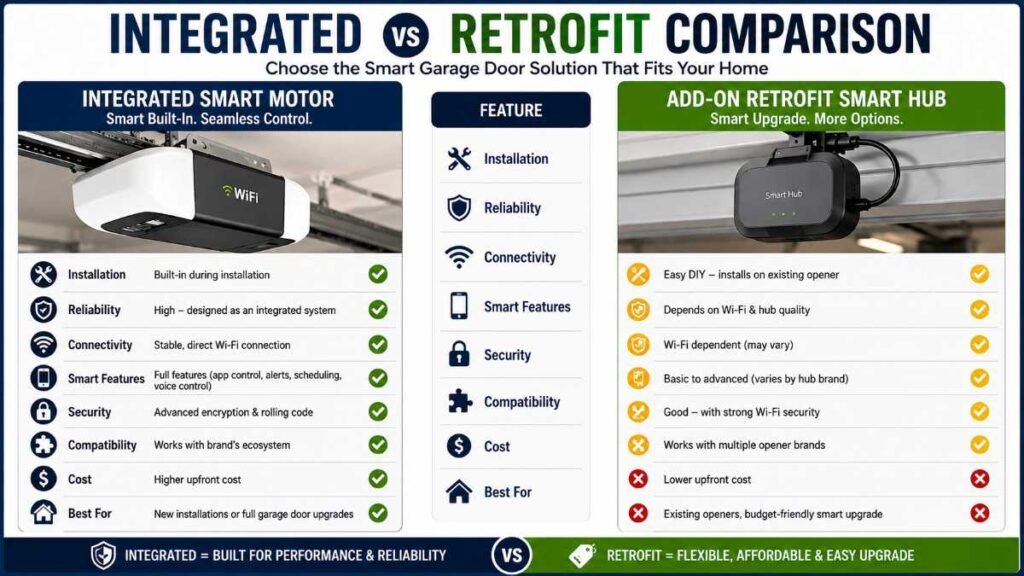
Full Feature Comparison: Built-In Smart Motors vs. Add-On Retrofit Controllers
Choosing the right system depends on whether you are replacing an entire motorized assembly or upgrading an existing unit.
Feature / Metric | Integrated Smart Opener (e.g., Chamberlain / LiftMaster) | Retrofit Smart Controller (e.g., Meross / Tailwind) |
Average Cost | $250 – $380 | $30 – $70 |
Installation Time | 2 to 4 hours (full mechanical swap) | 15 to 30 minutes (sensor and wire tap) |
Hardware & Operating Mechanism | Complete system replacement featuring modern belt or chain drive motors designed for minimal noise | Utilizes your existing pre-installed garage door motor and mechanical tracks |
Battery Backup | Included in specific compliance models | None (limited by legacy motor specs) |
Extra Perks | Integrated LED lighting, built-in cameras, advanced encryption | Low cost, high compatibility with older legacy openers |
Understanding U.S. Safety Regulations: UL 325 and State Mandates
When modifying home access mechanisms in the United States, strict safety compliance protects households from mechanical injury.
- UL 325 Safety Standard: According to standards published by Underwriters Laboratories (UL), UL 325 addresses safety requirements for residential garage door operators, including entrapment protection. Always follow the opener manufacturer’s exact installation instructions for the placement and rigorous testing of photo-eye safety sensors.
- Battery Backup Compliance: Under state regulations such as California Senate Bill 969 (detailed via the California Legislative Information portal), specific residential installations and replacements involving automatic garage door operators require built-in battery backup functionality to ensure emergency egress during grid power outages.
For broader household safety, monitoring vital indoor hazards is just as important as securing your entry thresholds. Reviewing guidelines on which smart smoke detector is best helps keep your family comprehensively protected.
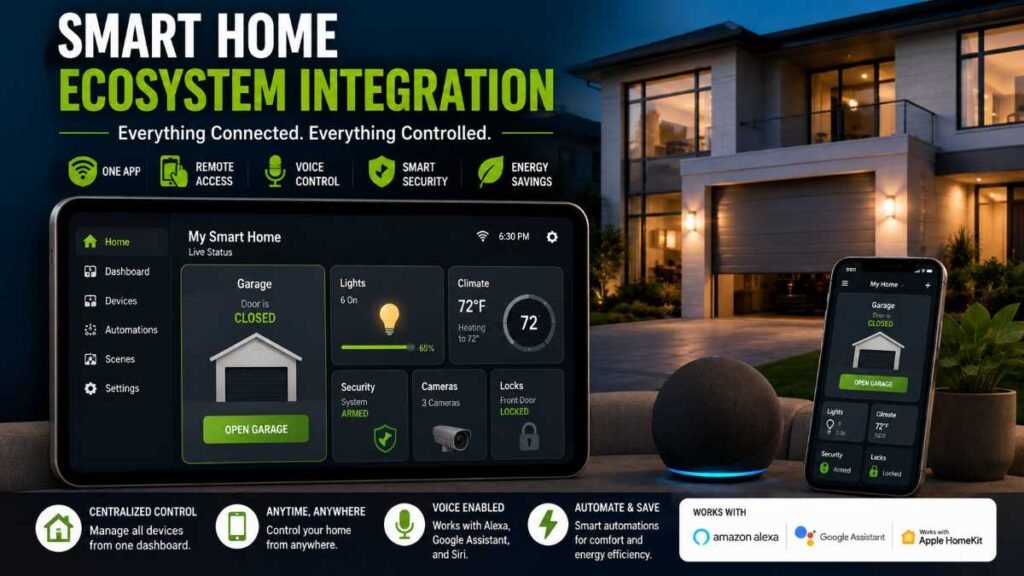
How Smart Garage Tech Integrates with Modern Home Automation
A smart garage is rarely an isolated gadget; it serves as a central pillar of total home ecosystem control.
When integrated correctly, your garage door can trigger other smart routines across the house. For instance, arriving home late can automatically disarm your indoor security system, turn on exterior pathway lights, and adjust your climate control via platforms like Apple HomeKit, Google Home, or Amazon Alexa. To explore how to tie these disparate smart devices into a cohesive, secure network, consult expert resources on smart home automation.
Step-by-Step Guide to Installing a Smart Garage Door Opener
Whether you purchase a complete unit or install a controller add-on, follow these technical steps for a clean setup:
- Step 1: Test Your Current Door Balance. Disconnect your old unit and manually lift the door halfway. If the door does not stay balanced or moves unexpectedly, stop the installation and have a qualified garage-door technician inspect the spring system. Never attempt to adjust torsion springs yourself unless you are properly trained.
- Step 2: Mount the Rail and Motor Header. Securely anchor the header bracket to the wall studs above the door opening. Secure the hanging brackets to ceiling joists to eliminate vibration and noise.
- Step 3: Align Safety Photo Eyes. Mount the infrared sensors according to local building guidelines and manufacturer specifications. Ensure the lenses are clean and the indicator lights show a solid connection without obstruction.
- Step 4: Connect Wi-Fi and App Pairing. Download the manufacturer’s official app, follow the on-screen prompts to sync your secure home Wi-Fi network, and test the remote open/close cycle twice.
Pros and Cons of Smart Garage Door Systems
Pros
- Enhanced Home Security: Check door status from anywhere in the world, preventing accidental overnight exposure.
- User Permission Sharing: Easily assign temporary virtual keys to dog walkers, family members, or service contractors without handing out physical keys.
- Quiet Operation: Modern DC-powered belt-drive units eliminate the loud rattling noise common in older homes.
Cons
- Wi-Fi Dependency: If your home router drops offline or power cuts out without an active battery backup, smart remote features become temporarily unavailable.
- App Ecosystem Restrictions: Some popular brands charge subscription fees or limit direct platform integrations.
- Upfront Expense: High-end models with integrated security cameras and battery backups cost significantly more than standard legacy openers.
Smart Garage Door Opener Security: Encryption, Wi-Fi, and Account Protection
When transitioning your home to a modern infrastructure, cybersecurity is just as vital as physical mechanical durability. A smart garage door opener acts as a direct digital bridge into your private property, making it an attractive target if configured incorrectly. Traditional legacy remote controls often relied on fixed-code radio frequencies that could be captured using code-interception tools under certain conditions.
Depending on the model and ecosystem, modern garage-door systems may use rolling-code technology, encrypted communications, secure authentication, or a combination of these protections paired with multi-factor authentication inside companion mobile applications.
To safeguard your automated home network from unauthorized remote intrusions, always ensure your home Wi-Fi router uses WPA3 or WPA2-AES security, enable two-factor authentication on your mobile app accounts, and regularly update your device firmware to patch emerging vulnerabilities.
Frequently Asked Questions
Why should U.S. homeowners switch to a smart garage door opener?
Leaving your garage unlocked exposes your home to sudden theft. Upgrading to a modern smart garage door opener costs between $30 for add-on controllers and $250+ for heavy-duty motor kits. It gives you instant phone alerts, remote monitoring, and total peace of mind when you’re away.
Can you convert an old Chamberlain or LiftMaster into a smart opener?
Yes, you don’t need to strip out your whole setup. Most legacy Chamberlain, Genie, or LiftMaster motors work seamlessly with budget retrofit kits like Meross or Tailwind. Setup takes under 30 minutes with basic wiring.
What features make the best smart garage door opener in 2026?
The ultimate smart garage door opener combines ultra-quiet belt-drive performance, built-in HD security cameras, encrypted Wi-Fi, and compliance battery backups for emergency power outages.
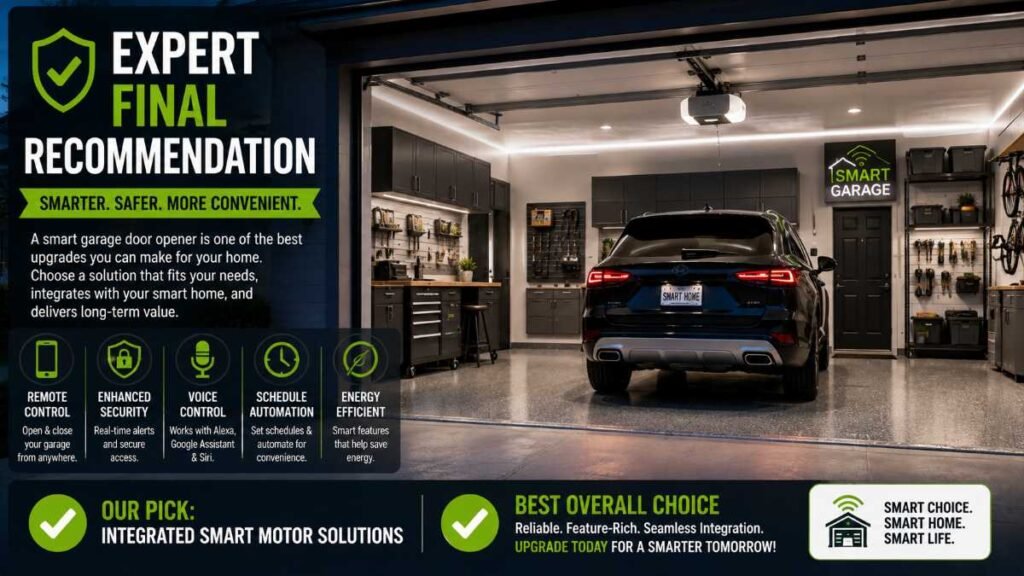
Expert Final Recommendation
Upgrading to a smart garage door opener is one of the highest-return smart home investments you can make for daily convenience and structural security. If you are starting from scratch, opt for an integrated belt-drive model with a battery backup and bright LED lighting to drastically cut down on noise and maintenance. If your current motor works perfectly fine, save money by installing a reliable retrofit smart controller and enjoy total control over your home’s main threshold right from your smartphone.
Author By: Dambar C. Rajbanshi About: A renovation strategist and home improvement enthusiast. Dambar specializes in budget-smart planning and functional kitchen design. He is dedicated to helping homeowners create spaces that perfectly balance beauty and practicality