

Struggling to decide between two popular countertop cooking appliances? Both promise crispy, evenly cooked meals using rapid hot-air circulation, but their capacity, energy draw, and cooking speeds differ drastically. An air fryer is essentially a compact convection-style cooker, but not every convection oven behaves exactly like an air fryer. Choosing between an air fryer vs convection oven comes down to your household size, meal prep habits, and available counter space. This expert-backed comparison breaks down heating mechanisms, energy costs, and real-world performance to help you make the right investment.
How We Compare These Appliances
To evaluate these appliances fairly, our team analyzes performance across standardized kitchen benchmarks rather than relying on marketing claims alone.
OUR CORE COMPARISON BENCHMARKS
| [Preheat Duration] ===> Speed to target cooking temperature |
| [Crisping Capability] ===> Texture on frozen fries & chicken wings|
| [Usable Capacity] ===> Single-layer area vs. total volume |
| [Energy Efficiency] ===> Rated wattage & estimated electricity |
| [Maintenance Ease] ===> Clean-up time & ease of removing residue|
Evaluating these core factors helps homeowners design efficient food prep zones, much like choosing proper layouts when reviewing small kitchen island ideas or selecting durable surfaces like quartz vs granite countertops.

Heating Mechanics: Concentrated Velocity vs. Volume Airflow
While both appliances rely on convection technology—using fans to circulate hot air—their physical designs deliver noticeably different cooking environments.
- Air Fryer Mechanics: Perched within a tight cooking chamber, top-mounted high-speed fans rapidly circulate heat close to food baskets. This intense airflow significantly accelerates surface moisture evaporation, producing a deep-fried crunch with minimal oil.
- Convection Oven Mechanics: Featuring larger interior cavities, convection toaster ovens distribute heat across a wider space using top and bottom heating elements. While airflow velocity varies by model, this design promotes steady, even thermal distribution across cooking racks.
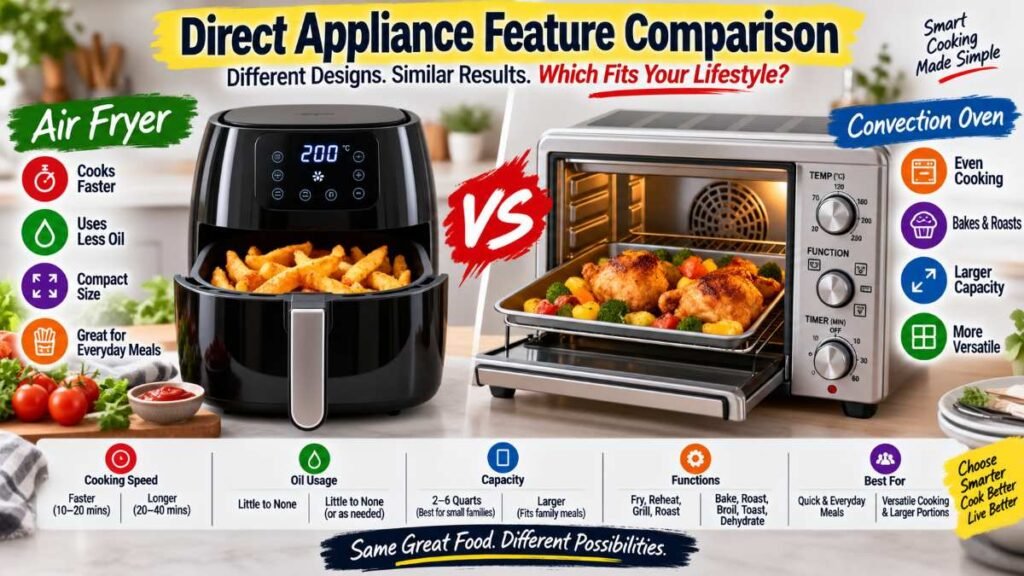
Air Fryer vs Convection Oven: Direct Comparison
Performance Factor | Compact Air Fryer Units | Countertop Convection Ovens | Better Choice For |
Airflow Concentration | High-velocity focused heat | Broad circulation across cavity | Air Fryer (Crisping) |
Preheat Duration | Rapid (Little to no preheat needed) | 8 to 12 minutes | Air Fryer (Speed) |
Cooking Capacity | 2 to 7 Quarts (Ideal for 1–3 people) | 20 to 30+ Quarts (Ideal for families) | Convection Oven (Volume) |
Baking Versatility | Limited (Best for quick crisping) | High (Fits quarter-sheet pans & 12″ pizza) | Convection Oven (Baking) |
Cleaning Effort | Pull-out basket washes in minutes | Crumb tray & rack scrubbing needed | Air Fryer (Clean-up) |
Cooking Speed, Preheating, and Thermal Efficiency
If saving time on weeknight dinners is your top priority, internal cavity size plays a decisive role.
Air fryers generally require little or no preheating compared with conventional ovens because the heating element sits directly above the compact basket. A batch of frozen chicken wings cooks in under 15 minutes without heating up your entire kitchen.
Conversely, countertop convection ovens take longer to reach preheat targets due to their larger air volume. However, larger countertop convection ovens can provide stable heat for roasting whole chickens, casseroles, or baking larger batches, depending on their rack capacity. For verified safety guidelines on safe internal cooking temperatures, consult the USDA Safe Minimum Internal Temperature Chart.
Transparent Energy Consumption & Operating Cost Breakdown
To evaluate electricity consumption accurately, you can estimate the running cost for any appliance using this standard energy formula:
For example, a 1,500-watt air fryer running for 30 minutes (0.5 hours) at an assumed electricity rate of $0.15/kWh costs about $0.11 to run.
Operating Parameter | Compact Air Fryer | Countertop Convection Oven |
Average Rated Wattage | 1,500 Watts | 1,800 Watts |
Estimated 30-Min Cook Cost* | ~$0.11 USD | ~$0.14 USD |
Kitchen Thermal Buildup | Low | Moderate |
*Based on an illustrative electricity rate of $0.15/kWh and full-rated power draw; actual costs vary by geographic location, state utility rates, specific appliance wattage, and internal thermostat duty cycling.
Because air fryers complete smaller meal portions in shorter timeframes, evaluating an air fryer vs convection oven often shows lower overall kilowatt-hour consumption for compact units. Managing high-wattage kitchen appliances works alongside broader home efficiency strategies, such as setting up best smart thermostats or installing energy efficient windows to keep utility bills low.
Capacity, Footprint, and Countertop Ergonomics
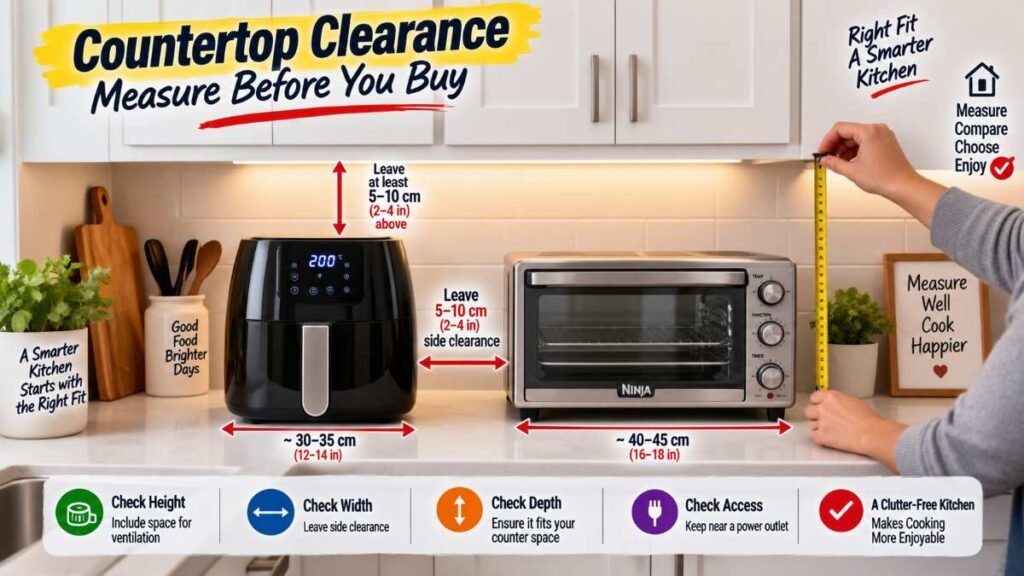
Before buying, measure your available counter clearance and storage cabinets carefully.
Basket Air Fryers
- Pros: Compact footprint, easy drawer removal, removable parts wash quickly.
- Cons: Limited single-layer surface area; overcrowding leads to soggy food.
Countertop Convection Ovens
- Pros: Accommodates quarter-sheet pans, 12-inch pizzas, and casserole dishes.
- Cons: Takes up significant counter space and requires dedicated clearance under upper cabinets.
For appliance placement and clearance requirements, always follow the manufacturer’s installation instructions and applicable local electrical and building codes. For general home appliance electrical safety standards, refer to safety guidance from the National Electrical Code (NEC).
Cleaning, Maintenance, and Long-Term Durability
Maintaining non-stick coatings and interior walls requires distinct cleaning routines for each appliance style.
- Air Fryer Care: Removable drawers and crisping plates wash easily in warm soapy water. Avoiding aerosol oil sprays prevents gummy residue buildup that degrades non-stick surfaces. For step-by-step non-stick restoration advice, read our detailed guide on how to clean an air fryer.
- Convection Oven Care: For convection ovens, remove crumbs regularly and clean grease from interior walls according to the manufacturer’s instructions. Avoid applying cleaners directly to heating elements unless the manufacturer specifically permits it. To see top-rated models with easy-clean interior walls, explore our roundups of the best air fryers.
Which Appliance Should You Buy? (Quick Verdict Matrix)
Evaluating an air fryer vs convection oven comes down to matching your household’s daily cooking priorities with the right appliance strengths.
If Your Priority Is… | Better Appliance Choice | Reason |
Maximum Crunch & Crispiness | Air Fryer | Concentrated airflow speeds up surface crisping |
Quick Weeknight Meals (1–2 People) | Air Fryer | Reduced preheating wait time accelerates cooking |
Preparing Large Casseroles & Whole Pizzas | Cooking Family-Sized Trays & Pizzas | Baking Multi-Serving Meals & Large Pizzas |
Large Family Meal Prep | Convection Oven | Multi-rack design allows batch cooking |
Easy Sink Clean-Up | Air Fryer | Removable non-stick drawers wash quickly |
Tight Countertop Footprint | Air Fryer | Taller, narrower profiles save counter space |
Actionable Recommendation
If speed, quick cleanup, and maximum crunch for small portions matter most, choose an air fryer. If you regularly cook multi-rack meals, bake casseroles, or feed a large family, invest in a versatile countertop convection oven.
To maximize your kitchen performance:
- Immediate Step: Measure your available height and depth clearance between your countertop and upper cabinets before ordering.
- Optimization: Pair your chosen appliance with precise thermal settings by checking our verified air fryer cooking times chart to eliminate guesswork and enjoy perfectly cooked meals every time.

Frequently Asked Questions
Q1: Which is better, an air fryer or convection oven?
When comparing an air fryer vs convection oven, an air fryer wins for fast, extra-crispy single meals, while a convection oven is better for batch cooking.
Q2: Which is better, a convection microwave or an air fryer?
Evaluating an air fryer vs convection oven style microwave comes down to crispiness; dedicated air fryers circulate heat much faster for superior texture.
Q3: What are the disadvantages of convection ovens?
In an air fryer vs convection oven comparison, convection ovens take longer to preheat, consume slightly more electricity, and take up significantly more counter space.
Q4: Can I air fry in a convection oven?
Yes, but in any air fryer vs convection oven analysis, convection ovens lack the concentrated airflow velocity needed to make food as deeply crispy.
Editorial Safety & Care Note
Appliance designs, power ratings, and tray coatings vary across brands. Always consult your specific model’s user manual before using heavy cleaners or testing maximum temperature limits. Never leave high-wattage countertop appliances running unattended, and maintain proper clearance from wall outlets and upper cabinets to ensure safe heat dissipation.
About the Author
Dambar C.Rajbanshi is a home appliance enthusiast, technology researcher, and the founder of Smart Home Zenith. He tests kitchen gear, smart home tech, and energy-efficient appliances to deliver practical, real-world maintenance guides that help homeowners save time, lower utility bills, and extend equipment lifespan.