
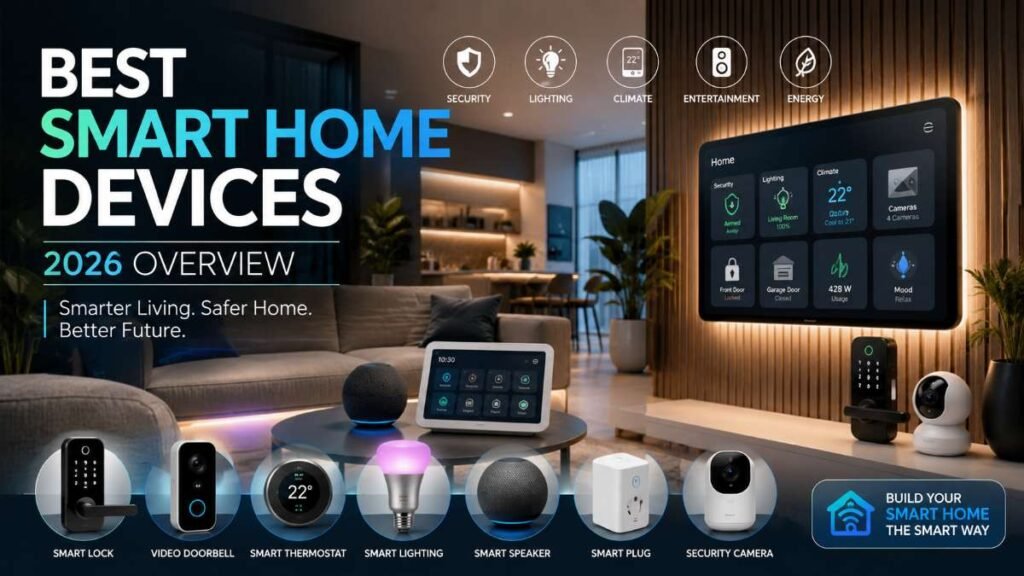
Ever spent forty minutes wandering around your house in the dark, trying to figure out which remote controls which light bulb, or why your front door lock suddenly refuses to recognize your thumbprint? Let’s be real—piecing together a connected house can feel like a frustrating tech nightmare if you buy the wrong ecosystem. Choosing the right best smart home devices keeps your lights, locks, cameras, and thermostats communicating smoothly instead of arguing in digital silence.
Securing Your Perimeter: The Best Front Yard Tech
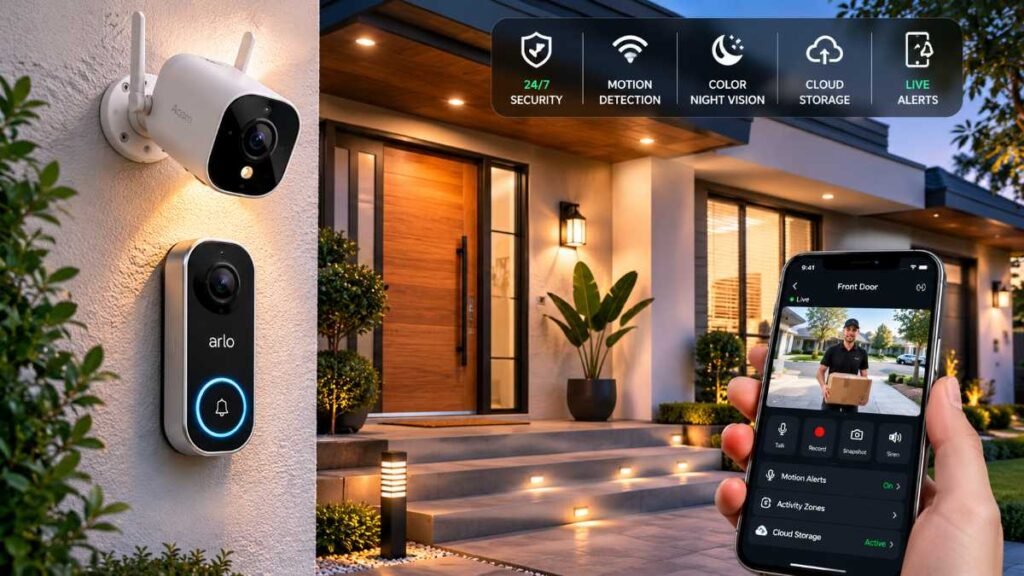
Before you even step foot through your front door, your house should be working quietly to keep you safe. Setting up a reliable exterior security matrix is the single most important step for modern property management. Dealing with package thefts and blind spots requires hardware built for real-world weather and motion tracking.
- Aqara Camera Hub G5 Pro: This weather-resistant camera delivers sharp video and color night vision while doubling as a local hub supporting Matter, Thread, and Zigbee.
- Arlo Video Doorbell: Captures crisp footage with a wide 180-degree diagonal field of view, making porch pirates and surprise package deliveries instantly visible from your couch.
Expert Tip: When mounting outdoor cameras, make sure they sit just out of arm’s reach (around 9 feet high) to prevent tampering while keeping the lens clear of wide eaves blocking your field of view.
Access Control: Smart Locks and Entryways
Keys are rapidly becoming a thing of the past, but swapping out a deadbolt requires trust.
Lock or Access Device | Primary Unlock Method | Standout Ecosystem & Performance Feature |
Ultraloq Bolt Fingerprint | Fingerprint / Keypad | Native HomeKit support with secure backup key |
Feather River Smart Glass | Voice / Button Toggle | Instant privacy glass toggle (opaque/clear) |
Before you start tearing up your walls or pulling old wiring, check out our professional insights on Smart Home Installation to avoid common wiring mistakes. For broader industry benchmarks, you can also reference professional testing insights over at America’s Test Kitchen or explore consumer trend updates on TechCrunch.
Professional Monitoring vs. DIY Security Systems
When protecting your home assets from break-ins, you have to choose between paying for professional peace of mind or managing a DIY setup yourself. Navigating monthly subscription fees versus managing hardware alerts manually is a major fork in the road for homeowners looking to secure their properties effectively.
- Vivint Smart Home: The gold standard for professional installation and 24/7 monitoring, offering lightning-fast emergency response times during testing.
SimpliSafe Home Security System: The best DIY alternative for homeowners who want remote smartphone alerts and reliable door sensors without signing an expensive, long-term monitoring contract.
Interior Comfort: Climate, Lighting, and Voice Control
Voice assistants have evolved past simple keyword matching, using advanced models like Gemini and Alexa Skills to interpret complex, natural home automation commands. Handling daily audio routines requires speakers that double as robust smart home hubs, ensuring your devices synchronize properly.
When choosing your audio hub, evaluate your daily workflow:
- Google Nest Hub Max: Ideal for households deeply invested in the Android ecosystem, featuring industry-leading voice accuracy, familiar face detection, and a strong partnership with ADT.
- Amazon Echo Show 8: The go-to choice for mixed-device households because it offers the widest compatibility on the market, integrating smoothly with over 400,000 smart accessories.
- Apple HomePod: A privacy-focused powerhouse. Apple HomePod processes many Siri requests on-device to keep your household data entirely out of the cloud. However, households that rely heavily on Google Workspace or Alexa routines may find Apple’s ecosystem more restrictive despite its privacy advantages.
Common Mistake: Buying cheap off-brand smart plugs or bulbs that don’t support standardized protocols like Matter. Sticking to certified gear prevents your Wi-Fi network from choking on low-quality device chatter.
If your home upgrades stretch beyond gadgets and you are planning larger structural renovations, take a look at our expert breakdowns for Bathroom Remodeling and upgrading your Luxury Vinyl Flooring. Remodeling your entire house? Ensure your core living spaces are optimized first by reviewing our space-saving Small Kitchen Island Ideas Space Saving Hacks and picking out durable materials with our comprehensive Kitchen Flooring Guide. For extra architectural design inspiration, feel free to visit Architectural Digest.
Energy Management and Intelligent Climate Optimization
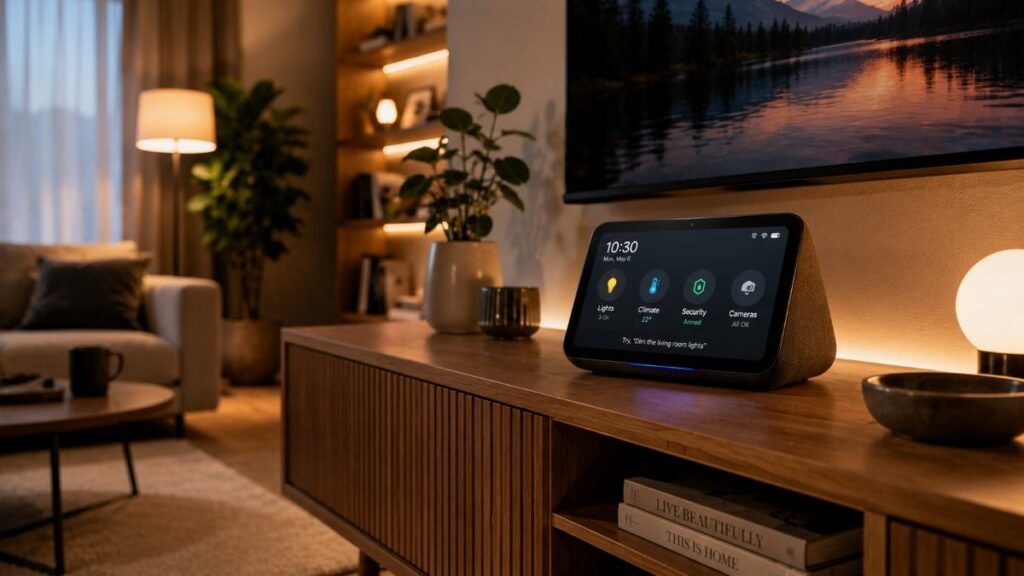
Controlling your indoor climate efficiently is one of the most practical ways to lower utility bills while boosting everyday comfort. Modern best smart home devices include self-learning thermostats and automated window shades that react dynamically to sunlight patterns, keeping your HVAC system from running overtime when rooms are empty.
- Ecobee SmartThermostat: Features smart sensors that monitor room occupancy to prevent heating or cooling empty spaces.
Quick Tip: Place remote temperature sensors in bedrooms that tend to run hotter or colder than your main hallway thermostat to achieve balanced whole-house climate control.
Entertainment Integration and Multi-Room Audio Ecosystems
Your living room and entertainment spaces deserve just as much automation attention as your security setup. Centralized media management transforms standard movie nights into cinematic experiences with single-tap controls, syncing high-definition video feeds with immersive room-filling soundscapes.
- Sonos Era 300: Delivers spatial audio and integrates across multiple streaming platforms without missing a beat.
For expert tips on organizing media furniture or planning surrounding structural updates, check out our layout strategies for Kitchen Remodeling Mistakes and surface refinishing tutorials like How to Paint Kitchen Cabinets.
Automated Lighting and Ambient Scene Control
Lighting sets the mood, but deploying it correctly requires careful planning regarding bridge hardware versus native Wi-Fi connections.
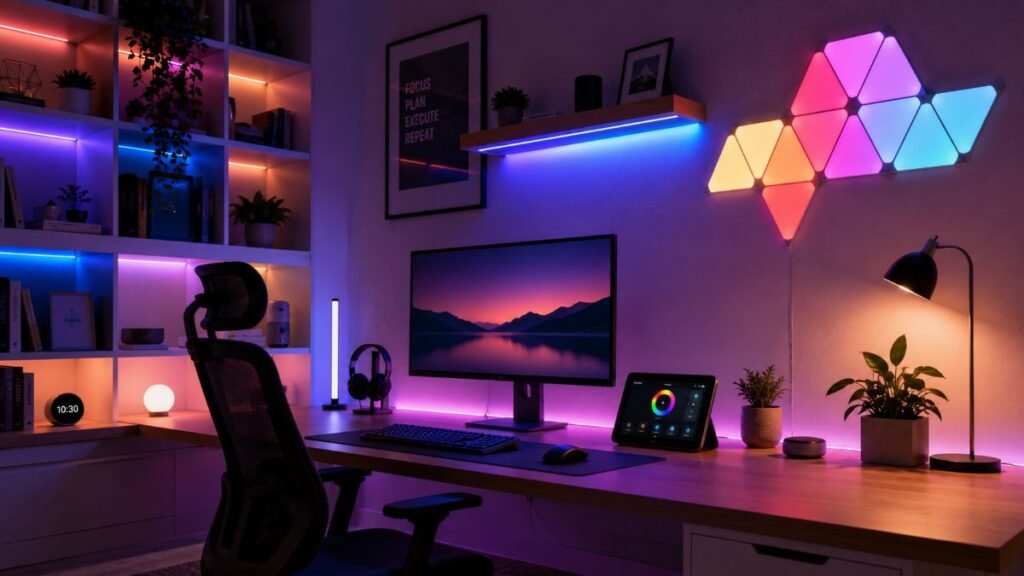
- Philips Hue Starter Kit: Philips Hue works best for homeowners who plan to expand room-by-room over time, offering millions of color variations and robust scheduling features through a dedicated bridge. If you only need one or two smart bulbs, a Wi-Fi-based system may offer better value without requiring a separate bridge.
- Nanoleaf Shapes: Modular light panels that react to music and double as artistic wall decor.
Lutron Caséta Wireless Dimmers: Regulates natural and artificial light levels seamlessly while integrating with major voice platforms.
Network Infrastructure: The Backbone of Your Connected House
None of your automated routines matter if your wireless network drops out every time three people stream movies simultaneously. When selecting a network setup, evaluate your home architecture:
- Are you covering a single-story layout or a multi-story house?
- Are your interior walls made of thick concrete or drywall?
- Do you use high-speed fiber internet?
Based on these structural factors, deploying a robust mesh configuration keeps high-density smart grids online without lag, dropped packets, or unexpected device disconnections.
- Google Nest Wifi Pro: Delivers robust Wi-Fi 6E mesh coverage across every corner of large multi-property spaces.
- TP-Link Deco XE75: Offers reliable tri-band backhaul routing to handle heavy device loads effortlessly.
Expert Tip: Hardwire your primary streaming boxes and smart hubs via Ethernet ports whenever possible to free up critical Wi-Fi bandwidth for mobile phones and wireless sensors.
Smart Kitchen Innovations: Cooking and Water Safety
The kitchen is the heart of the home, and modern sensor technology has turned culinary spaces into intelligent command centers. Before installing smart kitchen hardware, address the primary domestic risks: mitigating catastrophic water damage, securing cooking automation, and capturing long-term energy savings.
- Moen Flo Smart Water Monitor: Automatically shuts off your main water supply if it detects a pipe burst or slow hidden leak.
- June Intelligent Oven: Uses computer vision to recognize food types and automatically sets precise cooking profiles.
Common Mistake: Ignoring water sensor placement under dishwashers and refrigerator ice maker lines where slow leaks can quietly rot subflooring over several months.
Smart Health, Air Quality, and Environmental Monitoring
Your home environment heavily impacts daily wellness, making air purification and climate tracking critical components of a comprehensive living setup. Monitoring indoor particulate matter and humidity levels ensures your family breathes clean air while preventing mold growth in damp rooms.
- Dyson Purifier Hot+Cool Gen1: Combines high-end HEPA filtration with powerful seasonal heating and oscillating cooling fans.
Quick Tip: Pair your air purifiers with smart humidity monitors to automatically trigger ventilation fans whenever shower steam or kitchen smoke spikes indoor moisture levels.
Smart Outdoor Living and Landscape Integration
A fully optimized smart home does not stop at your exterior walls; bringing automation to your yard bridges indoor comfort with outdoor property management.
- Rachio Smart Sprinkler Controller: Adjusts watering schedules dynamically based on hyper-local weather forecasts, soil conditions, and municipal restrictions to keep your lawn thriving while saving water.
Expert Tip: When building out your smart yard, pair automated irrigation with weatherproof outdoor smart plugs to control string lights and water features seamlessly from your primary mobile dashboard.
Final Verdict
Building a resilient smart home in 2026 comes down to choosing an ecosystem that matches your daily habits. If you love deep Android integration and precise voice recognition, anchor your home around Google Nest gear. If you want maximum hardware compatibility across hundreds of third-party brands, stick with Amazon Alexa. Whichever route you take, prioritize local connectivity protocols and best smart home devices to keep your household running smoothly for years to come.
Frequently Asked Questions
Q1. What is the best smart home system in 2026?
Apple HomeKit leads in security, while Google Home and Amazon Alexa offer broad connectivity across the best smart home devices.
Q2. What are the home tech trends in 2026?
Key trends focus on local Matter protocol integration, AI-driven automation, and energy-efficient climate controls.
Q3. What is the most popular smart device?
Smart video doorbells and automated thermostats remain top choices when upgrading your property with the best smart home devices.
Q4. What are the top 3 home automation brands?
Google Nest, Amazon Echo, and Philips Hue dominate the industry for syncing the best smart home devices effortlessly.
Author By: Dambar C. Rajbanshi About: A renovation strategist and home improvement enthusiast. Dambar specializes in budget-smart planning and functional kitchen design. He is dedicated to helping homeowners create spaces that perfectly balance beauty and practicality