
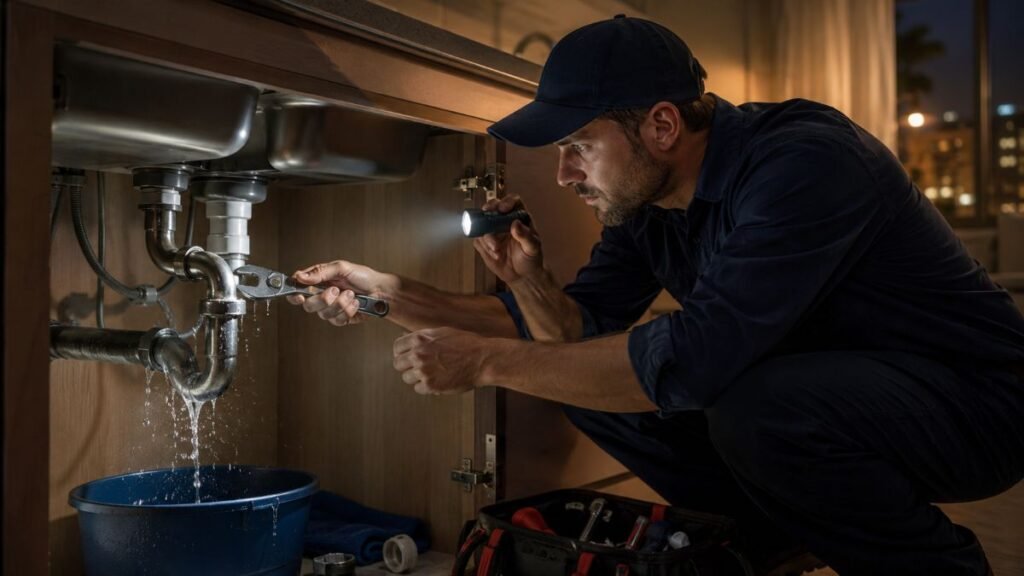
It’s 3 AM, and stepping out of bed into standing water is every homeowner’s worst nightmare. In a panic, most people tap the first ad they see, only to get slapped with a $400 invoice just for a dispatch visit. Before you make a frantic call, knowing how dispatch fees work and when to act will save you thousands in water damage and hidden fees. Here is how to handle an emergency plumbing repair without blowing your budget.
When to Call Emergency Plumbing (And When to Wait)
You don’t need to pay a steep midnight dispatch fee just for a trickling faucet or a sluggish sink drain. Knowing the difference keeps money in your pocket.
Real Emergencies (Call Immediately)
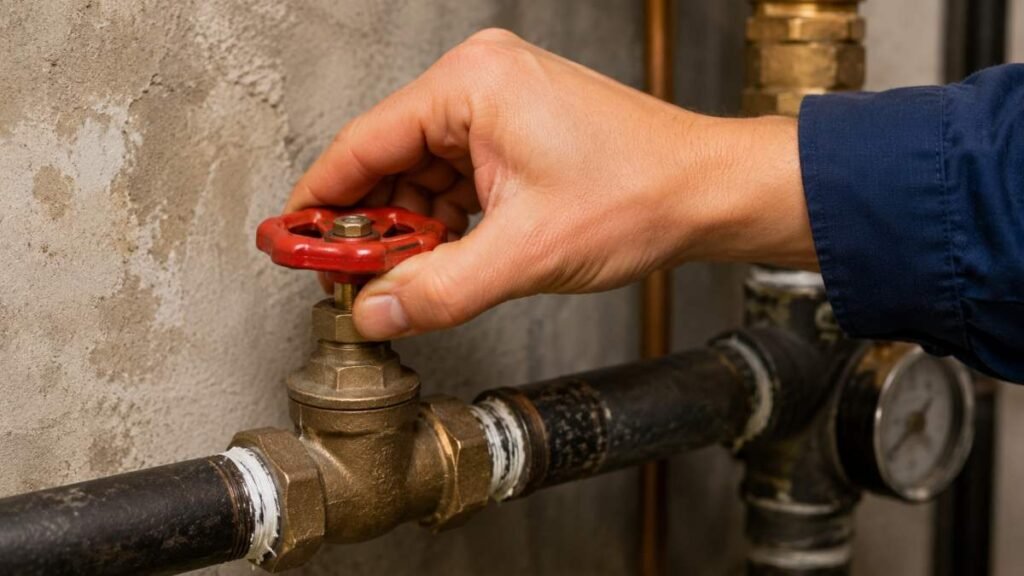
- Active Burst Supply Lines: If a pipe behind a wall or ceiling cracks and gushes water, shut off your main water valve right away and search for immediate emergency plumbing repair options.
- Sewer Line Backups: Raw sewage coming back up through floor drains, tubs, or toilets poses a severe health hazard that requires immediate professional extraction.
- Water Heater Leaks Near Electrical Panels: Water pooling near high-voltage wiring or subpanels creates a critical fire hazard.
Non-Emergencies (Wait Until Normal Business Hours)
- A single running toilet (you can shut off its dedicated wall valve).
- A slow-draining shower or bathroom sink.
- Minor faucet drips.
Expert Advice: Every adult in your home needs to know the exact location of the main water shut-off valve. A huge portion of structural water damage happens simply because homeowners spend frantic minutes searching for the shut-off handle while water floods the subfloor.
Uncovering the Real Cost of Emergency Plumbing
Emergency plumbing rates operate on a completely different scale than standard scheduled appointments.
Factor | Normal Business Hours | Emergency / After-Hours Call |
Hourly Rate | $75 – $150 / hr | $200 – $400+ / hr |
Dispatch / Trip Fee | Low or Waived | $100 – $250 upfront |
Parts Markup | Standard Retail | 15% – 30% Service Surcharge |
Response Time | Scheduled Window | 30 to 60 Minutes |
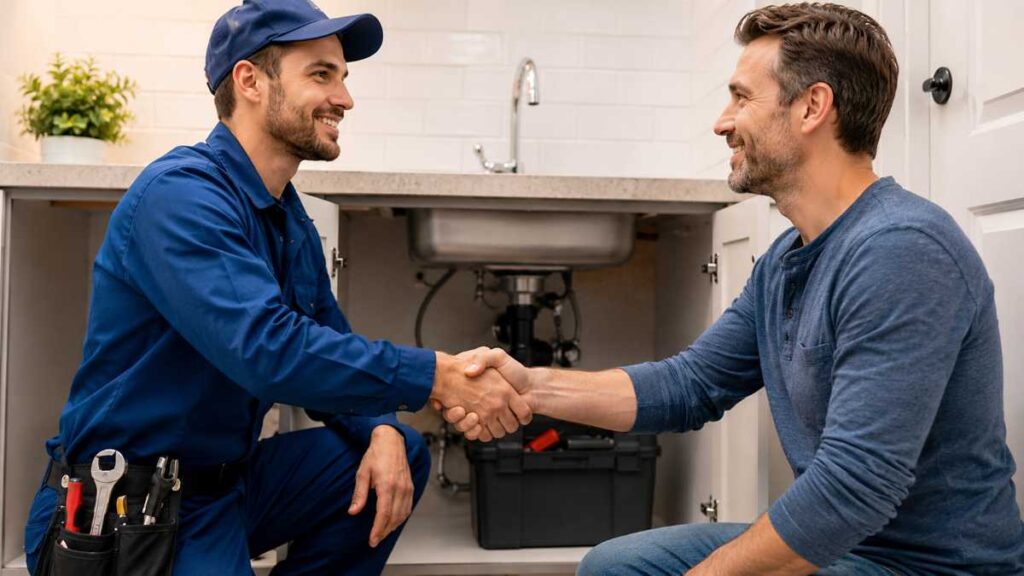
Before authorizing any technician to work on your home, demand a clear breakdown of their diagnostic fee and hourly rate. Always request a digital estimate before physical wrench work begins on an emergency plumbing repair.
How to Vet Local Plumbing Contractors Fast
Relying purely on search engine ad listings during a crisis can backfire. Use these quick vetting steps to ensure you get a qualified professional:
- Verify State Licenses & Insurance: Never hire an unaccredited handyman for complex piping. If an unlicensed repair fails later, your home insurance company may deny your water damage claim.
- Prioritize Local Contractors: Choose contractors with a physical shop near your immediate area. This reduces travel-time fees and guarantees faster arrival.
- Check Warranty Terms: Ask upfront if their repair work includes a written warranty on both parts and labor.
If you are planning broader home upgrades, organizing your utility layout early prevents future disasters. Poorly planned pipe placement leads to costly structural rework, similar to common kitchen remodeling mistakes that force homeowners to tear open fresh drywall.
Temporary DIY Fixes vs. Permanent Professional Fixes
“Applying plumber’s tape or epoxy putty buys you time while waiting for a professional, but it won’t withstand full household water pressure for long.
- DIY Emergency Patches: Rubber clamps and leak-repair tape slow down the flow to buy you time. They are not permanent code-compliant fixes.
- Professional Pipe Repairs: Licensed plumbers execute permanent repairs following guidelines established by the International Code Council (ICC), ensuring your home’s infrastructure remains durable for decades.
Learning basic utility management is just as essential for proper home maintenance as tackling aesthetic projects like learning how to paint kitchen cabinets. Knowing how your home functions keeps maintenance overhead under control.
Protecting Your Home with Smart Water Automation
You do not have to wait for a catastrophic pipe burst to schedule an emergency plumbing repair. Modern smart home technology lets you spot moisture long before a pipe completely fails.
- Smart Leak Detectors: Place small battery-powered moisture sensors under water heaters, sinks, and washing machines. They send instant phone alerts the moment moisture is detected. Learn how to set these up in our comprehensive smart home installation guide.
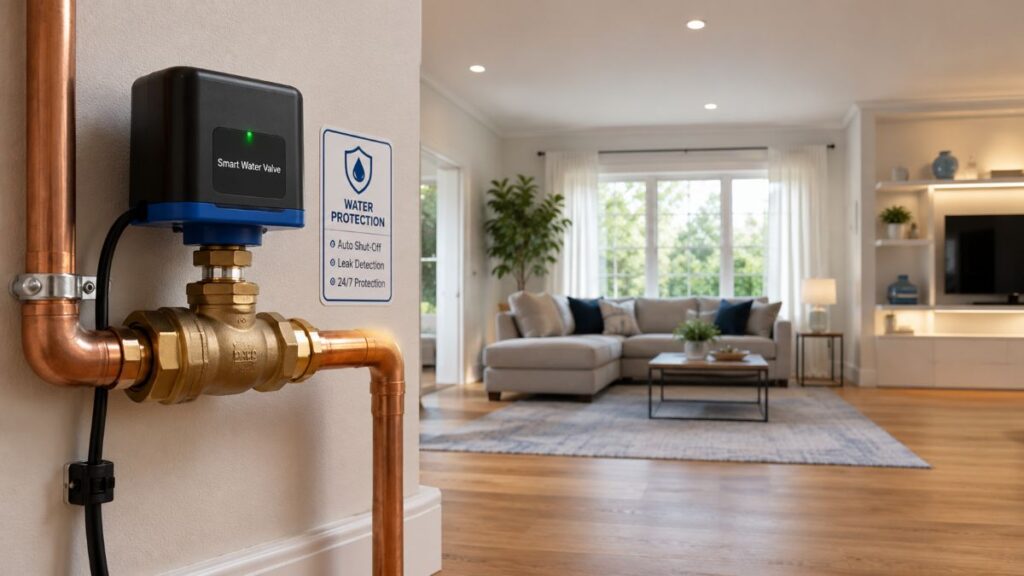
- Smart Shut-Off Valves: Mounted on your primary water line, these automated valves instantly cut off main supply within seconds whenever sudden pressure dips or continuous flow is detected or continuous flow.
Moisture defense also extends to your building materials. In high-humidity areas like kitchens and bathrooms, choosing waterproof flooring options like those covered in our kitchen flooring guide prevents subfloor warping during minor spills.
Whole-Home Maintenance: Preventing Long-Term Leaks
Plumbing failures rarely happen without subtle warning signs. “Running a basic maintenance check every few months ensures your pipes stay in solid working condition:
Essential Preventative Checklist
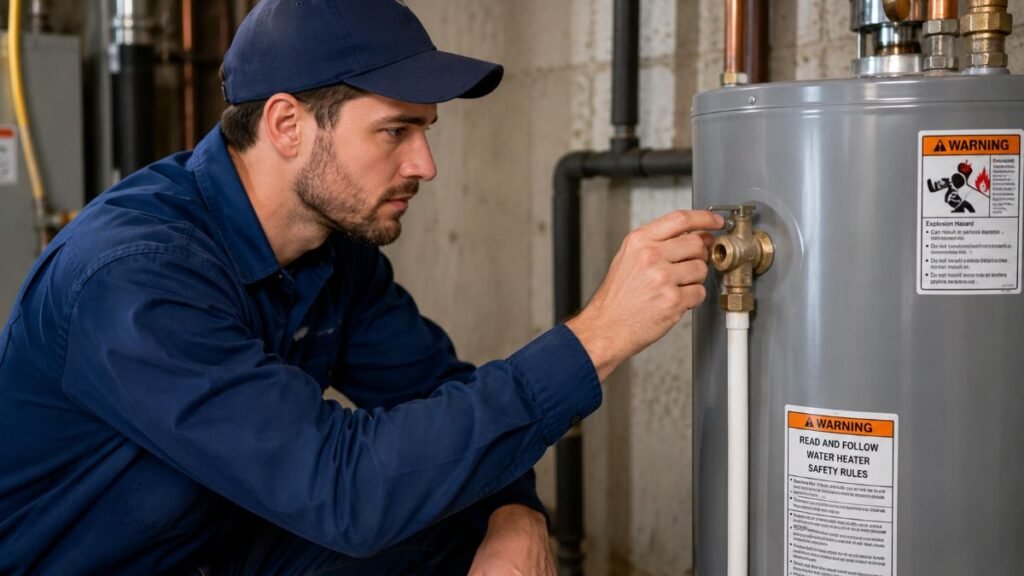
- Inspect Water Heaters: Test the Temperature and Pressure Relief (TPR) valve twice a year to prevent dangerous tank pressure buildup.
- Upgrade Supply Lines: Replace flexible plastic or rubber hoses on toilets and washing machines with braided stainless steel lines.
- Clear Drains Safely: Avoid pouring fats, oils, and grease down sink drains.
Integrating proper drainage throughout every area of your property protects your foundation from moisture damage. Planning a bathroom update? Review our layout recommendations for bathroom remodeling to ensure proper drain slope and pipe sizing.
To safeguard household appliances and home hardware against physical hazards and pressure faults, reviewing official safety standards from the Reviewing official guidance from the Consumer Product Safety Commission (CPSC) helps verify that your household hardware meets national safety standards.
Pros and Cons of Hiring Local Emergency Plumbers
Pros
- Rapid On-Site Response: Local independent plumbers can often arrive within 30 to 45 minutes when you need an urgent emergency plumbing repair.
- Regional Code Compliance: Local pros understand specific regional requirements, such as frost-line depth requirements for severe winter freezing.
- Direct Accountability: Community-based plumbers rely heavily on local reviews and stand behind their labor warranties.
Cons
- After-Hours Surcharges: Emergency dispatch fees and late-night rates carry a significant markup over scheduled appointments.
- High Demand During Weather Events: During severe freezing snaps, local dispatch teams face heavy booking backlogs.
Key Questions to Ask Your Plumber On-Site
When a contractor steps into your home for an emergency plumbing repair, spending two minutes asking targeted questions shields you from unexpected invoice surprises:
- “Does your initial diagnostic fee get applied toward the total repair cost if I hire you for the job?”
- “Will the replacement fittings include a manufacturer guarantee alongside your labor warranty?”
- “Does fixing this line involve cutting through drywall, and do you handle wall patching afterward?”
“Does your pricing model follow the ethical billing standards recommended by industry groups such as the Plumbing-Heating-Cooling Contractors Association (PHCC)?”
Demanding straight answers and getting a written estimate before any physical work starts keeps billing completely transparent and eliminates post-repair price disputes.
Final Verdict & Recommendations
Preventing a midnight water disaster shouldn’t feel like a high-stakes gamble. Protecting your home takes less than ten minutes: find your main water valve, program two verified local contractors into your phone, and place a smart leak sensor near major appliances. Taking control now ensures you never overpay for a last-minute emergency plumbing repair when every second counts!
Frequently Asked Questions
Q1. How to stop water leakage immediately?
Shut off your main water valve right away to cut off pressure and prevent immediate structural damage while you assess the situation.
Q2. How to temporarily stop a plumbing leak?
Wrap plumber’s tape or apply epoxy putty over the line as a short-term stopgap while waiting for professional emergency plumbing repair.
Q3. Why are emergency plumbers so expensive?
After-hours call-outs require late-night dispatch, rapid response times, and premium labor surcharges outside regular business hours.
Q4. What is the 135 rule in plumbing?
It requires a minimum 135-degree angle change between cleanout fittings to ensure smooth waste flow and prevent severe drain backups.
Author By: Dambar C. Rajbanshi About: A renovation strategist and home improvement enthusiast. Dambar specializes in budget-smart planning and functional kitchen design. He is dedicated to helping homeowners create spaces that perfectly balance beauty and practicality.