
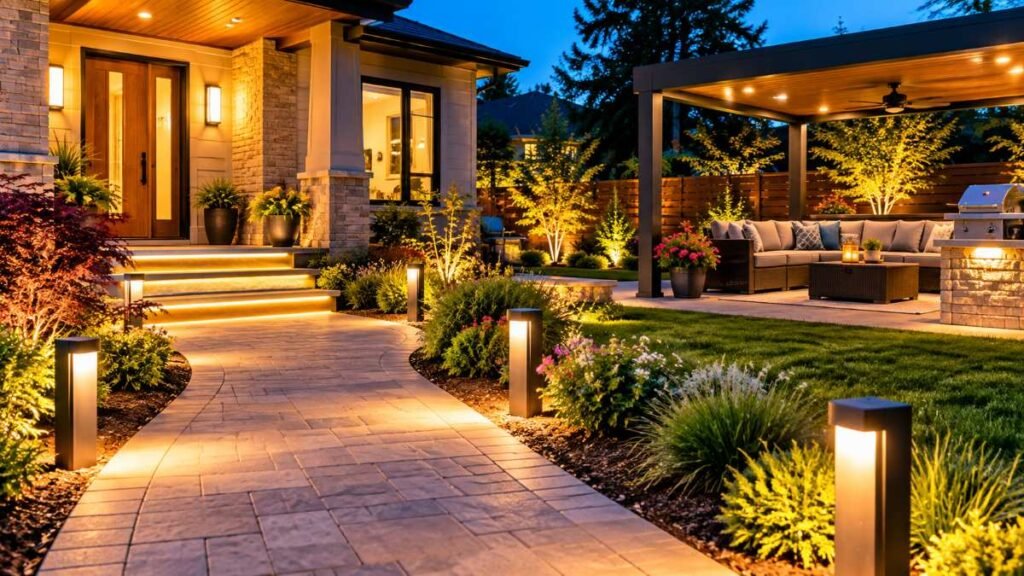
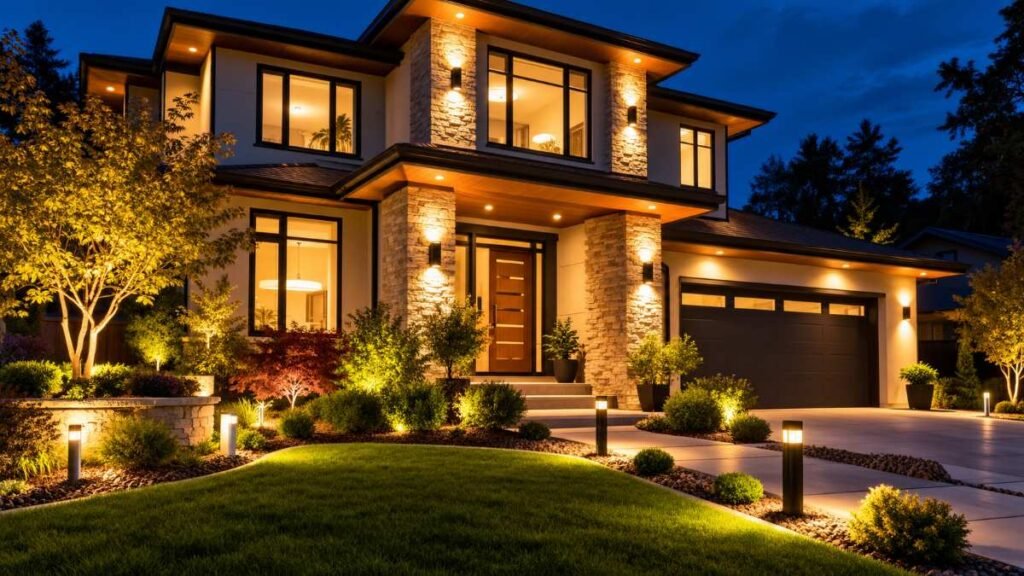
Step onto your patio after sunset without fumbling in the dark or wasting electricity on harsh floodlights. Modern smart outdoor lighting seamlessly blends curb appeal, perimeter defense, and automated efficiency into a unified home ecosystem. Forget clunky solar stakes or manual timers that desynchronize with seasonal changes; current low-voltage landscape fixtures adjust dynamically to weather, motion, and daily routines.
Fast Overview: Exterior Illumination Architecture
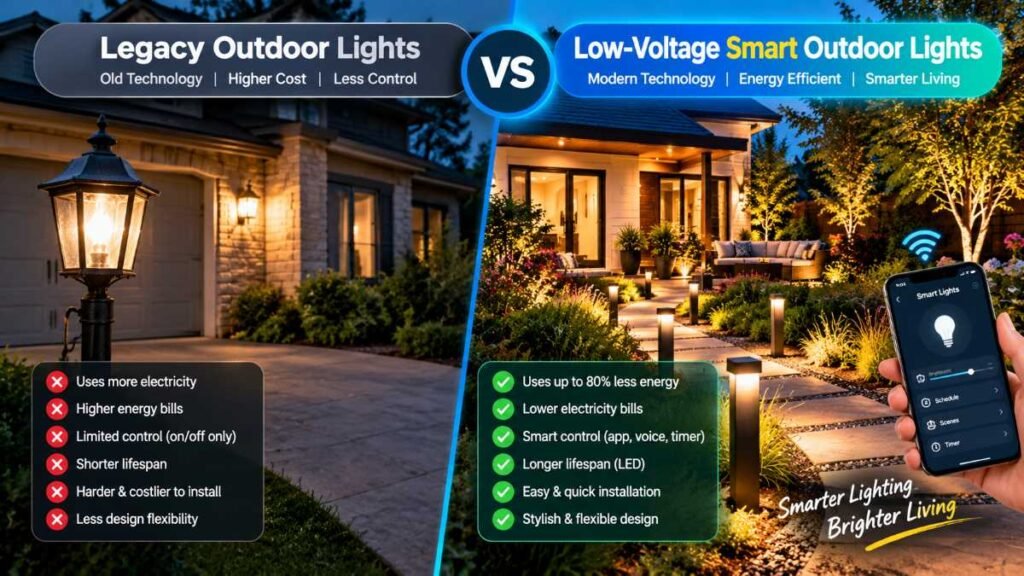
Upgrading from traditional line-voltage floodlights to integrated low-voltage systems represents a major leap in residential efficiency, safety, and operational speed.
System Parameter | Legacy Outdoor Lighting | Standard Wi-Fi Fixtures | Thread / Matter Mesh Fixtures |
Operating Voltage | 120V AC (High Risk) | 12V AC / DC Transformer | 12V DC Ultra-Low Voltage |
Control Method | Standard Wall Switch or Mechanical Timer | Smartphone App with Cloud Skills | Local Network Control & Multi-Admin Voice |
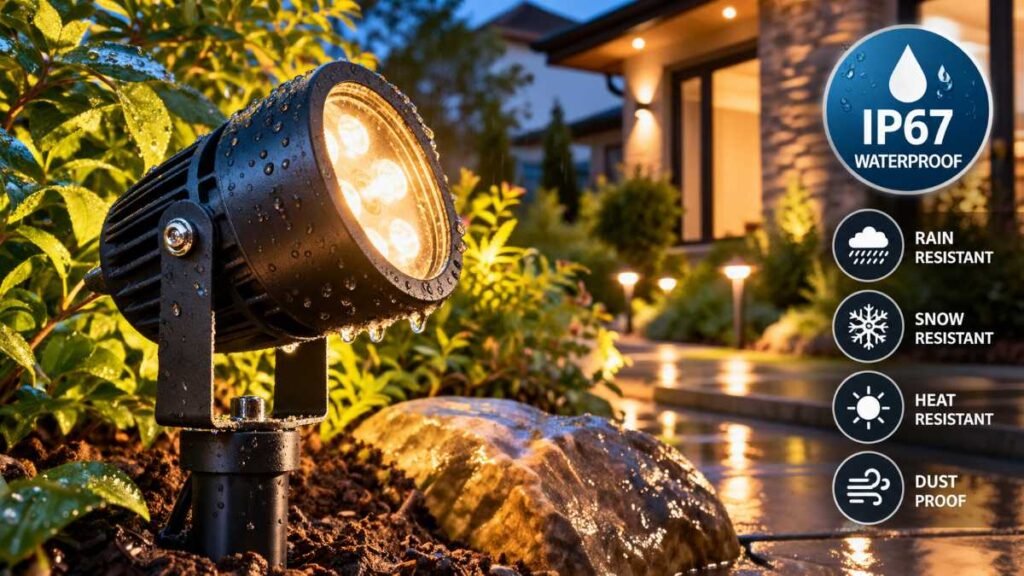
Weather Protection | Basic Rubber Seals | IP65 Weatherproof | IP67 Heavy-Duty Waterproof |
Power Consumption | 50W – 150W Halogen | 8W – 15W LED | 5W – 12W Tunable LED |
Response Latency | Manual Activation | 1 to 3 Seconds (Cloud Dependent) | Instant (< 50ms Local Execution) |
Technical System Design & Signal Flow
Unlike indoor fixtures protected from physical elements, exterior automated setups rely on weatherproof transformers, low-voltage cabling, and resilient wireless controllers.
Architecture Stage | Hardware Component | Core Operational Role |
Power Conversion | Weatherproof Transformer (120V to 12V) | Steps down high voltage safely for exterior ground burial |
Local Processing | Thread Border Router / Smart Hub | Handles local routines, sunset triggers, and sensor inputs |
Wireless Mesh | Sub-GHz / Thread Node Repeaters | Extends wireless coverage to far edges of yards and gates |
Illumination Output | IP67 Tunable RGBW Fixtures | Delivers architectural uplighting, path safety, and wall washing |
- Low-Voltage Safety: Operating at 12V DC eliminates shock hazards, allowing homeowners to run direct-burial cables under mulch and turf without deep conduit trenching.
- Mesh Network Reliability: Mains-powered exterior spotlights function as signal repeaters, extending wireless coverage across expansive backyards and detached garages.
- Astronomical Timers: Integrated controllers sync with local sunset and sunrise data automatically, eliminating manual clock adjustments during Daylight Saving Time transitions.
Essential Core Benefits
Investing in connected exterior fixtures delivers significant advantages beyond simple aesthetic elevation.
- Deterrence & Perimeter Defense: Automated motion sensing deters unwanted visitors by instantly illuminating dark entryways and side alleys.
- Drastic Energy Savings: High-efficiency LED arrays draw up to 80% less power than legacy halogen fixtures while yielding higher lumens per watt.
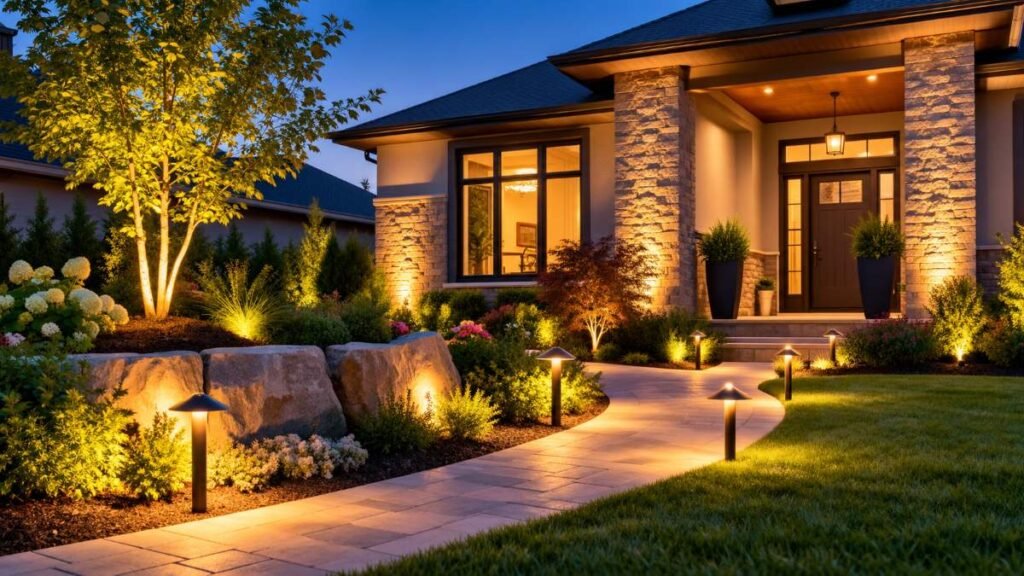
- Architectural Accentuation: Tunable white temperatures (2200K warm gold to 4000K crisp white) highlight landscaping features and brick masonry with precision.
To see how exterior energy monitoring integrates with interior power management, review our hands-on smart plug guide.
Multi-Admin Interoperability & Local Control
Choosing high-end smart outdoor lighting requires assessing how reliably it links with your primary home controller across various weather conditions.
Connectivity Protocol | Supported Hub Ecosystems | Transmission Range | Key Advantage |
Matter over Thread | Apple Home, Alexa, Google Home | 100+ feet (via Mesh Nodes) | Full local control with zero reliance on cloud servers |
Zigbee 3.0 / Dedicated Hub | Philips Hue, Dedicated Bridges | 30 to 50 feet (Hub to Bridge) | Isolated wireless mesh that preserves main Wi-Fi bandwidth |
Direct Wi-Fi / Bluetooth | Standalone Vendor Mobile Apps | 50 feet (Line of Sight) | Quick single-fixture installation without a central hub |
Modern Matter-compatible outdoor controllers allow household members to manage patio scenes or security floodlights simultaneously across platforms without cloud delays. Local signal processing ensures sunset schedules and motion triggers execute even if your main internet link goes down.
According to exterior electrical safety and building guidelines from the U.S. Department of Energy, utilizing low-voltage LED landscape fixtures significantly reduces annual energy consumption while enhancing perimeter safety.
Critical Hardware & Structural Factors
Before installing exterior fixtures, evaluate these crucial technical specifications to ensure long-term durability:
- Ingress Protection (IP Rating): Choose IP65-rated units for covered porches and IP67-rated fixtures for ground-level path lights exposed to lawn mowers and sprinklers.
- Color Rendering Index (CRI): Select fixtures with CRI 90+ ratings to preserve the vivid, natural colors of foliage, stone pathways, and home exteriors.
- Transformer Wattage Headroom: Calculate total fixture wattage and select a transformer rated for at least 20% higher capacity to handle electrical surges and future expansion.
To confirm your exterior junction boxes and transformers meet residential code, read our complete guide on smart home installation
Pairing Exterior Lights with Security & Climate Systems
Integrating your smart outdoor lighting into broader home automation schedules maximizes curb appeal while expanding perimeter security.
Perimeter Security Synergy
Linking outdoor spotlights to entry sensors triggers bright illumination whenever driveway gates or perimeter fences open unexpected after hours.
According to residential security guidelines from the National Institute of Standards and Technology (NIST), securing local network protocols prevents unauthorized access to connected outdoor cameras and lighting networks.
Vacation Simulation & Entry Defense
Combine path illumination with automated door locks to light up walkway steps the instant you arrive home or simulate occupancy while traveling. For complete entry security recommendations, explore our evaluation of the best smart locks.
To protect outdoor connected fixtures against wireless network threats, inspect our guide on smart home cybersecurity. For full layout inspiration, browse our strategies for smart home automation.
Preventive Maintenance & Network Diagnostics
Outdoor hardware faces extreme weather, moisture, and temperature fluctuations that require routine upkeep for peak performance.
Issue | Potential Cause | Actionable Solution |
Intermittent Signal Dropout | Distance or physical barriers (brick/stucco) | Add an intermediate mains-powered outdoor Thread repeater |
Dimming or Voltage Drop | Excessive cable length or overloaded transformer | Upgrade wire gauge (12 AWG) or divide runs into multiple zones |
Moisture / Lens Fogging | Compromised O-ring seals or loose casing | Dry internal housing, inspect gaskets, and apply silicone grease |
Schedule Misalignment | Lost time synchronization during power loss | Re-sync local astronomical clock through your central Matter controller |
Step-by-Step Installation Roadmap
Setting up a complete low-voltage smart outdoor lighting array is straight-forward when using proper step-down transformers and weatherproof wire connectors.
Step | Work Phase | Critical Task | Safety / Quality Checkpoint |
1 | Power Isolation | Disconnect outdoor GFCIs at the main breaker box. | Test power outlets using a non-contact voltage tester. |
2 | Transformer Mounting | Secure 12V transformer near an exterior GFCI outlet. | Ensure unit is mounted at least 12 inches above ground level. |
3 | Cable Routing | Route heavy-duty 12-gauge 2-conductor wire along specified landscape channels and borders. | Leave slack at each fixture location for easy adjustments. |
4 | Fixture Splicing | Connect path lights and spotlights using waterproof caps. | Use silicone-filled twist connectors to block moisture ingress. |
5 | Network Integration | Power on transformer and pair controller in your smart app. | Verify local execution and test dusk-to-dawn automation rules. |
Frequently Asked Questions
Q1. What is the best smart outdoor lighting setup for home security?
A low-voltage 12V setup with Matter or Thread motion sensors is ideal. It delivers instant local response times, keeping dark entryways safely illuminated without cloud lag.
Q2. Does smart outdoor lighting require a dedicated hub or bridge?
Not always, but using a local hub or Matter border router ensures your smart outdoor lighting runs smoothly, even during internet outages or severe weather.
Q3. How do I prevent voltage drop in long smart outdoor lighting runs?
Use direct-burial 12 AWG copper wire and pick a transformer rated 20% above total fixture wattage to maintain crisp, vibrant LED brightness across your entire yard.
Q4. Can smart outdoor lighting reduce monthly home energy bills?
Yes. Upgrading to tunable LED smart outdoor lighting uses up to 80% less power than legacy halogen floodlights while automating exact dusk-to-dawn schedules.
Upgrade Your Outdoor Living Space Today
Take full control of your home’s exterior security and evening ambiance today! Invest in high-efficiency smart outdoor lighting, link it to your primary local hub, and enjoy an automated, beautifully illuminated yard that welcomes you home every single night.
Editorial Disclaimer
This guide is prepared independently for educational and informational purposes. Electrical codes, transformer limits, and moisture ratings vary by region; always consult local building regulations and verify GFCI outlet installation before installing new exterior electrical hardware.
About the Author
Dambar C.Rajbanshi. is a home optimization writer and space analyst passionate about creating functional, comfortable living environments. He shares practical spatial layouts, ergonomic setups, and smart automation strategies to help homeowners build efficient, secure spaces without compromising daily comfort.