
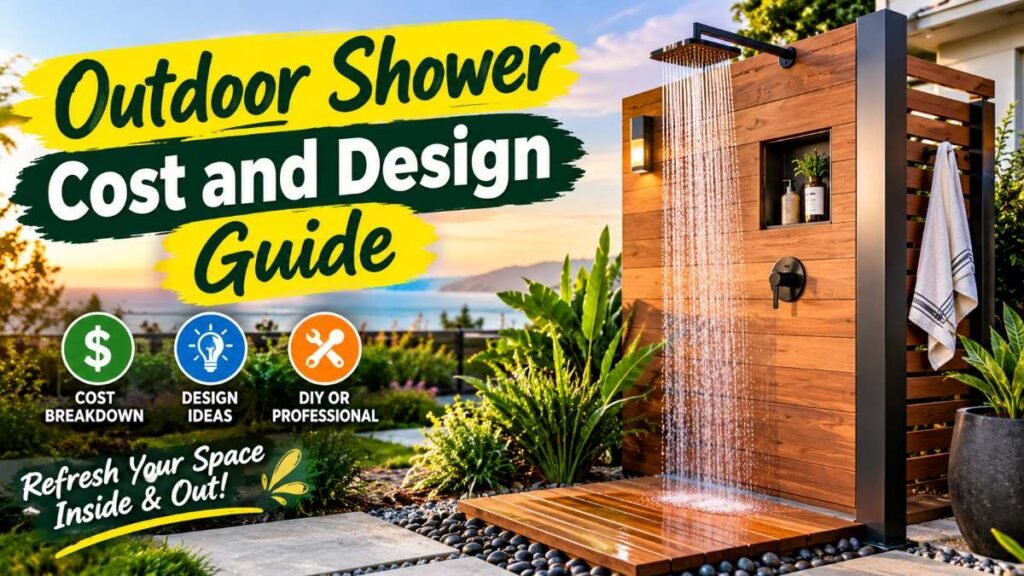
An outdoor shower sounds like the ultimate summer upgrade—until a sudden plumbing surprise doubles your bill. The total outdoor shower cost isn’t just about picking a slick showerhead. From subterranean trenching to freeze-proofing, hidden expenses can stack up fast. Whether you want a quick $300 weekend rinse setup or a heated cedar retreat, here is where your money actually goes—and how to avoid overpaying for unnecessary extras before digging.
How Much Does an Outdoor Shower Cost?
On average, most homeowners spend between $1,500 and $3,800 for a complete mid-range outdoor shower setup that includes both hot and cold water, a durable privacy enclosure, and a dedicated dry well drainage basin.
Price Ranges by Installation Tier
Installation Tier | Typical Price Range | Key Features & Inclusions | Ideal Use Case |
Basic / DIY Rinse | $300 – $1,200 | Cold water line tapped from hose bib, simple vinyl or bamboo screen, gravel drain pad. | Beach sand removal, poolside rinse, tight budgets. |
Mid-Range Standard | $1,500 – $3,800 | Hot & cold supply tie-in, pressure-balanced mixing valve, cedar or composite enclosure, dry well. | Daily family bathing, pet washing, suburban backyards. |
Custom Luxury | $4,000 – $7,500+ | Long supply runs, solid Ipe wood or stone structure, thermostatic control, bench, integrated lighting. | High-end coastal properties, year-round outdoor spa living. |
Outdoor Shower Cost Breakdown
To build an accurate budget, you must evaluate each component of the installation individually. Here is where your money actually goes during construction.
Cost Factor Table
Component | Cost Range | Key Drivers Influencing Price |
Shower Fixture | $100 – $1,200 | Stainless steel grade (304 vs 316 marine-grade), thermostatic controls, rain showerheads. |
Plumbing Supply | $400 – $2,500 | Distance from existing interior lines, trenching depth, wall penetrations. |
Drainage System | $200 – $1,800 | Soil absorption rates, gravel trench vs dry well vs municipal sewer tie-in. |
Enclosure & Shower Base | $500 – $3,500 | Costs can vary depending on the material you choose, such as treated wood, cedar, Ipe, or composite decking. |
Labor Fees | $500 – $2,000 | Plumber and carpenter hourly rates, job complexity, accessibility. |
Permits & Inspection | $100 – $400 | Local building codes, environmental graywater inspection fees. |
What Drives Outdoor Shower Costs?
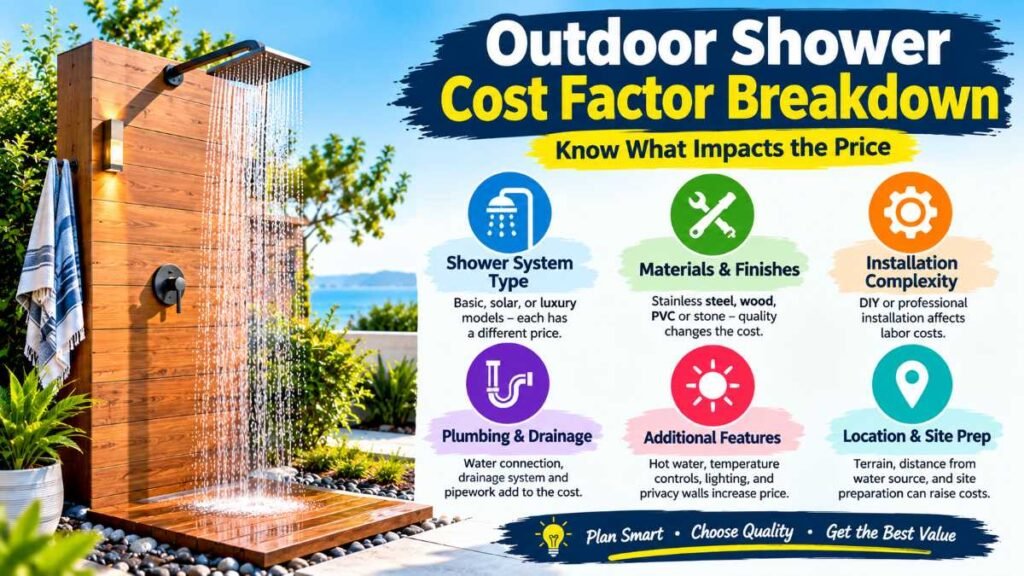
Four main variables dictate whether your project stays near the lower estimate or climbs toward the high end:
- Plumbing & Hot Water Distance: Installing the shower close to an existing bathroom wall can shorten the plumbing run and reduce installation costs. However, running subterranean PEX or copper lines 30 feet out near a pool adds $50 to $150 per linear foot.
- Drainage Infrastructure: Simple gravel beds ($200–$500) work for cold rinses, but buried dry wells ($600–$1,800) or direct sewer connections ($1,200–$3,000+) are needed when soaps are used regularly.
- Enclosure Materials: Pressure-treated pine ($500–$1,200) is budget-friendly, while Western Red Cedar ($1,200–$2,500) and Ipe hardwood ($1,800–$3,500) offer superior longevity.
- Local Codes & Permits: Permit costs and graywater requirements can differ from one area to another, so check your local rules before starting.
Labor & Trade Specialist Rates
Unless you are an experienced plumber and carpenter, hiring certified professionals protects your home against costly water damage and structural hazards.
- Licensed Plumber ($75 – $150/hour): Installs interior shut-off valves, extends supply lines, and sets anti-scald valves. If you are coordinating broader household water upgrades, review our guide on emergency plumbing repair for additional system tips.
- Carpenter / Contractor ($50 – $100/hour): Builds concrete footings, frames posts, attaches privacy walls, and constructs slatted draining floors.
- Electrician ($85 – $135/hour): Necessary if adding low-voltage outdoor lighting, motorized privacy screens, or electric heat tape.
DIY vs Professional Installation
- Where DIY Works: Assembling pre-made vinyl or cedar enclosure panels over a gravel drain pad, connecting to a hose bib via garden hose extensions for seasonal cold-water rinsing.
- Where Professionals Are Required: Cutting into interior supply lines, penetrating exterior siding, installing thermostatic mixing valves, or tying drainage into municipal sewer lines.
Cost by Installation Type
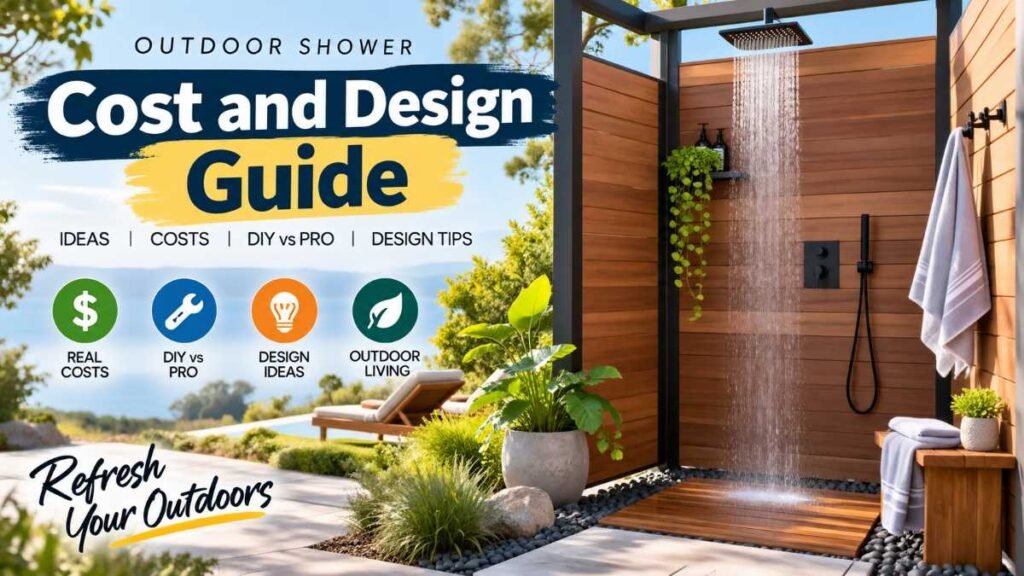
How you structure your shower setup directly controls your overall expenditure:
- Wall-Mounted Attached Shower ($800 – $2,500): Leveraging an existing exterior wall keeps your total outdoor shower cost to install down because plumbing lines only travel through one exterior wall from an adjacent indoor room.
- Freestanding Enclosure ($2,500 – $6,000+): Standalone structures require post footings, underground utility trenching, four-sided privacy screening, and dedicated drainage basins.
Plumbing, Winterization & Safety Realities
If you live in a region that experiences sub-freezing winter temperatures, failing to properly winterize your outdoor lines will result in burst pipes.
- Interior Shut-Off Valves: Plumbers must install ball valves with drain ports inside your home’s heated space.
- Low-Point Drain Valves: Lines must pitch downward toward an outdoor drain port so gravity purges residual water.
- Marine-Grade Fixtures: Always specify solid 316 stainless steel or solid brass hardware to prevent corrosion and peeling.
Permits, Code Compliance & YMYL Safety
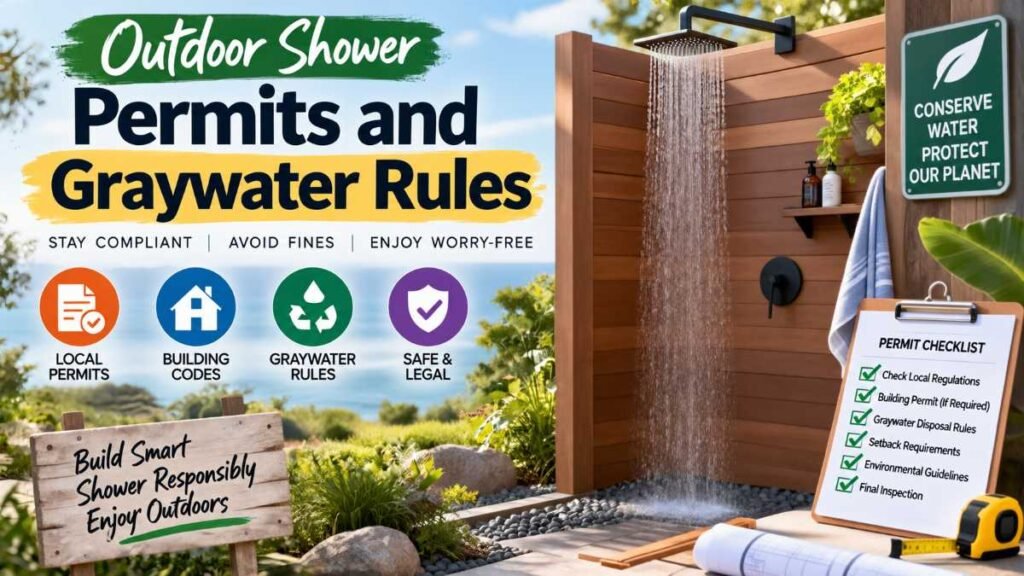
Regulatory Disclaimer: Local plumbing, building, drainage, electrical, and graywater discharge rules vary significantly by city and county. Always verify local municipal codes and hire licensed professionals where required.
- Building & Plumbing Permits ($100 – $400): Often required when extending permanent supply pipes or erecting structures taller than six feet.
- Graywater Regulations: Local health departments and environmental agencies regulate graywater runoff to protect local soil and groundwater tables. Check guidelines provided by the U.S. Environmental Protection Agency (EPA) regarding water efficiency and discharge standards.
- HOA Rules: Homeowners associations frequently mandate specific enclosure height restrictions, material colors, and property line setbacks.
For surrounding landscape design, explore our creative strategies for smart backyard privacy ideas and our structural advice for outdoor kitchen ideas.
Realistic Budget Scenarios (Illustrative Examples)
- Illustrative Project A: Post-Pool Rinse Setup ($800 Estimated)
Configuration: Wall-mounted cold water line, cedar privacy panel, gravel drainage pit.
Breakdown: $450 materials + $350 handyman labor.
- Illustrative Project B: Full-Feature Year-Round Enclosure ($3,450 Estimated)
Configuration: Hot/cold supply extension through exterior wall, composite enclosure, subsurface dry well.
Breakdown: $1,600 materials + $1,700 plumber & carpenter labor + $150 permits.
What I Would Spend My Money On (Expert Value Priorities)
When building an outdoor shower, prioritize functional durability over cosmetic extras:
- Proper Subsurface Drainage: Investing in a dry well prevents pooling water, soil erosion, and foundation hazards.
- Freeze Protection & Shut-Offs: An easy-to-reach indoor shut-off can help prevent costly winter pipe damage.
- Marine-Grade 316 Hardware: High-grade steel withstands outdoor exposure without rusting.
- Placement Back-to-Back with Plumbing: Keeps line extensions short and drastically lowers labor costs.
- Decorative Accessories (Cut Here First): Save premium lighting, integrated benches, and high-end stonework for last.
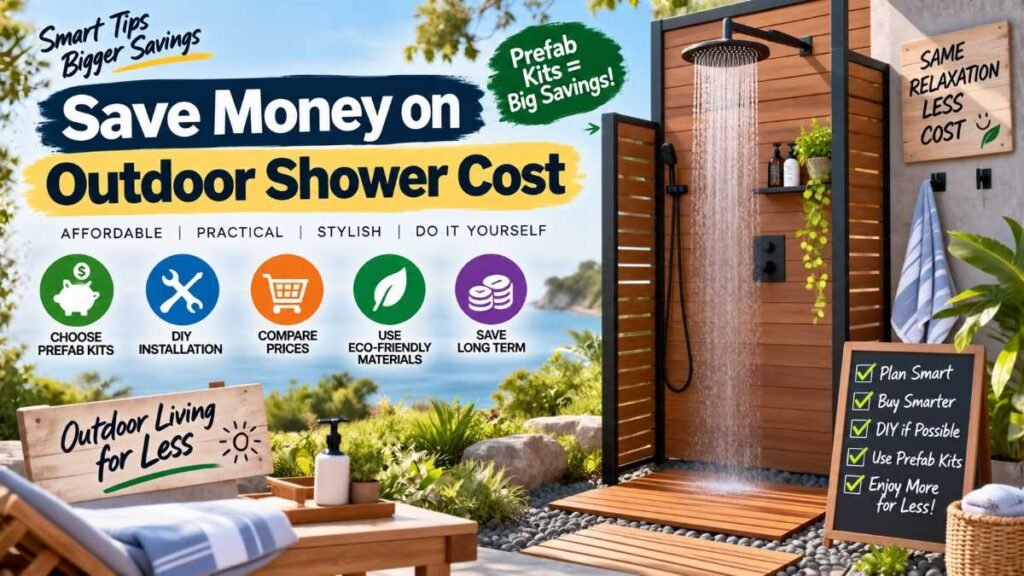
How to Save Money Without Cutting Corners
You can lower your outdoor shower plumbing cost and overall material expenses by following these strategic approaches:
- Share an Existing Plumbing Wall: Mounting your shower on the back wall of a laundry room or bathroom keeps pipe runs short.
- Use Pre-Fabricated Enclosure Kits: Modular privacy kits cost significantly less than custom timber carpentry while offering clean aesthetics.
- Handle Non-Plumbing Prep Work Yourself: Dig the drainage pit and clear the installation site before your contractor arrives.
When planning adjacent exterior improvements, balance your water drainage management by consulting our guides on lawn care habits and rain gutter installation.
Common Mistakes to Avoid
- Ignoring Soil Drainage: Clay soils absorb water slowly, requiring larger dry wells compared to sandy soils.
- Forgetting Soap and Shampoo Runoff: If using soaps regularly, ensure your drainage meets local graywater regulations.
- Skipping Anti-Scald Valves: Direct sun can heat water trapped in exposed outdoor pipes to burning temperatures.
Neglecting Ground Protection: Ensure water drains away from your home’s foundation to protect your slab or crawlspace. For related foundation protection tips, see our guide on basement waterproofing.
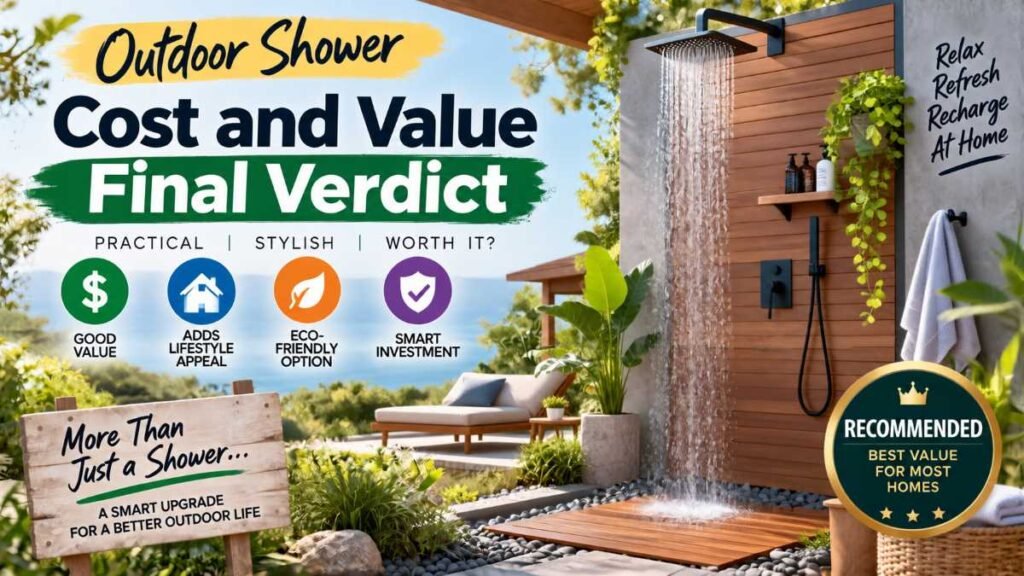
Final Verdict & Best Value Recommendation
An outdoor shower is a high-utility home improvement that keeps dirt and sand outside while elevating your summer backyard living experience.
- Best Budget Choice: A cold-water wall-mounted shower kit installed on an existing patio wall with a gravel drain pad ($500 – $1,200).
- Best Overall Value: A hot-and-cold wall-mounted unit positioned directly behind an indoor bathroom, enclosed with cedar paneling and drained via a dry well basin ($1,800 – $3,200).
- Best Luxury Choice: A standalone hardwood timber structure with custom thermostatic controls, bench seating, and integrated drainage connected to municipal lines ($4,500 – $7,500+).
For technical installation standards and residential code guidelines, consult resource references provided by the International Association of Plumbing and Mechanical Officials (IAPMO) and official cost planning tools on HomeAdvisor Construction Data.
Frequently Asked Questions
Q1: How much does it cost to do an outdoor shower?
A typical outdoor shower cost ranges from $1,500 to $3,800 for a full hot-and-cold setup. Basic DIY cold rinses start around $300, while high-end custom structures can easily cross $7,500.
Q2: Is an outdoor shower worth it?
Absolutely! It keeps mud, sand, and pool water out of your house. Plus, balancing your initial outdoor shower cost against property resale value shows a solid return for suburban and coastal homes.
Q3: How much does it cost to have a shower fitted?
Expect $500 to $2,000 in labor fees for a plumber and builder. You can lower your total outdoor shower cost to install by placing it directly against an indoor bathroom wall to keep pipe runs short.
Q4: What is needed for an outdoor shower?
You’ll need a durable fixture, water supply lines, shut-off valves for winterizing, privacy walls, and a proper dry well or gravel bed to manage your overall outdoor shower cost effectively.
Author By: Dambar C. Rajbanshi About: A renovation strategist and home improvement enthusiast. Dambar specializes in budget-smart planning and functional kitchen design. He is dedicated to helping homeowners create spaces that perfectly balance beauty and practicality