
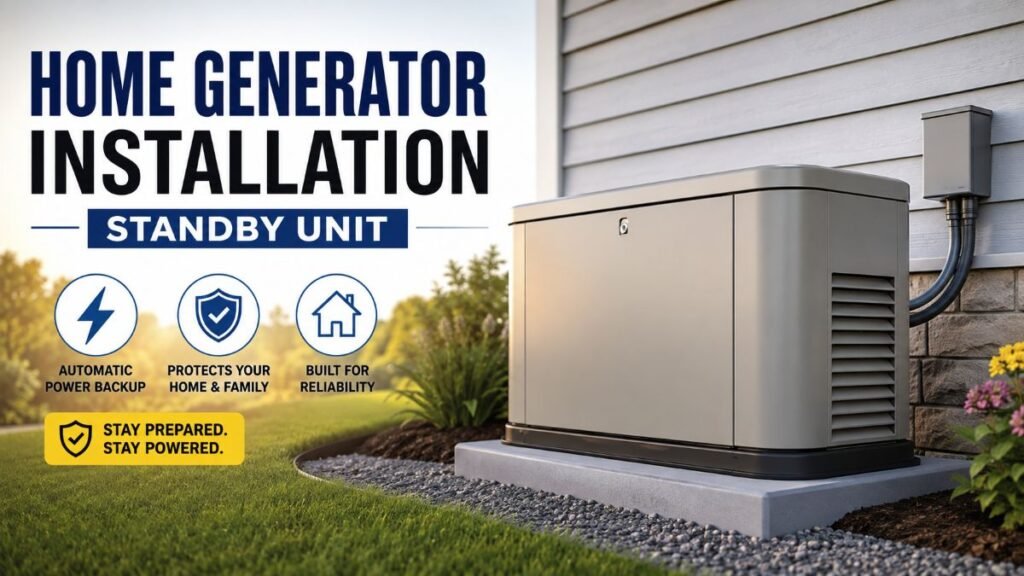
A power outage is easy to ignore—until the refrigerator stops, the house loses heating or cooling, and the outage lasts longer than expected. That is when backup power becomes a serious priority. Home Generator Installation can help homeowners stay prepared, but buying a generator is only the beginning. The real decision is choosing the right size, fuel source, transfer equipment, installation location, and backup loads without paying for capacity you may never use.
Do You Need a Whole-Home Generator?
Not every home needs enough generator capacity to run everything at once.
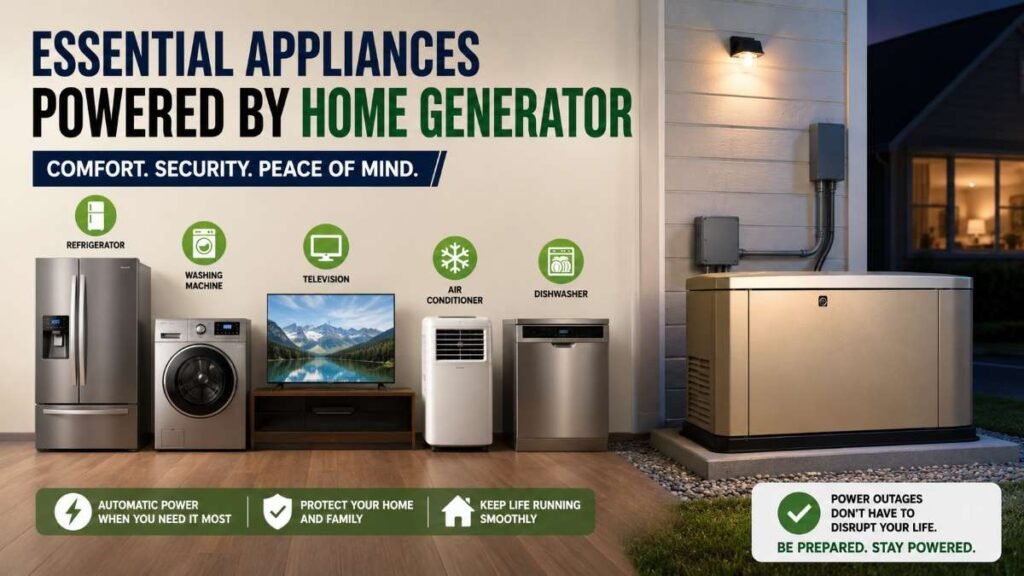
Start by deciding what absolutely needs to stay powered during an outage. For many households, that may include:
- Refrigerator and freezer
- Heating or cooling
- Internet and Wi-Fi equipment
- Selected lights and outlets
- Security systems
- Sump or well pumps
- Garage door opener
- Other essential equipment
If you only need a few critical circuits, a smaller system may be more practical than a generator designed to power the entire house.
The important question is not, “How big a generator can I buy?”
It is, “What do I actually need running when the power goes out?”
That answer should guide the rest of the project.
How Big Should a Home Generator Be?
Generator sizing is based on electrical demand, not simply the size of your house.
Some appliances use more electricity when starting than they do during normal operation. Air conditioners, refrigerators, pumps and other motor-driven equipment can create temporary startup demands that affect generator sizing.
Before getting a quote, make a simple list of the systems you want backed up.
Backup Goal | Main Consideration |
Essential appliances | Basic running load |
HVAC backup | Starting and running demand |
Pumps | Motor startup requirements |
Whole-home backup | Multiple large loads together |
Future needs | Potential additional electrical loads |
A qualified installer can evaluate the electrical system and determine whether the proposed generator can handle the intended loads.
Buying a larger unit “just to be safe” is not always the best approach. You are paying for equipment, installation and fuel capacity, so unused capacity can become an expensive luxury.
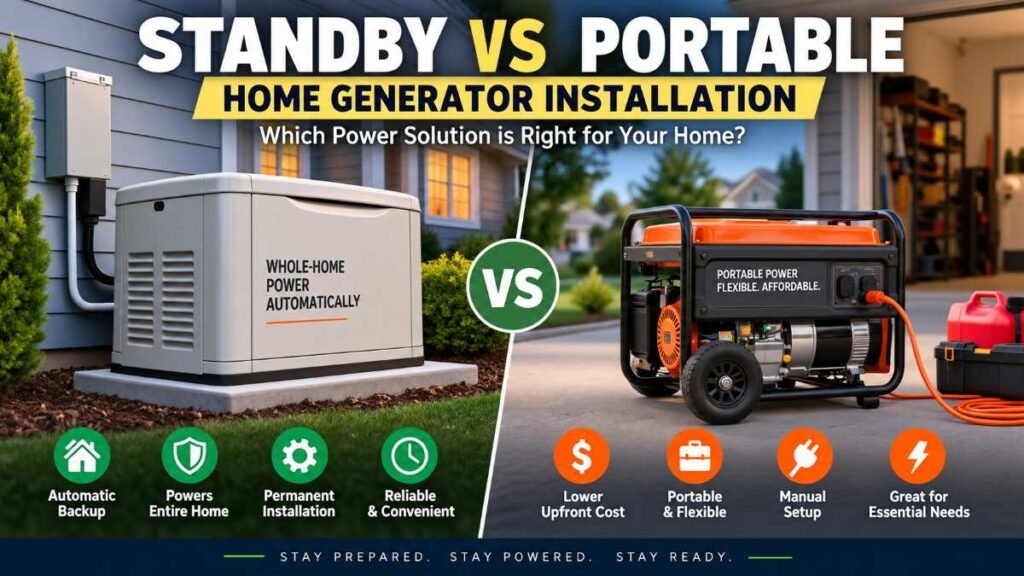
Standby or Portable Generator?
The right choice depends heavily on how you expect to use the system.
Portable Generator
Portable generators generally cost less and can make sense for occasional outages and limited backup needs.
But they require more homeowner involvement. You may need to position the unit safely, connect equipment correctly, monitor fuel and manage operation during the outage.
Portable generators must always be operated outdoors. The U.S. Consumer Product Safety Commission’s generator safety guidance warns about carbon-monoxide poisoning and recommends operating portable generators at least 20 feet from the home, with exhaust directed away from windows, doors and vents.
Standby Generator
A standby generator is permanently installed outside and connected to the home’s electrical system through appropriate transfer equipment.
Its biggest advantage is convenience. When utility power fails, the system can automatically switch to generator power, depending on the equipment and configuration.
The tradeoff is a higher overall project cost because installation can involve electrical work, fuel connections, permits and site preparation.
For homeowners who experience frequent outages or need automatic backup, a standby system may be worth the additional investment.
What Happens During Generator Installation?
A professional installation involves considerably more than placing a generator outside the house.
The process usually includes four major steps.
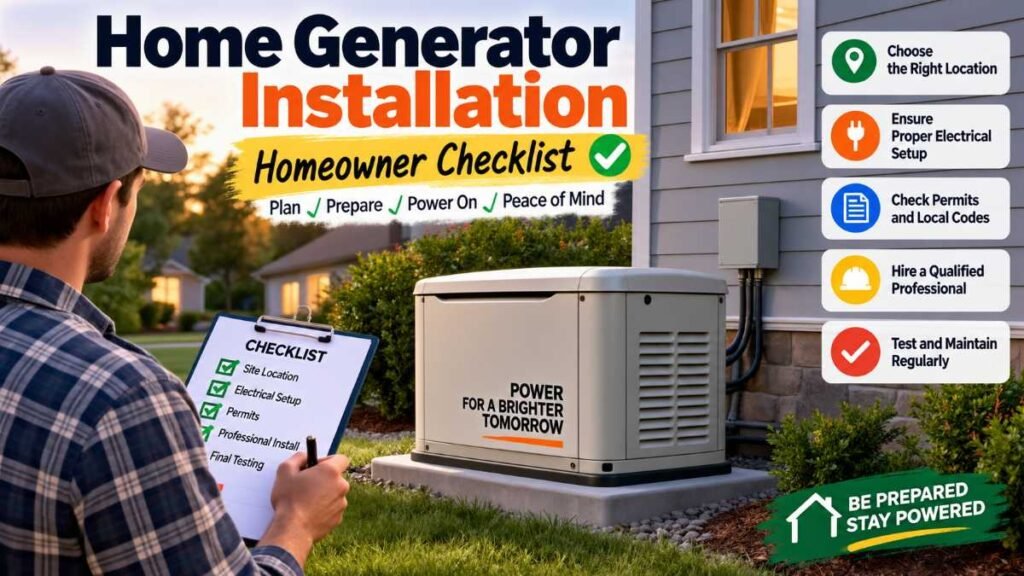
Electrical Assessment
The installer reviews the electrical panel and determines which circuits you want backed up.
This is where you decide between selected-load backup and whole-home backup.
Generator Placement
The installation location must provide appropriate clearance, ventilation and access for maintenance.
The location should also account for nearby windows, doors, vents and other structures.
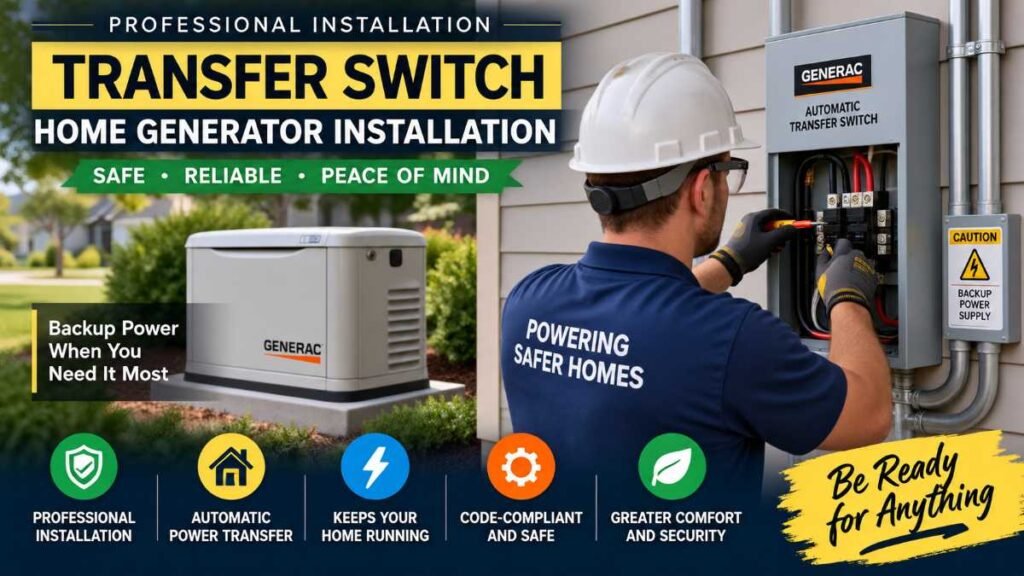
Transfer Equipment
A transfer switch or approved transfer equipment separates generator power from utility power.
This is a critical safety component. OSHA’s generator safety guidance warns against connecting a generator directly to a building’s electrical system unless a qualified electrician has installed the appropriate transfer switch. Improper connections can send electricity back into utility lines and create an electrocution hazard.
Fuel and Final Testing
Depending on the system, the generator may use natural gas, propane or another approved fuel source.
The installer should also test the system and explain:
- Which circuits receive backup power
- How the generator starts and stops
- What maintenance is required
- How alerts are monitored
- What to do if the system fails to start
The U.S. Department of Energy’s emergency preparedness guidance also emphasizes planning for utility disruptions and understanding backup-power needs before an outage occurs.
Generator Safety: The Part You Should Never Skip
Generator safety is not a minor detail.
Carbon monoxide is one of the biggest risks associated with portable generators. Never operate one inside a home, garage, basement, shed or other enclosed area. Opening doors or windows does not make indoor operation safe.
Working CO alarms should be installed and maintained according to the manufacturer’s instructions. The CPSC provides additional carbon monoxide safety information for generators and engine-driven tools.
Electrical safety matters just as much. Never improvise a connection to the home’s wiring. OSHA also warns about generator overloads because excessive electrical load can cause overheating and create a fire hazard.
For permanent systems, follow the generator manufacturer’s installation requirements and applicable local electrical, fuel and building rules.
Choosing a Fuel Type
Fuel availability should be considered before choosing the generator.
Natural gas can be convenient for homes that already have an appropriate gas connection. There is no need to store gasoline for routine operation, but the property’s gas supply must be suitable for the generator.
Propane can provide another practical option, particularly where natural gas is unavailable. Tank size and expected fuel consumption should be considered.
Gasoline is common with portable generators. However, safe storage, refueling and fuel maintenance become the homeowner’s responsibility.
There is no universally best fuel. The practical choice depends on availability, expected outage duration, equipment requirements and local conditions.
What Does Generator Installation Cost?
The total price varies substantially between homes.
Your quote may include:
- Generator equipment
- Transfer switch
- Electrical wiring or panel work
- Fuel-line installation
- Concrete pad or site preparation
- Permits and inspections
- Labor
- Testing
- Warranty or service arrangements
That is why comparing only the generator’s sticker price can give you a misleading picture.
A better approach is to request an itemized installed quote.
Ask exactly what is included and whether additional electrical or fuel work could increase the final cost.
If you are improving your home’s electrical resilience, our whole-house surge protector guide explains an important distinction: surge protection and generator backup solve different problems.
Smart Preparation Before Getting a Quote
You do not need to understand every technical detail before speaking with an installer.
Instead, prepare a short list of your priorities.
Write down:
- Appliances that must remain operational
- Typical outage duration in your area
- Whether you want automatic backup
- Available fuel sources
- Any existing electrical limitations
- Whether you want selected circuits or whole-home coverage
If your backup plan includes internet, cameras, smart locks or other connected equipment, reviewing your smart home automation guide can help identify which devices are genuinely important during an outage.
For connected security equipment, in this smart home cybersecurity guide can also be useful when deciding which devices should remain online during an extended outage.
Reducing unnecessary household energy demand can also make backup planning easier. Upgrading to energy-efficient windows helps lower overall heating and cooling loads, making it much easier for a smaller generator to handle your home’s needs. broader energy strategy.
Questions to Ask the Installer
Before approving a proposal, ask:
- Why is this generator size being recommended?
- Which circuits will receive backup power?
- Is the system whole-home or selected-load?
- What transfer equipment is included?
- What fuel work is required?
- Who handles permits and inspections?
- What maintenance is required?
- What happens if the generator fails to start?
- Is system testing included?
- What is the complete installed price?
A good installer should be able to explain the reasoning behind the recommendation instead of simply presenting a product and price.
Is a Home Generator Worth It?
For homeowners who regularly deal with outages, backup power can provide considerable peace of mind.
Home Generator Installation becomes particularly attractive when a household depends on heating or cooling, pumps, refrigeration, security equipment or other systems that cannot easily be interrupted.
But bigger is not automatically better.
If your main concern is keeping a refrigerator, internet connection and several essential circuits operating for a limited period, a smaller setup may be enough. If you need multiple high-demand systems operating simultaneously, a larger standby generator may make more sense.
The best system is the one that matches your actual electrical needs rather than the largest model your budget can afford.
Final Takeaway
Don’t rush to buy the biggest generator on sale this weekend. List your must-have appliances, get 2–3 itemized quotes from certified electricians, and let a proper Home Generator Installation protect what matters most when the grid goes dark.
Frequently Asked Questions
FAQ 1: What is the most common problem with generators?
Dead batteries and bad fuel are the top issues. A proper Home Generator Installation includes routine exercise cycles so it fires up instantly during power cuts.
FAQ 2: How to use a generator in an outage?
Keep portables 20 feet away outdoors with extension cords. With a standby Home Generator Installation, power restores automatically to your home panel within seconds.
FAQ 3: What is the 20/20 rule for generators?
Position portable units 20 feet from windows and maintain a 20% power buffer to handle motor startup loads safely.
FAQ 4: What are the major faults in a generator?
Common issues include low coolant, clogged lines, and failing switches. Faulty Home Generator Installation wiring can also trigger severe overload risks.
Author By: Dambar C. Rajbanshi About: A renovation strategist and home improvement enthusiast. Dambar specializes in budget-smart planning and functional kitchen design. He is dedicated to helping homeowners create spaces that perfectly balance beauty and practicality