
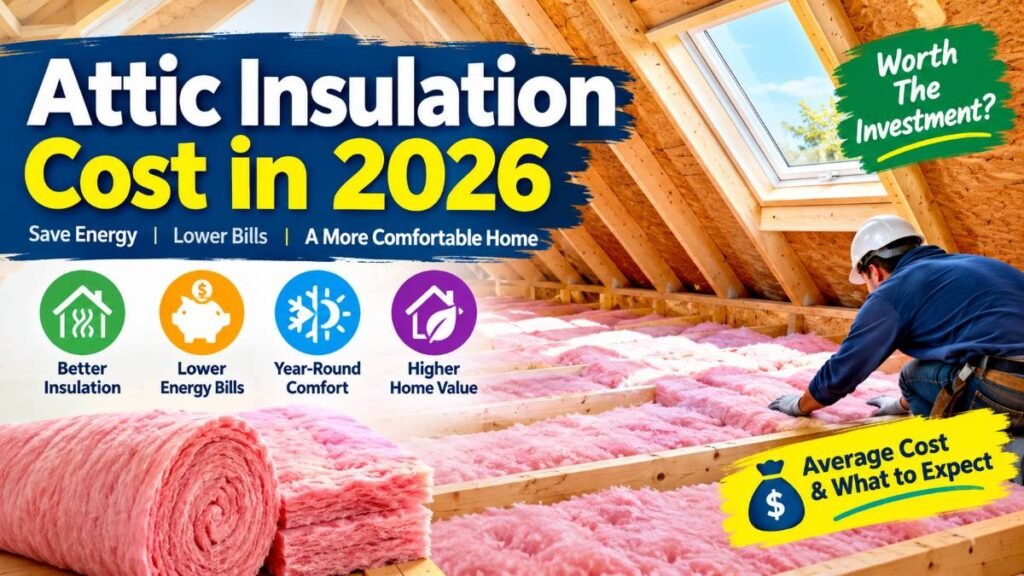
Ever wondered why your energy bills spike during summer heatwaves and winter cold snaps, even when your HVAC unit is running properly? Drafty living areas and uncomfortably warm upper levels usually trace back to an under-insulated ceiling structure. Getting a realistic estimate of your true attic insulation cost before speaking with contractors helps you select the right materials, set a practical renovation budget, and evaluate project quotes with confidence.
What Is the Average Attic Insulation Cost in the USA?
Industry benchmark data from home service resources like Angi places the national average attic insulation cost at approximately $2,100, with most standard residential projects falling between $1,700 and $2,500. On a square-foot basis, professional installation generally ranges from $1.00 to $3.00 per square foot for common options like loose-fill cellulose or fiberglass batts.
However, total project expenditures can range from $1,500 to over $4,500 for larger homes, complex roof designs, or premium closed-cell spray foam applications. If your space requires old insulation removal ($1.00 to $1.50 per sq. ft.) or preliminary air sealing ($250 to $750), contractors will include these essential preparatory services in their overall project bids.
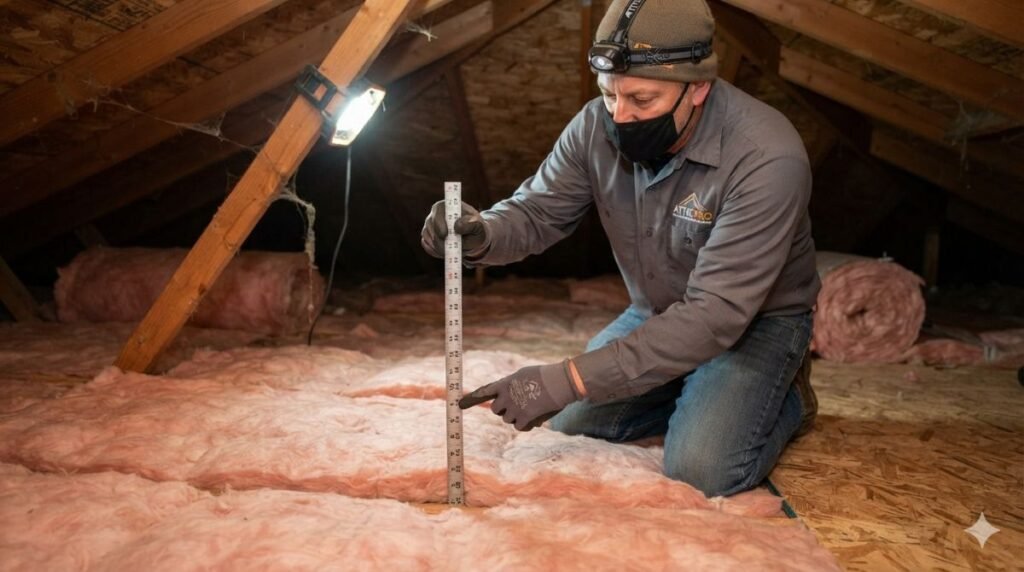
Cost Breakdown by Material Type
The material you choose directly impacts both your initial budget and the thermal performance of your attic assembly:
Material Type | Installed Cost per Sq. Ft.* | Estimated Cost (1,500 Sq. Ft. Attic) | R-Value per Inch** | Best Suited For |
Loose-Fill / Blown Fiberglass | $1.00 – $2.00 | $1,500 – $3,000 | R-2.5 – R-3.2 | Retrofitting existing attics affordably |
Blown-In Cellulose | $1.50 – $2.50 | $2,250 – $3,750 | R-3.2 – R-3.8 | Dense coverage in uneven joist spaces |
Fiberglass Batts / Rolls | $1.00 – $2.50 | $1,500 – $3,750 | R-3.0 – R-3.7 | Open joist bays and targeted DIY projects |
Open-Cell Spray Foam | $2.00 – $3.50 | $3,000 – $5,250 | R-3.5 – R-4.0 | Rafter undersides and acoustic dampening |
Closed-Cell Spray Foam | $3.00 – $5.00+ | $4,500 – $7,500+ | R-6.0 – R-7.0 | Maximum thermal resistance and vapor barriers |
*Note: Pricing ranges are derived from aggregated contractor averages published by Angi and national building material suppliers. Costs fluctuate based on regional labor rates, structural accessibility, and material thickness.
R-Value specs align with technical performance data provided by the U.S. Department of Energy (Energy Saver) and insulation manufacturer guidelines.
Major Factors That Impact Your Final Quote
- Attic Size & Accessibility: Raw square footage dictates material volume. Narrow access hatches, low roof clearances, or complex framing increase installation time and labor fees.
- 2021 IECC Reference Standards: The 2021 International Energy Conservation Code (IECC) serves as a widely referenced national benchmark for uninsulated attic ceilings, though actual local building code adoption varies by municipality:
- Zone 1 (Warmest / Southern US): Reference standard starts at R-30.
- Zones 2–3 (Moderate / Sunbelt): Reference standard rises to R-49.
- Zones 4–8 (Cold / Northern US): Reference standard reaches R-60.
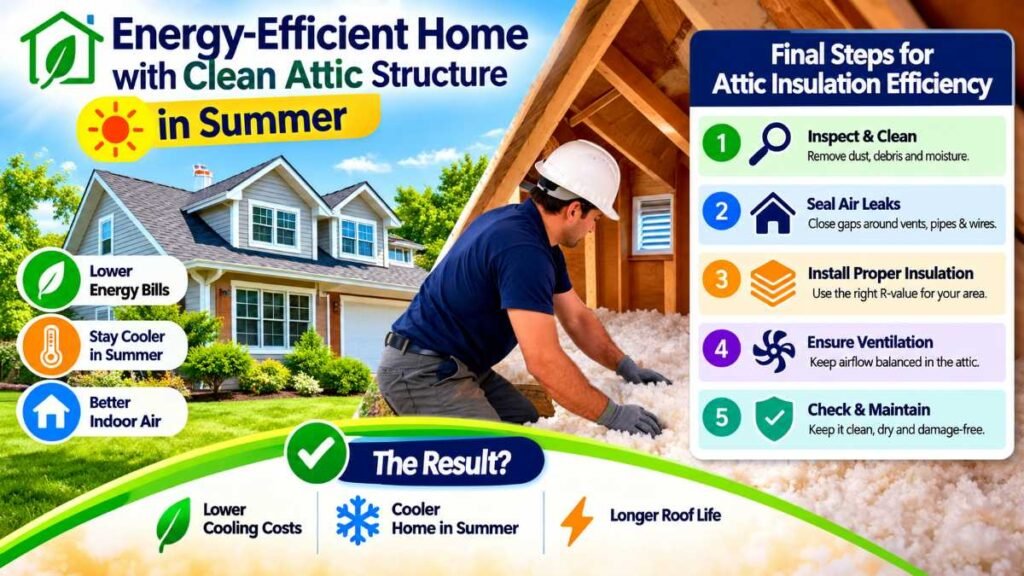
- Air Sealing Pre-Work: Insulation slows conductive heat transfer, but it does not stop convective air leaks around recessed lights, wiring penetrations, or chimney flues. Professional air sealing typically costs $250 to $750 and helps optimize overall material performance.
- Removal & Moisture Management: Replacing water-damaged or pest-compromised insulation adds around $1.00 to $1.50 per square foot for vacuuming and disposal. If you are also addressing moisture control in lower levels, checking a detailed basement waterproofing guide helps ensure consistent moisture management across your home.
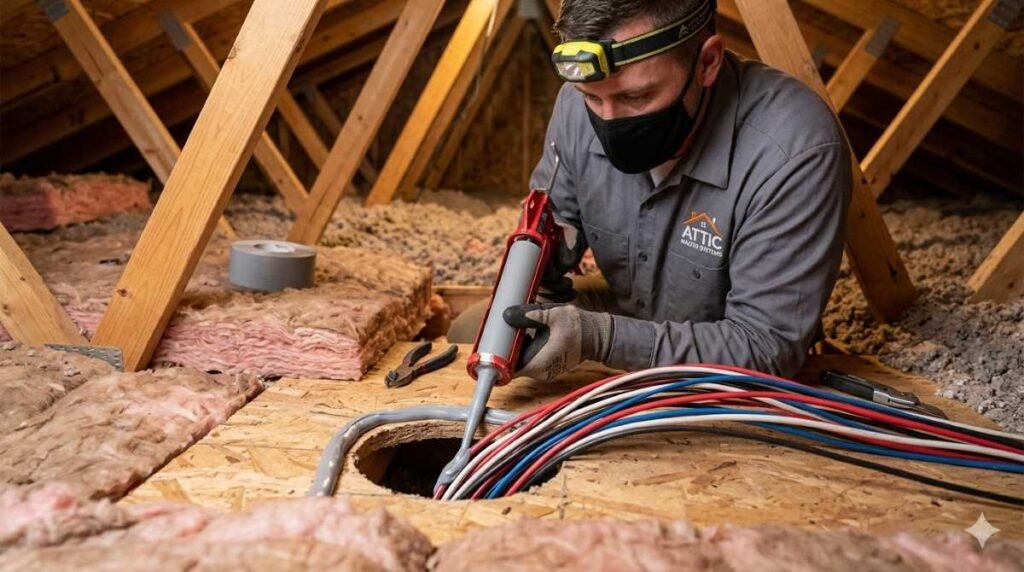
Labor Expenses vs. DIY Considerations
Labor typically represents a significant portion of a professional installation quote, with standard crew rates averaging between $55 and $85 per hour per technician.
- DIY Route: Rolling out fiberglass batts or renting a cellulose blower from a local hardware store can reduce material costs to approximately $600–$1,500. However, DIYers must handle proper personal protective equipment (PPE), ensure safe clearance around heat-producing fixtures, and preserve soffit ventilation paths.
- Professional Route: Qualified contractors can help ensure the installation meets applicable local building-code requirements, handle specialized installation machinery, and maintain safety standards on site.
For homes using smart efficiency upgrades, combining improved ceiling insulation with modern equipment like a heat pump water heater in the usa or managing temperatures using the best smart thermostats supports consistent climate control year-round.
Regional Price & Climate Variations
- Northern & Mid-Atlantic Regions (Zones 4–8): Substantial heating demands require deeper insulation depth (up to R-60). Higher material volume generally pushes overall bids into the $2,500 to $4,500 range.
- Southern & Sunbelt Regions (Zones 1–3): Projects prioritize heat defense (R-30 to R-49). Standard loose-fill installations often range between $1,500 and $3,000, with radiant barriers sometimes added as an optional climate-specific strategy for extreme attic temperatures.
- Pacific Northwest & Coastal Zones: Local moisture conditions and climate-zone requirements may affect vapor-control and ventilation details, keeping average professional quotes between $2,000 and $3,800.
Signs Your Attic May Need More Insulation or an Inspection
Before calculating your exact attic insulation cost, it helps to recognize common symptoms of energy loss and envelope drafts. Homeowners often notice these key warning signs:
- Ice Dams in Winter: When interior heat leaks into the attic, it can melt snow on the roof, which may refreeze at the cold eaves and create ice ridges or gutter backup risks.
- Fluctuating Room Temperatures: If upper floor bedrooms are noticeably hotter in summer or cold in winter compared to lower floors, your attic thermal layer may be uneven or insufficient.
- HVAC Systems Running Constantly: Inadequate ceiling insulation causes heating and cooling equipment to run longer cycles, increasing monthly utility usage.
- Pest Signs or Musty Odors: Damaged, wet, or pest-disturbed insulation loses its thermal effectiveness and can harbor moisture issues that require a professional evaluation.
Lifespan Expectations and Maintenance Considerations
Insulation materials are long-lasting, but environmental factors, settling, and moisture can affect their effectiveness over time:
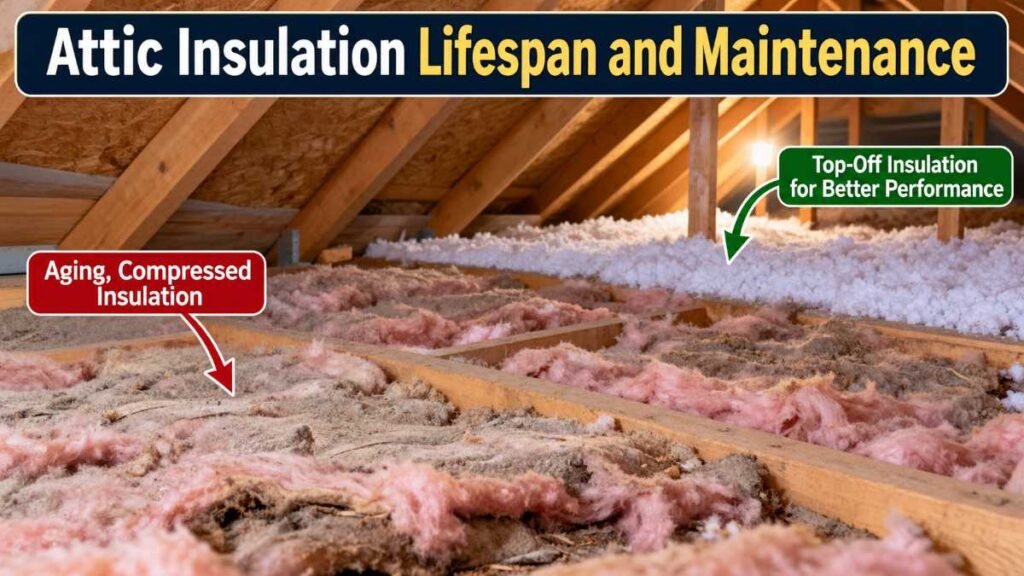
- • Fiberglass Batts & Loose Fill: Under dry conditions, these materials easily last for decades. However, heavy foot traffic, air movement, or accidental displacement can cause them to compact, shift, or lose coverage over time.
- Blown-In Cellulose: Generally maintains proper thermal resistance for decades, though natural settling over time may reduce original depth and effective R-value.
- Spray Foam Insulation: Can remain stable for many decades when properly installed and maintained, serving as a durable barrier against air leakage.
Older, compressed, or damaged insulation should be inspected by a qualified professional to determine whether adding top-off insulation or completing a full replacement is appropriate for your home.
Utility Rebates, Tax Updates, and Estimated ROI
Understanding active financial incentives helps set realistic expectations for project payback:
- Federal Tax Credit Status: The federal Section 25C tax credit for residential energy efficiency improvements expired for properties placed in service after December 31, 2025. Homeowners should verify current tax regulations with a certified tax professional before factoring federal credits into project planning.
- State & Local Utility Incentives: Many electric and natural gas utilities offer local rebate programs for home weatherization and air sealing. Incentives range widely depending on location, program structure, income eligibility, and utility funding. Homeowners can check active rebate offerings through the DSIRE database—operated by the N.C. Clean Energy Technology Center at NC State University—or directly with their energy provider.
- Estimated Energy Savings: According to estimates from ENERGY STAR, properly air-sealing and insulating an attic saves homeowners an average of 15% on heating and cooling costs (or about 11% on total home energy bills).
- Illustrative Payback Example: If an attic air-sealing and insulation project costs $2,100, and reduces annual heating and cooling expenses by $300, the simple payback period would be approximately 7 years. (Note: Actual savings and payback timelines depend on local utility rates, weather patterns, and individual home habits).
- Building Envelope Improvements: Pairing upgraded attic insulation with energy efficient windows creates a better-sealed building envelope that balances indoor temperatures and reduces strain on primary heating and cooling units.
How to Hire a Qualified Insulation Contractor
To ensure a smooth project and protect your home investment:
- Schedule an In-Person Inspection: Avoid binding phone estimates. A qualified contractor should assess current depth, inspect framing accessibility, and check for existing ventilation issues.
- Confirm Baffle Installation: Verify that your estimate includes rafter vents (soffit baffles) to prevent loose insulation from blocking airflow at the eaves.
- Review Itemized Line Items: Confirm that quotes clearly separate material types, targeted R-values, air sealing scope, and removal/disposal fees.
Next Steps for Improving Your Home's Efficiency
Upgrading your upper-level thermal barrier is one of the most practical steps you can take toward maintaining consistent indoor comfort. Schedule a home efficiency assessment with qualified local contractors, review current weatherization rebates offered in your region, and choose a solution that delivers reliable performance for years to come.
Frequently Asked Questions
Q1: How much does it cost to insulate a 1,500 sq. ft. attic?
Typically $1,500 to $3,750 for cellulose or fiberglass, and up to $7,500 for closed-cell spray foam.
Q2: How much for 1,000 sq. ft. of insulation?
Standard professional installation costs between $1,000 and $2,500, depending on regional labor and R-value needs.
Q3: Is it expensive to put insulation in an attic?
No. Although the national average attic insulation cost is $2,100, saving 15% on energy bills yields a quick ROI.
Q4: What is the cheapest way to insulate my attic?
DIY blown-in cellulose or rolling fiberglass batts minimizes your upfront attic insulation cost, often staying under $1,000.
Q5: What type of insulation is best for attics?
Blown cellulose offers the ideal balance of performance and reasonable attic insulation cost, while spray foam provides maximum sealing.
Editorial Disclaimer
The cost estimates, building codes, and rebate details in this article are provided for informational and educational purposes only. Actual installation quotes vary based on regional labor rates, structural conditions, and municipal code adjustments. Always obtain detailed, itemized estimates from qualified, insured contractors licensed where required by local law before undertaking home improvement projects.
About the Author
Dambar C.Rajbanshi. is a home improvement researcher specializing in residential building envelope efficiency, smart HVAC integrations, and home renovation cost structures. He focuses on analyzing industry building codes and material specifications to help homeowners evaluate contractor bids and make informed renovation decisions.