

Achieving a thick, deep-green yard shouldn’t cost a fortune. Most homeowners dump expensive fertilizers on their lawn without realizing the real problem is compacted soil or poor watering habits.
Stop throwing money at quick chemical fixes! Whether you are managing cool-season turf or warm-season grass, following a structured lawn care blueprint helps you fix underlying soil issues, prevent costly weed outbreaks, and build a resilient, healthy lawn on a budget without guessing.
Seasonal Maintenance Breakdown
Effective lawn care demands dynamic, season-specific protocols. Applying heavy nitrogen fertilizers during intense midsummer heat risks root burn, while neglecting autumn root development leaves lawns vulnerable to spring weed invasion.
eason | Primary Focus | Critical Action Steps | Recommended Tools & Methods |
Spring | Soil awakening & weed defense | Soil testing, targeted pre-emergent timing, light debris removal | Core aerator, drop spreader, soil testing kit |
Summer | Thermal defense & hydration control | Water before sunrise, raise mower deck settings, and watch for drought stress | High-efficiency mower, smart sprinkler controller |
Fall | Root strengthening & overseeding | Core aeration, slit seeding, species-appropriate nutrient feeding | Heavy-duty aerator, seed broadcast spreader |
Winter | Power equipment maintenance & turf preservation | Stabilize engine fuel, restore mower blade edges, and limit foot traffic on frozen lawn | Engine oil service kit, fuel additive, breathable storage cover |
Soil Health and Nuanced pH Management
Before purchasing soil amendments or grass seed, evaluating soil chemistry establishes the foundation for root development. While many common residential turfgrasses perform well within a general pH range of 6.0 to 7.0, optimal levels vary depending on whether you cultivate cool-season or warm-season species. Soil pH directly impacts nutrient availability; when soil is too acidic or alkaline, essential elements become locked and unavailable to grass roots.
- Conduct a Soil Test: Collect samples from four or five distinct areas of your yard at a depth of four to six inches. Submit samples to your local county university cooperative extension office or utilize a calibrated digital testing tool to determine baseline pH and nutrient levels.
- Managing Acidic Soil: If testing confirms soil pH falls below target thresholds for your specific grass species, apply agricultural limestone at rates recommended by your soil test report.
- Managing Alkaline Soil: If soil testing confirms a pH above 7.2, elemental sulfur or aluminum sulfate may be recommended by local specialists. Avoid automatic chemical applications without a laboratory report, as unnecessary sulfur additions can disrupt soil microbial activity.

Mowing Height Guidelines and Blade Maintenance
Mowing grass too short—commonly referred to as scalping—reduces root depth and exposes the soil bed to direct sunlight, encouraging opportunistic weeds like crabgrass. Following extension guidelines for mowing heights forms an essential part of effective lawn care.
Turfgrass Species | Grass Category | Recommended Cut Height | Extension Reference |
Kentucky Bluegrass | Cool-Season | 2.5 – 3.5 inches | |
Tall Fescue | Cool-Season | 3.0 – 4.0 inches | |
Bermuda Grass | Warm-Season | 1.0 – 2.0 inches | Clemson University Extension |
Zoysia Grass | Warm-Season | 1.5 – 2.5 inches | |
St. Augustine Grass | Warm-Season | 3.0 – 4.0 inches |
- The One-Third Rule: Never trim more than one-third of the leaf blade height during a single mowing session. Removing excessive top growth shocks the plant and depletes energy stores.
- Maintain Sharp Mower Blades: Sharpen blades based on usage (typically after every 20 to 25 hours of operation) or whenever leaf tips appear frayed. Dull blades tear grass tissues, causing brown edges and opening entry points for fungal pathogens.
Early Morning Deep Irrigation Strategies
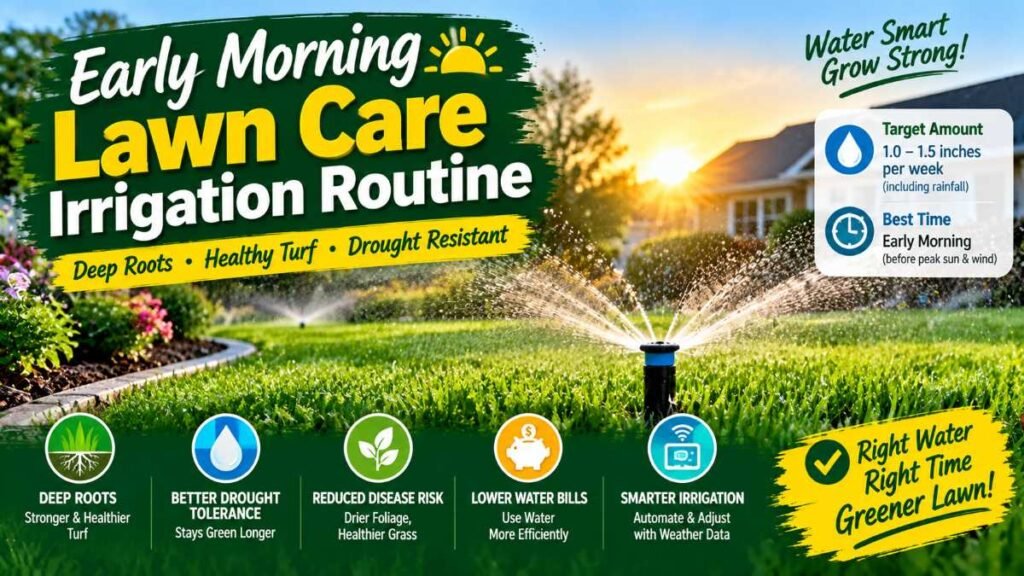
Infrequent, deep watering promotes strong root growth. Daily light sprinklings keep root systems concentrated near the surface, leaving the lawn vulnerable to thermal stress during high summer temperatures.
Target General Starting Point: ~1.0 inch of water per week (including rainfall)
Optimal Timing Window: Early morning hours (before peak sun and wind exposure)
A common starting point for residential turf is approximately 1.0 inch of water per week, including rainfall. However, actual water requirements vary based on turf species, soil type, temperature, and local municipal water restrictions. Irrigation guidelines provided by EPA WaterSense emphasize early morning watering to allow moisture to soak into the root zone before heat drives evaporation, while avoiding late evening irrigation that keeps foliage damp overnight.
For automated management, integrating a smart irrigation controller helps adjust run times dynamically based on real-time rainfall data.
Nuanced Fertilization and Weed Diagnostics
Applying fertilizers or herbicides without diagnostic steps leads to uneven results and unnecessary environmental runoff. An effective routine balances pre-emergent weed protection with species-appropriate nutrient scheduling.
- Spring Pre-Emergent Timing: Apply pre-emergent treatments in spring when soil temperatures reach roughly 55°F consistently for several consecutive days. Timing varies by region, so consult regional soil temperature trackers or local extension advisories to determine the precise application window for your zip code.
- Nutrient Timing for Turf Types: Cool-season grasses benefit significantly from late summer and fall fertilization to build root storage before winter dormancy. Warm-season grasses require nutrient support during late spring and summer when actively growing. Always check state extension recommendations for maximum nitrogen application limits.
- Targeted Weed Management: Identify specific weed species before applying post-emergent herbicides. Blanket spraying chemicals across heat-stressed lawns can burn delicate turf blades.
Quick Lawn Diagnosis Checklist
When lawn issues arise, misinterpreting symptoms often leads to incorrect chemical treatments. Use this practical diagnostic framework to evaluate problems before taking corrective action:
Lawn Issue | First Diagnostic Check | Recommended First Action |
Brown or Discolored Grass | Check soil moisture levels and test root strength by gently tugging grass blades. | Do not automatically apply fertilizer; inspect for grub damage, drought stress, or root rot. |
Thin or Sparse Turf | Measure daily sunlight hours and test for soil compaction with a screwdriver test. | Evaluate if the grass species is suitable for shade; prune overhanging tree branches or relieve compaction. |
Standing Water / Pooling | Check soil clay content, thatch accumulation, and lawn slope. | Investigate drainage channels; schedule core aeration if topsoil is tightly compacted. |
Recurring Weed Outbreaks | Verify mower deck height and check past pre-emergent timing records. | Raise mowing deck height to shade weed seeds naturally; confirm proper seasonal timing for pre-emergents. |
Bare or Patchy Spots | Inspect for high pet traffic, chemical spills, or localized insect activity. | Identify the root cause before overseeding; patch repair will fail if underlying soil conditions remain untreated. |
Core Aeration and Overseeding
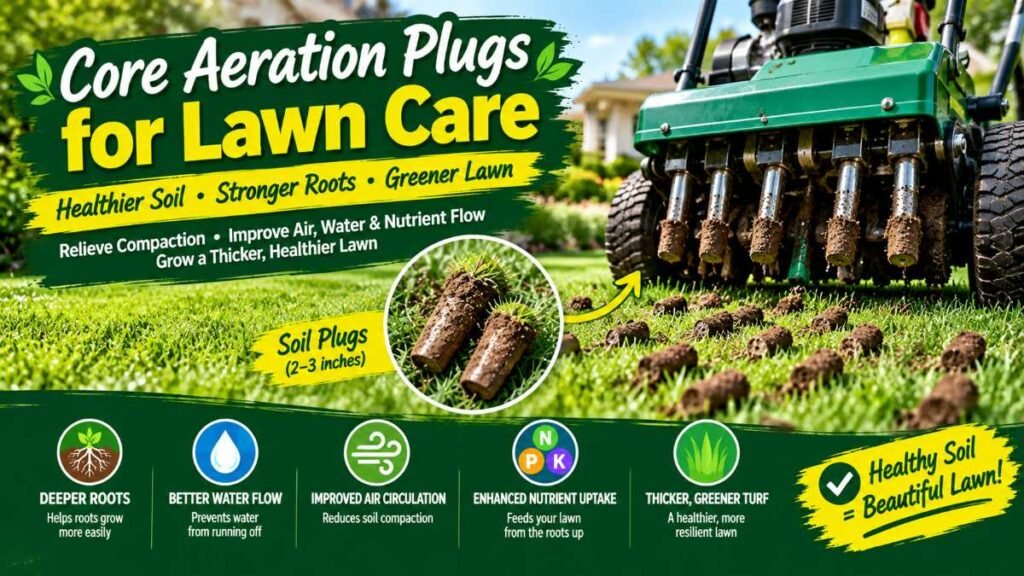
Soil compaction squeezes air pockets out of the ground, limiting the flow of oxygen, water, and nutrients to root systems. Heavy foot traffic, dense clay soils, and lawn mowers contribute to compaction over time.
Core Aeration vs. Dethatching Comparison:
- Core Aeration: Pulls 2–3 inch soil plugs to relieve compaction and encourage deeper root channels.
- Dethatching: Removes the dense layer of dead organic stems and roots accumulating above the soil line.
Schedule core aeration during periods of active turf growth—early fall for cool-season lawns and early summer for warm-season varieties. While overseeding immediately after core aeration improves seed-to-soil contact, seeding and applying weed control chemicals simultaneously can kill emerging seedlings; always check product labels for compatibility windows.
For routine maintenance between seasonal aerations, automated tools like a high-efficiency robot lawn mower keep turf height consistent while finely mulching clippings back into the soil. If expanding outdoor living spaces alongside turf upgrades, review practical smart backyard privacy ideas or accent your perimeter using a smart outdoor lighting guide to protect newly seeded turf lines from foot traffic.
Pest and Disease Management: Identify First, Treat Second
Soil pests and fungal outbreaks can thin established grass quickly when weather conditions favor pathogens. Following a strict “identify first, treat second” protocol prevents unnecessary pesticide exposure and saves money.
- Pest Identification: White grubs feed on grass roots. If patches of grass pull up easily like loose carpet, pull back a section of turf to inspect for C-shaped larvae.
- Targeted Control Timing: Apply preventive or curative grub control based on egg-hatch timing in your specific region rather than on arbitrary calendar dates. Check regional pest advisories from university extension offices for integrated pest management guidelines.
- Fungal Outbreak Protocols: Avoid applying broad-spectrum fungicides without identifying the specific disease first. Fungal issues like red thread, brown patch, and dollar spot respond differently to cultural adjustments—such as reducing evening irrigation or adjusting nitrogen levels—which can resolve symptoms without chemical application.
Sustainable Turf Practices and Soil Health
Combining lawn care with sustainable management practices reduces maintenance costs and protects local waterways from chemical runoff.
- Mulching Clippings: Returning finely chopped grass clippings to the yard recycles organic material into the topsoil. Studies by university extension programs demonstrate that leaving clippings on the lawn returns valuable nitrogen and organic matter back to the root zone over time.
- Compost Top-Dressing: Spreading a thin layer (1/8 to 1/4 inch) of high-quality screened compost after core aeration introduces beneficial soil microorganisms and improves moisture retention in sandy or clay-heavy soils.
Frequently Asked Questions
1. Where can I find a reliable month-by-month lawn care calendar?
Following a structured lawn care blueprint gives you a clear seasonal schedule for mowing, watering, and fertilization tailored to your regional climate.
2. Is do-it-yourself lawn treatment better than hiring services like TruGreen?
DIY treatment lets you target specific soil chemistry issues directly, saving thousands of dollars compared to commercial subscription packages.
3. What is the most essential lawn care fertilizer for healthy grass?
A balanced slow-release nitrogen fertilizer paired with proper soil pH management promotes deep root growth without scorching turf.
4. Where can I get a free lawn maintenance schedule template?
You can use our seasonal breakdown table above as a practical blueprint to track core aeration, overseeding, and pre-emergent timing.
5. How do I choose the best lawn care approach for my home?
Start with a quick soil test to understand your yard’s nutrient needs before applying chemicals or choosing a treatment routine.
Mastering Your Turf: From Seasonal Care to Long-Term Success
Transforming a tired yard into a vibrant, resilient green space isn’t about quick chemical fixes—it comes down to smart, daily decisions. By understanding your soil chemistry, sticking to proper seasonal mowing heights, and diagnosing lawn issues before taking action, you take full control of your yard’s health. Consistency is what turns everyday lawn care into a thriving, low-stress outdoor landscape. Take the first step today: run a simple soil test, adjust your irrigation timer, and build a routine that keeps your turf strong through every season!

External Resources
EPA WaterSense Irrigation Guidelines – Smart outdoor watering standards, efficient irrigation practices, and water conservation guidelines.
USDA Natural Resources Conservation Service – Soil health indicators, pH balance management, and sustainable land management protocols.
Purdue University Lawn Care Extension – Turfgrass species selection, seasonal mowing height benchmarks, and soil aeration research.
Editorial Disclaimer
The turf management and residential landscaping guides published on SmartHomeZenith are provided strictly for educational and informational purposes. Soil dynamics, climate zones, and local environmental regulations vary significantly across the United States. Always consult your state university cooperative extension service and adhere to municipal chemical application ordinances before applying fertilizers, herbicides, or pesticides.
About the Author
Dambar C.P.Rajbanshi is a digital publisher, home improvement specialist, and residential tech advocate. Drawing on research-backed home maintenance protocols, outdoor automation evaluations, and practical testing, he provides actionable, straightforward guidance to help homeowners cultivate resilient, sustainable, and well-maintained residential spaces.