

Ever wonder why a living room can look cluttered again only minutes after you tidy it? Usually, the problem is not a lack of space—it is a lack of storage that matches how the room is actually used. The best living room storage ideas combine function, good proportions, and easy everyday organization. With the right furniture, vertical space, and hidden storage solutions, even a compact room can feel calmer, more useful, and much easier to keep tidy.
Choose Furniture That Works Twice
The smartest living room storage ideas give you storage without demanding another full-size piece of furniture.
Furniture | Best For | Main Benefit |
Storage ottoman | Blankets, toys, pillows | Seating + hidden storage |
Lift-top coffee table | Games, books, remotes | Surface + storage |
Storage bench | Throws, cushions, toys | Seating + concealed space |
TV console | Electronics, games | Large storage zone |
Side table with drawers | Chargers, books | Small footprint |
Cabinet bookcase | Books + clutter | Open + closed storage |
A storage ottoman is a particularly practical choice in a smaller room because it can serve as a footrest, extra seat, and storage box.
But measure before buying. Check the furniture depth, walkway, doors, windows, and outlets. A cabinet that holds plenty but blocks movement is not a good storage solution.
A useful rule: buy the smallest piece that comfortably solves the problem.
That same space-first approach can be applied elsewhere in the home with these small closet organization ideas, especially when storage space is limited.
Use the Walls
When floor space is tight, look upward.
Floating shelves, tall bookcases, wall-mounted cabinets, and narrow shelving can add storage without filling another section of the floor. This is particularly useful in apartments and smaller homes.
Look for unused wall space above:
- A TV console
- A sofa
- A desk
- A reading chair
- A low cabinet
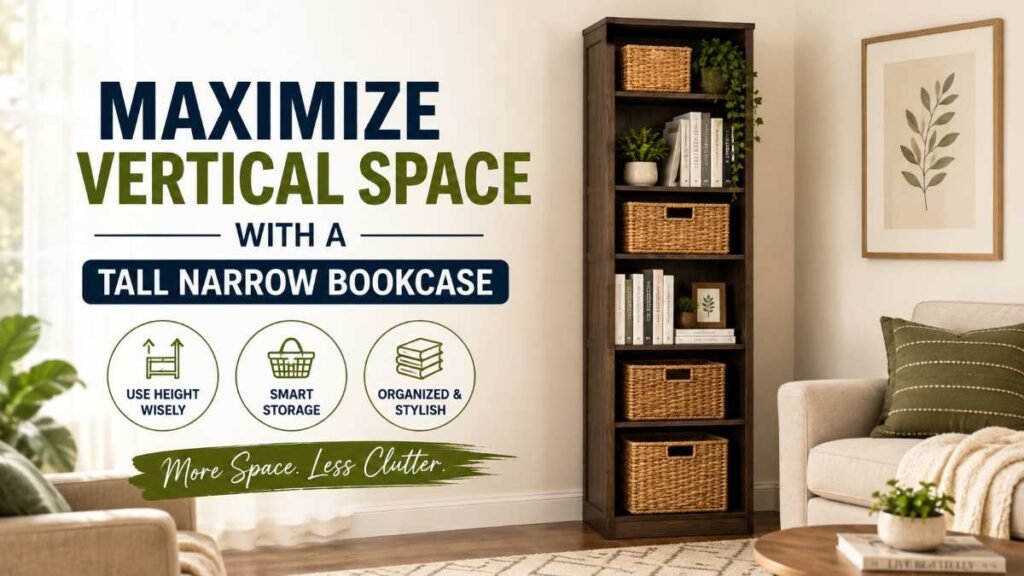
For compact rooms, a tall narrow bookcase may work better than a wide cabinet because it uses height instead of valuable floor area.
Simple Shelf Plan
Lower: heavier books, baskets, electronics
Middle: frequently used items
Upper: decor and occasional-use items
Do not fill every shelf. Open storage needs breathing room, or it can create visual clutter rather than remove it.
Using a mix of open and closed storage is also a practical small-space strategy; IKEA’s U.S. living-room guidance shows how wall storage and concealed compartments can help keep compact spaces organized while preserving usable floor area. (IKEA small-space storage guide)
Hide the Clutter
Not everything that needs storage deserves to be displayed.
Cables, chargers, toys, board games, paperwork, and extra blankets are useful but visually distracting. This is where hidden living room storage ideas can make the room feel noticeably calmer.
Hide
- Remotes and charging cables
- Board games
- Children’s toys
- Extra blankets
- Small electronics
- Paperwork
Display
- Books
- Plants
- Artwork
- Framed photos
- Favorite decorative pieces
Give each category a simple home:
One basket for throws.
One box for chargers.
One cabinet for games.
One drawer for paperwork.
That is much easier to maintain than repeatedly moving clutter from the coffee table to the sofa and back again.
If your entertainment area has several connected devices, plan cable storage before purchasing furniture. A smart home installation guide can also help you think about device placement and wiring as part of the overall room layout.
Make Small Rooms Work Harder
For apartments, studios, and compact family rooms, the best living room storage ideas protect open floor space.
Try:
- Tall, narrow shelving
- Storage ottomans
- Wall-mounted shelves
- Slim TV consoles
- Storage benches
- Corner shelving
- Narrow sofa tables with drawers
Also look for dead zones—areas that exist but rarely serve a purpose.
Think behind the sofa, under a window, beside the TV, inside an awkward corner, or above low furniture.
A slim shelf behind a sofa can hold books, lighting, or baskets without requiring another large cabinet.
Quick Decision Guide
Unused wall? → Go vertical.
Need hidden storage? → Choose cabinets or drawers.
Need extra seating? → Use a storage bench or ottoman.
Renting? → Favor freestanding pieces.
Already crowded? → Avoid another deep unit.
The goal is not maximum furniture.
It is maximum usefulness from the furniture you already own.
Match Storage to Your Style
Storage should look like part of the room rather than an afterthought.
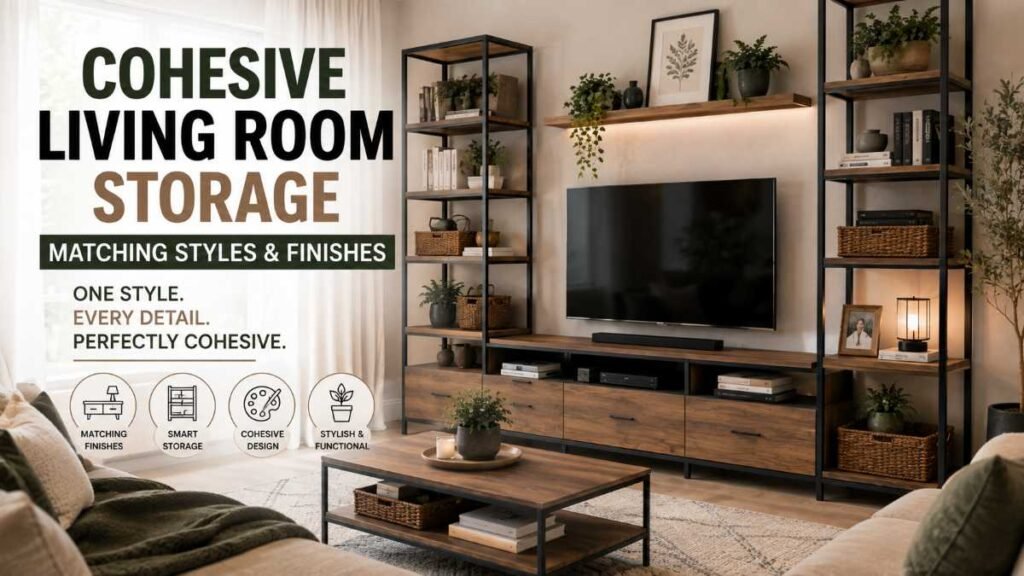
The strongest living room storage ideas work with your existing colors, materials, furniture scale, and overall style.
A traditional room may suit wood shelving or built-in cabinetry. A modern space can work well with clean-lined cabinets, floating shelves, and low-profile media units. A relaxed family room may benefit from woven baskets, upholstered benches, and practical open shelving.
Try repeating two or three finishes, such as:
Wood + black metal + neutral fabric
or
Light wood + white + woven texture
Scale matters, too. A huge bookcase can overpower a small room, while a tiny shelf can disappear in a large one.
Storage should fit the room’s proportions, not simply the empty wall.
If you are refreshing the space at the same time, these interior painting ideas can help you coordinate wall color, furniture, and storage instead of treating each decision separately.
Spend Where the Problem Is
You do not need custom cabinetry to improve your living room.
Start with simple baskets, boxes, shelves, organizers, and modular furniture. Spend more only when the storage problem genuinely requires a larger solution.
Budget | Useful Options |
Under $30 | Baskets, bins, boxes, cable organizers |
$30–$100 | Shelves, small ottomans, narrow bookcases |
$100–$300 | Storage benches, TV consoles, lift-top tables |
$300+ | Built-ins and custom cabinetry |
Consider these numbers as rough estimates rather than final price tags.
Before spending anything, solve your biggest clutter problem first. If toys cover the floor, start there. If books are piling up, create a book zone. If electronics dominate the TV area, improve that space.
And remember: you cannot organize your way out of owning too much stuff.
Donate, move, recycle, or discard what no longer belongs in the room before buying more storage.
Avoid the Mistakes That Create More Clutter
Even attractive furniture can make a room feel worse when the planning is off.
Buying Before Measuring
Measure the wall, furniture depth, windows, doors, outlets, and walking paths.
Filling Every Shelf
Open shelving looks better when some space is intentionally left empty.
Using Only Open Storage
Toys, chargers, paperwork, and miscellaneous items often look better behind doors or inside baskets.
Ignoring Vertical Space
A low cabinet may leave valuable wall height unused.
Putting Heavy Items Too High
This can become a safety problem, especially around children.
The U.S. Consumer Product Safety Commission recommends anchoring appropriate furniture and TVs, keeping heavier items lower, and following manufacturer instructions for anti-tip hardware. (CPSC Anchor It furniture safety guidance)
CPSC also warns that children can climb on or pull against furniture such as bookcases, shelves, and TV stands, which is why secure installation matters. (CPSC childproofing and furniture tip-over safety)
Organize Before You Shop
One of the biggest mistakes with living room storage ideas is buying furniture before deciding what actually needs a home.
Use four groups:
Keep: Things you use and enjoy.
Store: Things you need but rarely use.
Move: Items that belong elsewhere.
Let Go: Things you no longer need.
Then sort what’s left.
Item | Better Storage |
Books | Bookcase or floating shelves |
Blankets | Basket or storage ottoman |
Toys | Low bins or closed cabinets |
Electronics | TV console with ventilation |
Small items | Drawers or labeled boxes |
This simple inventory step can prevent you from buying storage that looks useful but solves the wrong problem.
If your living room doubles as a workspace, these home office setup ideas can also help keep desks, cables, shelves, and work supplies from spreading into the rest of the room.

Make the System Easy to Maintain
A storage system should not feel like another chore.
Keep daily-use items within easy reach. Reserve higher shelves for seasonal or rarely used belongings. Use lower, accessible storage for children’s everyday items, while securing tall or top-heavy furniture according to the manufacturer’s instructions.
Most importantly, make putting things away almost effortless.
Blanket → one basket.
Remote → one drawer.
Toy → one bin.
Book → one shelf.
That is the real test of living room storage ideas. Not whether the room looks perfect for an hour, but whether it still works on an ordinary Tuesday night.
Finish With a Storage Plan That Fits Real Life
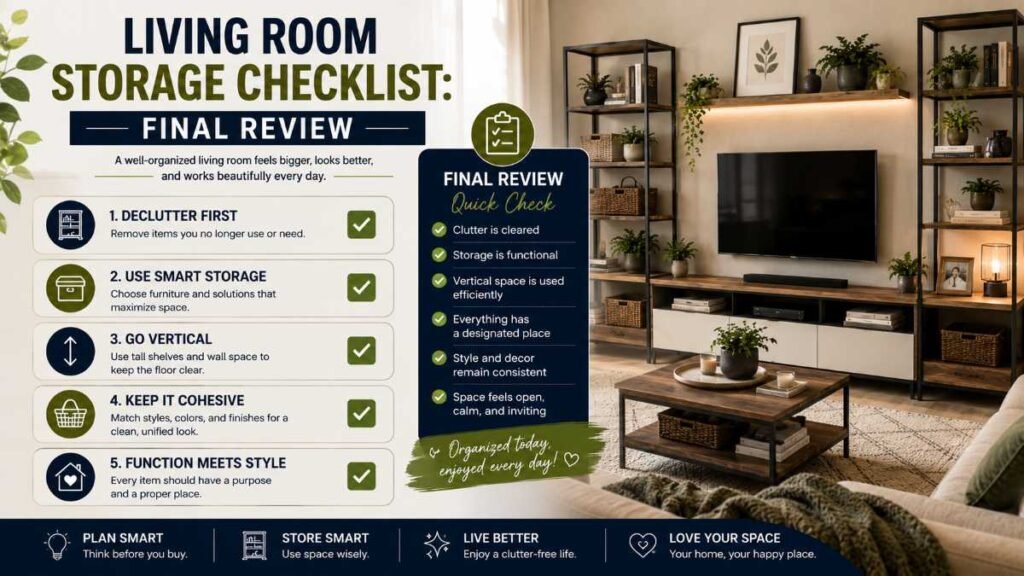
The best living room storage ideas are not the biggest or most expensive. They are the ones that remove daily clutter without making the room feel crowded.
Quick FAQ
Q1: How to reduce clutter in a living room? Purge unused items and assign a fixed home for everything else. Multi-functional furniture and vertical shelves offer smart living room storage ideas that keep everyday surfaces clear.
Q2: What is the 3-3-3 rule for decluttering? This rule means choosing 3 items to toss, 3 to donate, and 3 to put away in a quick session. It makes applying living room storage ideas easy without taking up much time.
Q3: What are some living room storage ideas? Popular choices include ottomans with storage, floating wall shelves, lift-top coffee tables, and narrow consoles. Combining open shelves with hidden storage baskets provides practical living room storage ideas to keep your room organized.
Author By: Dambar C. Rajbanshi About: A renovation strategist and home improvement enthusiast. Dambar specializes in budget-smart planning and functional kitchen design. He is dedicated to helping homeowners create spaces that perfectly balance beauty and practicality