
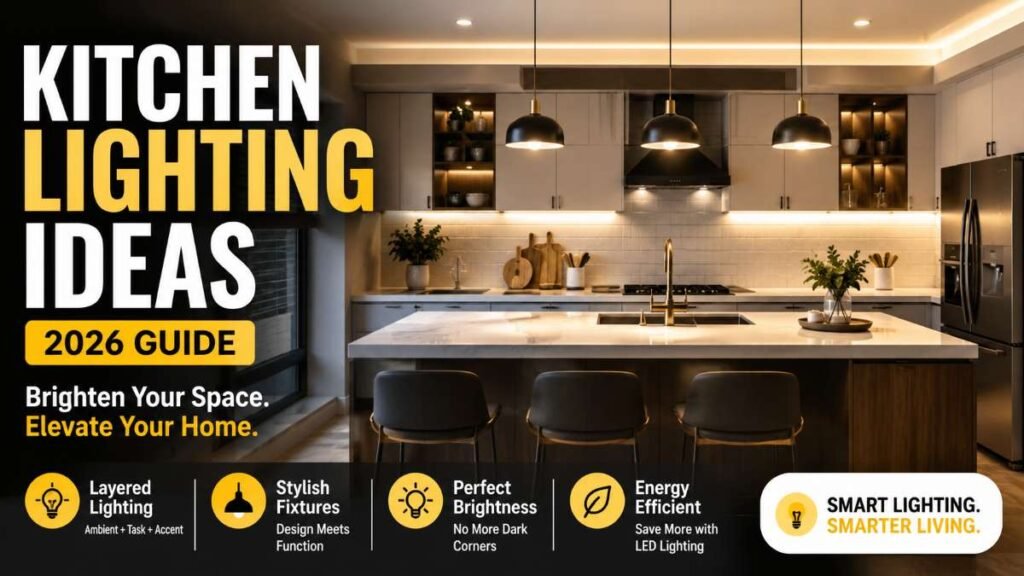
Tired of cooking dinner under harsh, glaring bulbs or squinting over your kitchen island because shadows block your workspace? Let’s be real—scrambling through a dim kitchen while trying to chop vegetables or read a recipe on a gloomy evening is a frustrating daily struggle.
Based on published interior design data, electrical standards, and homeowner feedback across the United States, planning a thoughtful multi-layered lighting layout prevents eye strain and transforms your kitchen into a welcoming culinary hub. Finding the right kitchen lighting ideas ensures that your culinary space remains functional, safe, and visually stunning throughout every season.
Illuminating Every Corner: Mastering Layered Home Lighting
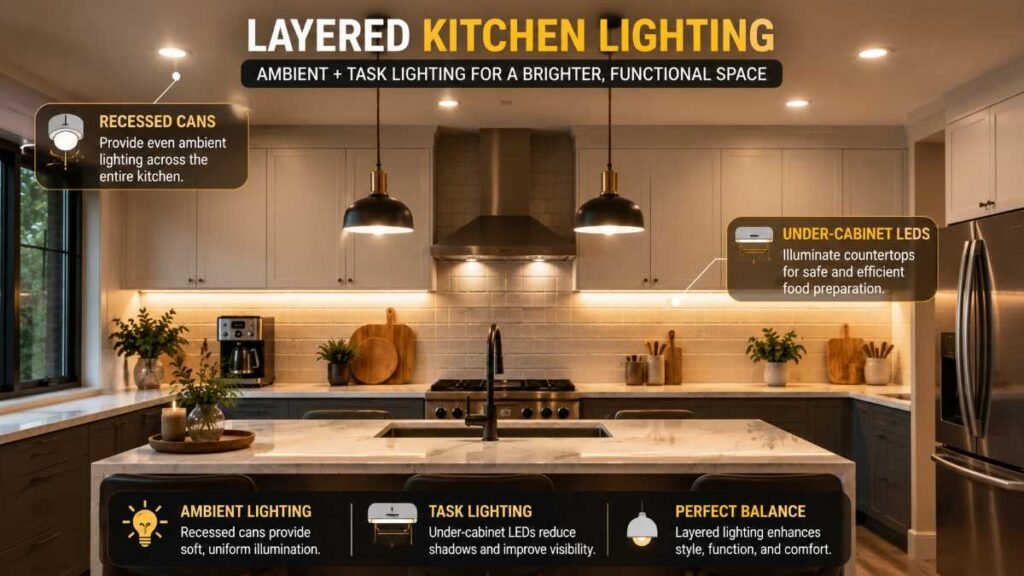
Not all kitchen fixtures serve the same purpose, and relying on a single overhead source guarantees dark corners. Knowing how to balance different lighting layers prevents harsh glares across your countertops while keeping every workspace uniformly bright and safe.
- Ambient Overhead Lighting: Fixtures like flush mounts, recessed cans, or modern chandeliers provide the foundational illumination that fills the entire room with soft, even radiance.
- Task Illumination: Focused under-cabinet LED strips or adjustable pendant lights direct bright, glare-free light onto cutting boards, stoves, and sinks where precision matters most.
- Common Mistake: Relying on a single center ceiling light creates heavy shadows right where you stand to prep food, blocking your own light source.
Expert Tip
In my experience, installing dimmer switches on every circuit allows you to transition seamlessly from bright, energized morning meal prep to warm, relaxing evening dining. For comprehensive setup strategies before mounting hardware, exploring expert insights on smart home installation helps prevent electrical missteps.
Balancing Budget and Fixture Quality in Modern Kitchens
Upgrading your home’s electrical fixtures shouldn’t drain your savings account, but investing in durable hardware prevents flickering bulbs and frequent maintenance headaches down the road.
Standard flush-mount fixtures across the US market generally range from $50 to $150, while premium multi-light island pendants or custom LED under-cabinet systems can push between $200 and $500 depending on wiring complexity. Think of quality kitchen lighting ideas like a permanent property upgrade; efficient LED systems consume noticeably less electricity and last for decades.
However, homeowners frequently discuss how cheap, unsealed fixtures trap kitchen grease and moisture, leading to premature yellowing and electrical shorts. Always look for damp-rated or wet-rated materials for fixtures near sinks and stoves to ensure long-term durability.
Quick Expert Recommendation: Plan Your Zones Wisely
Before committing to any purchase, evaluate your kitchen layout, ceiling height, and primary work triangles. Designing dedicated lighting zones ensures your space receives optimal brightness without wasting energy in low-traffic corners. In a typical kitchen lighting ideas plan for a 12×12-foot kitchen, installing six 4-inch recessed LED lights paired with continuous under-cabinet strips provides balanced, shadow-free illumination across all daily prep zones.
Island Illumination: Choosing the Right Pendants and Color Temperature
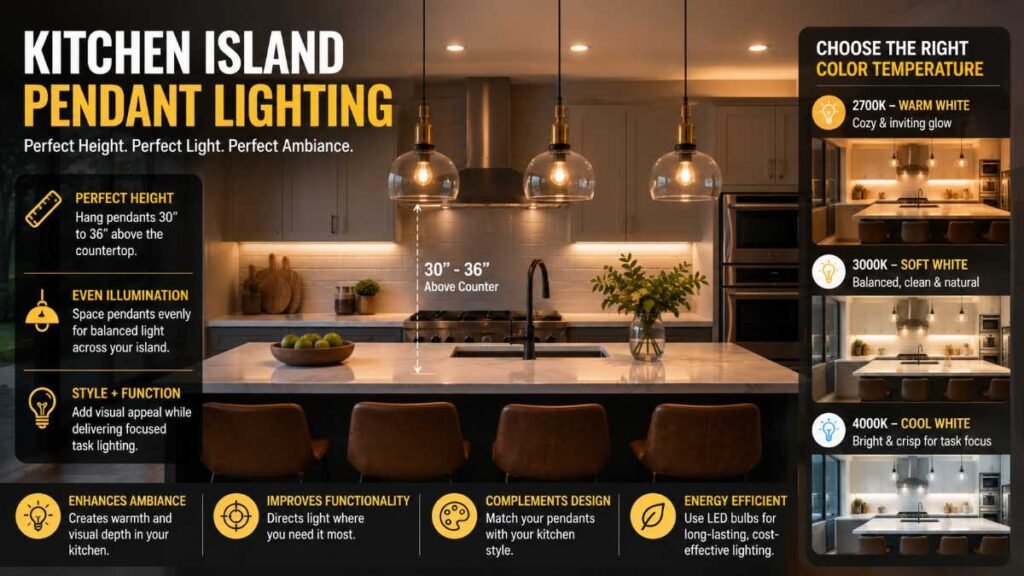
One of the biggest friction points for busy homeowners involves hanging island pendants at the wrong height, resulting in blocked sightlines across open-plan living spaces. Hanging fixtures too low obstructs conversations across the counter, while hanging them too high scatters light ineffectively. Standard design practice recommends keeping the bottom of pendant lights roughly 30 to 36 inches above your countertop surface.
Beyond physical placement, choosing the correct color temperature dictates the mood of your kitchen:
- 2700K (Warm White): Delivers a cozy, welcoming incandescent glow ideal for traditional or farmhouse kitchens.
- 3000K (Soft Neutral White): The gold standard for modern kitchens, providing crisp clarity without feeling sterile.
- 4000K – 5000K (Cool Daylight): Excellent for task-heavy workshops, though it can feel overly clinical for residential dining spaces.
For homeowners exploring broader layout transformations before updating fixtures, reviewing guides on kitchen remodeling mistakes helps avoid frustrating spatial bottlenecks. Additionally, understanding surface foundations such as a kitchen flooring guide ensures your overall aesthetic remains cohesive.
Installation & Electrical Safety Realities: What to Expect
Mounting and wiring your electrical fixtures correctly dictates how safely and reliably your home operates over the decades. Faulty wire splices and overloaded circuits create severe fire hazards that can compromise your entire household electrical system.
One major perk of choosing certified electrician services or following strict building codes is that modern circuits protect your home against power surges. Placing dimmer-compatible LED drivers in accessible junction boxes prevents frustrating troubleshooting later. Proper installation ensures that a simple bulb swap won’t trigger tripped breakers while you are running multiple high-draw appliances simultaneously.
Users transitioning from outdated fluorescent tube boxes to sleek LED recessed cans appreciate how clean and modern their ceilings look, matching the sleek utility found in modern culinary spaces like those featured in americas test kitchen gold standard.
Integrating Smart Controls with Modern Property Upgrades
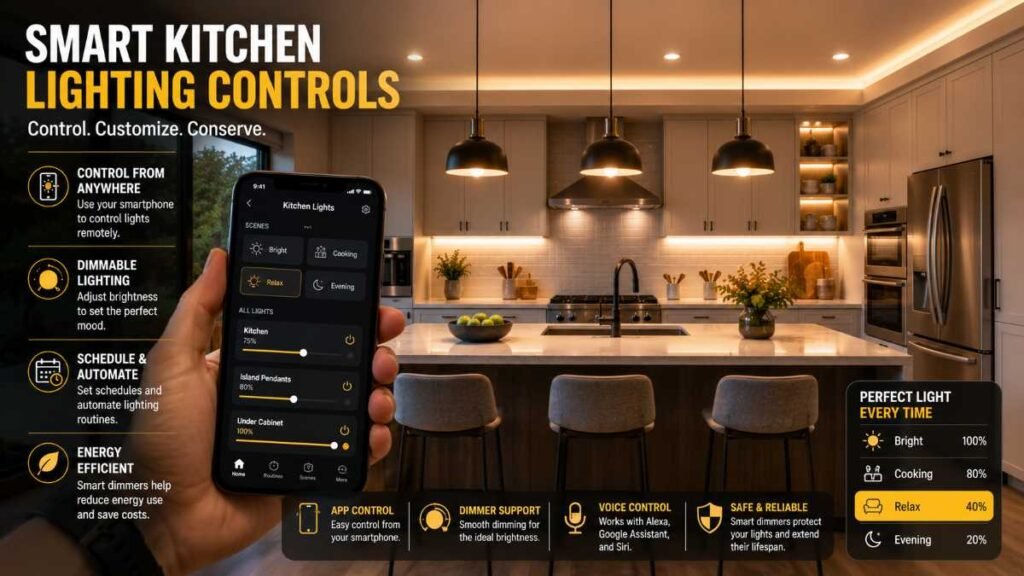
Maintaining an efficient home ecosystem often goes hand-in-hand with updating your broader residential environment, from smart dimmer switches to automated daily routines.
Pairing modern lighting fixtures with smart home protocols ensures your property remains energy-efficient and secure. Smart platforms like Lutron Caséta, Philips Hue, or GE Cync allow you to schedule automated lighting shifts based on sunset times or your arrival home. Choosing smart-enabled switches safeguards your daily lighting routine against unnecessary energy waste.
Keeping your electrical system optimized involves testing smart bridge connections regularly. For broader professional perspectives on home technology, fixture durability, and energy management, explore industry testing benchmarks from respected organizations like Consumer Reports or architectural design insights from the American Institute of Architects.
Comparative Breakdown of Kitchen Lighting Types
Evaluation Metric | Recessed Cans (Ambient) | Under-Cabinet LEDs (Task) | Pendant Fixtures (Accent) |
Primary Purpose | Overall room brightness | Shadow-free counter prep | Visual focus & style |
Average Cost Range | $20 – $50 per unit | $100 – $300 per run | $75 – $250 per fixture |
Standout Feature | Clean, flush ceiling look | Direct workspace clarity | Statement design piece |
Pros and Cons: A Balanced Look at Kitchen Lighting Upgrades
Every home improvement category has strengths and weaknesses. Weighing the advantages against the limitations helps you choose the ideal kitchen lighting setup for your home.
What We Like:
- Energy Efficiency: Modern LED systems consume up to 80% less electricity than older incandescent or halogen bulbs, drastically reducing monthly utility bills.
- Enhanced Ambiance: Layered lighting makes small kitchens feel larger and highlights beautiful cabinetry, backsplashes, and quartz countertops.
- Workspace Safety: Bright task lighting drastically reduces the risk of kitchen cuts and accidents while preparing meals on busy weeknights.
What We Don’t Like:
- Wiring Complexity: Adding new recessed cans or hardwired under-cabinet wiring in finished walls often requires professional electrician help and drywall patching.
- Initial Expense: High-end architectural pendants, CRI-rated smart bulbs, and integrated dimmer switches can strain tight renovation budgets.
Kitchen Lighting Maintenance and Long-Term Efficiency
Protecting your electrical investment requires proactive component care, especially when managing high-draw smart dimmers and integrated LED drivers. These kitchen lighting ideas help ensure your lighting system remains efficient for years to come. Dust buildup inside recessed cans and grease splatters over under-cabinet strips can diminish light output by up to 15% within a single year.
Make it a habit to wipe down fixture housings with a micro-fiber cloth during routine kitchen deep cleans, and always cut power at the breaker before replacing bulbs or tightening wire nuts. Keeping meticulous records of your purchase receipts, electrician invoices, and manufacturer warranty cards ensures you are fully covered if a smart dimmer switch or power driver experiences premature failure.
When building out a resilient household utility setup, looking beyond initial brightness helps ensure your investment remains viable over the long term. Integrating smart energy circuits with functional architectural layouts ensures you maintain seamless illumination across all prep zones without overloading individual breakers, saving you from expensive emergency service calls down the road.
People also ask
What type of lighting is best for a kitchen?
A layered approach works best. Combining ambient ceiling lights with targeted under-cabinet LEDs creates a balanced setup that eliminates shadows across work areas.
What is trending in kitchen lighting for 2026?
Current kitchen lighting ideas focus on modern smart dimmers, energy-efficient LED channels, and statement island pendants that blend style with functional brightness.
How do you create good kitchen lighting?
Mix distinct lighting zones—general ambient overheads, focused task lights, and subtle accents—to ensure these kitchen lighting ideas keep your space bright, safe, and comfortable.
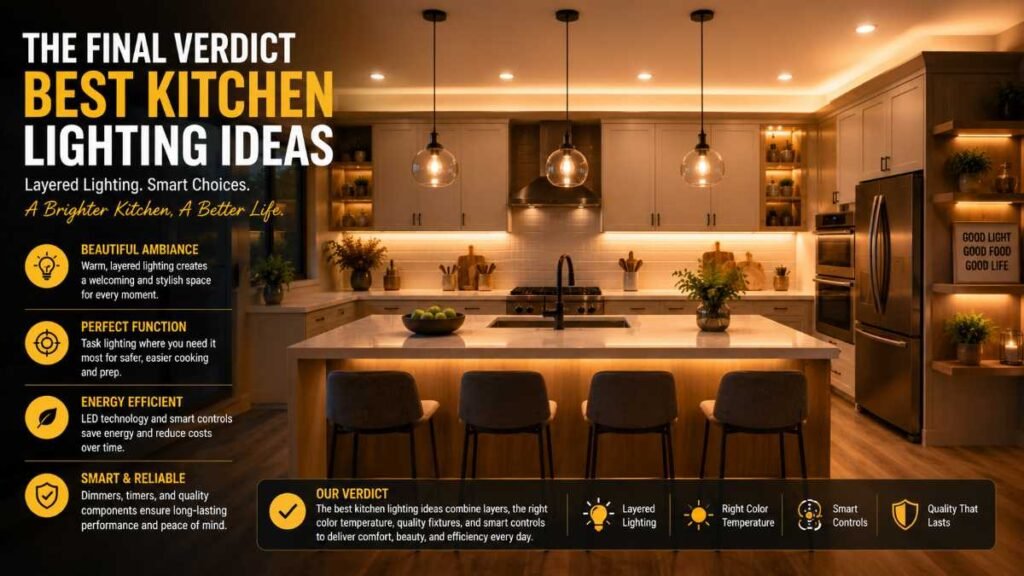
Final Verdict: Designing Your Ideal Kitchen Layout
Selecting the right layout for your kitchen lighting ideas comes down to balancing ambient coverage with functional task zones. If you manage a compact cooking space, a combination of clean recessed ceiling cans and bright under-cabinet strips will completely eliminate dark shadows. For larger kitchens with center islands, pairing layered ambient lighting with statement pendant fixtures delivers unmatched visual appeal and practical utility.
Take a moment to evaluate your current kitchen shadows, map out your prep zones, and upgrade your fixtures to create a brilliant, efficient culinary workspace!
Author By: Dambar C. Rajbanshi About: A renovation strategist and home improvement enthusiast. Dambar specializes in budget-smart planning and functional kitchen design. He is dedicated to helping homeowners create spaces that perfectly balance beauty and practicality