
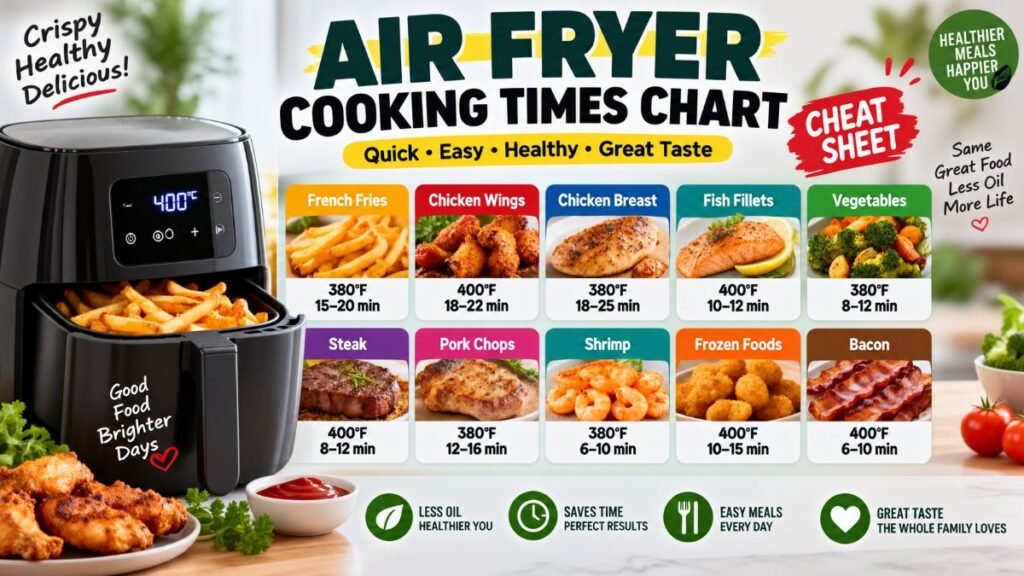
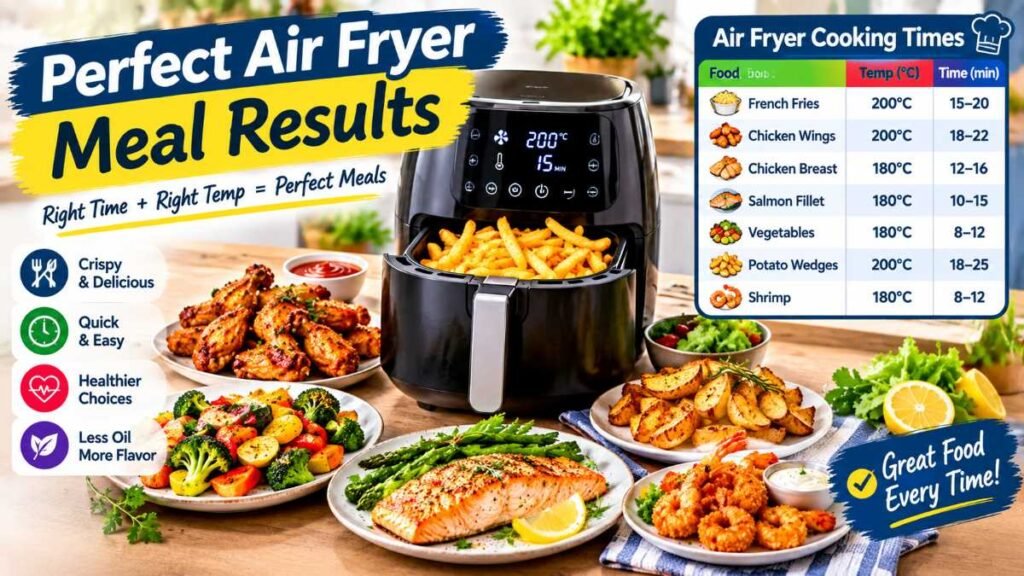
An air fryer can turn everyday ingredients into crisp, golden food in surprisingly little time. But a few extra minutes can dry out chicken, while an overcrowded basket may leave fries soft instead of crunchy. I have found that cooking time is only part of the equation; food thickness, basket space, and moisture matter just as much. This air fryer cooking times chart gives you a practical starting point for vegetables, chicken, seafood, frozen foods, and reheating without making you rely on guesswork.
Air Fryer Cooking Times Chart
Use these times as a starting point, not as an absolute rule. Air fryers differ in heating power, basket shape, and capacity. A small basket may cook a single layer quickly, while a larger load can take longer. Fresh, frozen, thick, and crowded foods will not always finish at the same time.
Food | Temperature | Approximate Time |
French fries, fresh | 380°F / 193°C | 18–25 minutes |
French fries, frozen | 400°F / 204°C | 12–18 minutes |
Sweet potato fries | 380°F / 193°C | 15–22 minutes |
Potato wedges | 390°F / 199°C | 18–25 minutes |
Chicken wings | 400°F / 204°C | 20–25 minutes |
Chicken breast | 375°F / 190°C | 18–25 minutes |
Chicken thighs, boneless | 380°F / 193°C | 18–24 minutes |
Chicken tenders | 390°F / 199°C | 10–16 minutes |
Salmon fillet | 380°F / 193°C | 8–12 minutes |
White fish fillet | 380°F / 193°C | 10–14 minutes |
Shrimp | 380°F / 193°C | 6–9 minutes |
Meatballs | 375°F / 190°C | 10–15 minutes |
Steak, 1-inch thick | 400°F / 204°C | 8–14 minutes |
Broccoli florets | 375°F / 190°C | 8–12 minutes |
Cauliflower florets | 375°F / 190°C | 12–16 minutes |
Brussels sprouts | 375°F / 190°C | 12–18 minutes |
Asparagus | 380°F / 193°C | 6–10 minutes |
Zucchini slices | 375°F / 190°C | 8–12 minutes |
Reheated pizza | 350°F / 177°C | 3–6 minutes |
Important: Shake the basket or turn the food halfway through cooking when appropriate. For meat, poultry, and seafood, use an instant-read thermometer instead of judging doneness by color alone.
A useful kitchen habit is to keep silicone-tipped tongs nearby. They make it easier to turn delicate food, remove hot pieces, and avoid scratching the basket.
Making Sense of the Air Fryer Time Chart
The air fryer cooking times chart works best when you use it as a starting point and adjust it to your particular appliance. Even two chicken breasts with a similar weight can cook at different speeds if one is noticeably thicker. The same applies to potatoes: thin strips brown quickly, while thick wedges need more time to soften in the center.
For more consistent results:
- Preheat when it makes sense. Preheating can improve browning for foods such as steak, chicken, and frozen snacks.
- Leave space between pieces. Hot air needs room to circulate. If the basket is packed tightly, cook in batches.
- Cut ingredients evenly. Similar-sized pieces are more likely to finish together.
- Shake or turn the food. This exposes different sides to the circulating heat.
- Check before the minimum time ends. Start checking two or three minutes early, especially with small portions.
- Use a thermometer for meat. A browned exterior does not always mean the center is safely cooked.
The cooking behavior can also vary between popular models. For example, a compact basket-style appliance may brown a small batch quickly, while a larger dual-basket model may need different settings when both zones are running. Treat the chart as a baseline and learn how your own machine behaves.
If you are still comparing appliances, this air fryer buying guide can help you evaluate useful features before making a purchase.
Vegetable Cooking Times
Vegetables can cook quickly in an air fryer, but their moisture levels and density affect the final texture. Zucchini may soften within minutes, while carrots and cauliflower generally need more time to become tender.
Vegetable | Temperature | Time |
Broccoli | 375°F / 190°C | 8–12 minutes |
Cauliflower | 375°F / 190°C | 12–16 minutes |
Brussels sprouts | 375°F / 190°C | 12–18 minutes |
Asparagus | 380°F / 193°C | 6–10 minutes |
Zucchini | 375°F / 190°C | 8–12 minutes |
Bell peppers | 375°F / 190°C | 8–12 minutes |
Green beans | 375°F / 190°C | 8–12 minutes |
Carrot sticks | 380°F / 193°C | 12–18 minutes |
For better browning, pat vegetables dry before seasoning them. A light coating of oil is usually enough. Too much oil can make the surface greasy and may create smoke.
One small detail makes a noticeable difference with vegetables: do not pile wet ingredients into the basket immediately after washing them. Give them a quick pat with a clean towel. This helps the hot air work on the surface instead of spending the first few minutes evaporating excess water.
Good preparation space also makes countertop cooking easier. These small kitchen island space-saving ideas may be useful if you are trying to organize appliances and food-preparation areas in a smaller kitchen.
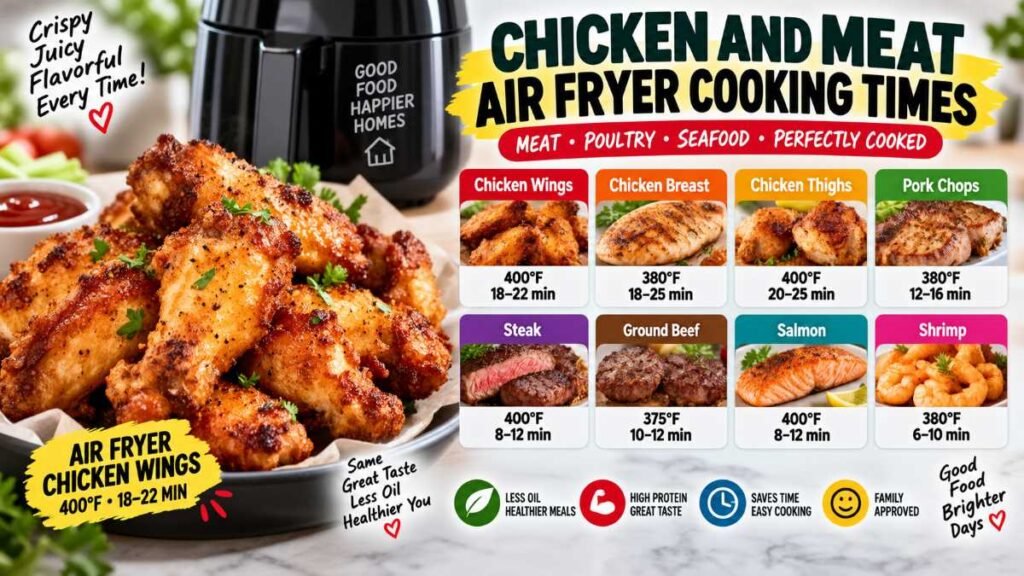
Chicken, Meat, and Seafood Cooking Times
Chicken, meat, and seafood need closer attention because thickness and internal temperature affect both texture and safety. The times below are estimates for commonly sized portions, not guarantees for every cut.
Food | Temperature | Time |
Chicken breast | 375°F / 190°C | 18–25 minutes |
Chicken thighs | 380°F / 193°C | 18–24 minutes |
Chicken wings | 400°F / 204°C | 20–25 minutes |
Chicken tenders | 390°F / 199°C | 10–16 minutes |
Salmon | 380°F / 193°C | 8–12 minutes |
White fish | 380°F / 193°C | 10–14 minutes |
Shrimp | 380°F / 193°C | 6–9 minutes |
Meatballs | 375°F / 190°C | 10–15 minutes |
Steak, 1-inch thick | 400°F / 204°C | 8–14 minutes |
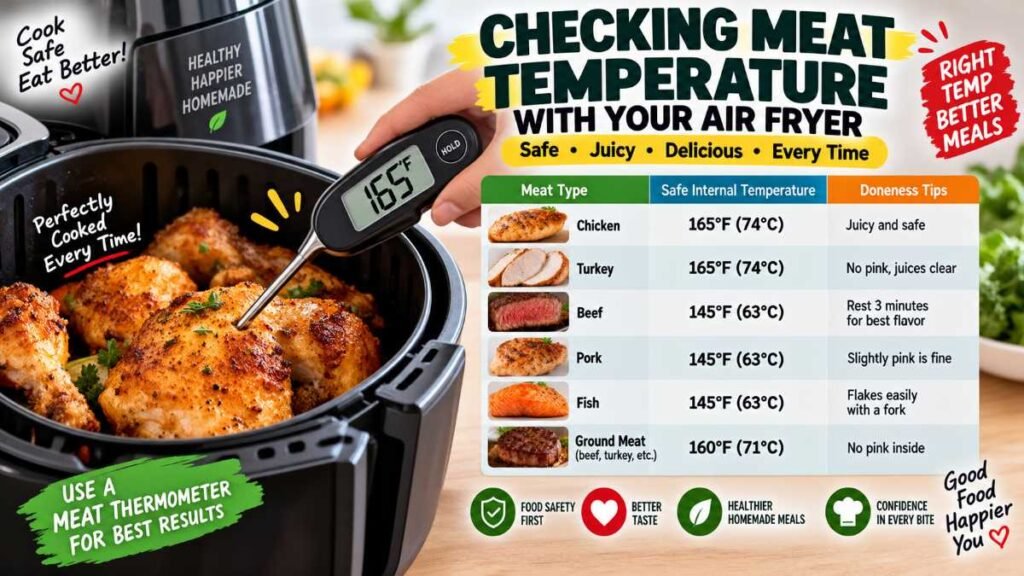
According to FoodSafety.gov’s safe minimum internal temperature chart, poultry should reach 165°F / 74°C. For safety, cook ground meat until its internal temperature reaches 160°F (71°C). Whole cuts of beef, pork, lamb, and veal should reach 145°F / 63°C, followed by a three-minute rest. Fish should also reach 145°F / 63°C.
The USDA’s air fryer food-safety recommendations emphasize safe food handling and checking internal temperatures rather than depending only on cooking time.
For chicken breast, check the thickest section with the thermometer. Avoid touching the bone because it can affect the reading. If the outside is browning too quickly but the center is not ready, reduce the temperature slightly and continue cooking until the safe internal temperature is reached.
Frozen Food Cooking Times
Frozen foods are convenient in an air fryer because many can be cooked without thawing. Still, the amount placed in the basket matters. Too much food at once can reduce airflow and leave the outside unevenly cooked.
Frozen Food | Temperature | Time |
Frozen French fries | 400°F / 204°C | 12–18 minutes |
Tater tots | 400°F / 204°C | 12–18 minutes |
Chicken nuggets | 400°F / 204°C | 8–12 minutes |
Fish sticks | 400°F / 204°C | 10–14 minutes |
Mozzarella sticks | 375°F / 190°C | 6–10 minutes |
Frozen onion rings | 400°F / 204°C | 8–12 minutes |
Frozen vegetables | 375°F / 190°C | 10–16 minutes |
Shake fries, tater tots, and onion rings halfway through cooking. For frozen meat or poultry products, follow the package instructions and check the center with a food thermometer when necessary.
A common mistake is adding extra oil to frozen fries or snacks before checking the package directions. Many frozen products already contain oil, so additional oil may not be needed.
For readers interested in app-connected cooking, this smart air fryer guide covers features such as remote controls, cooking notifications, and preset programs.
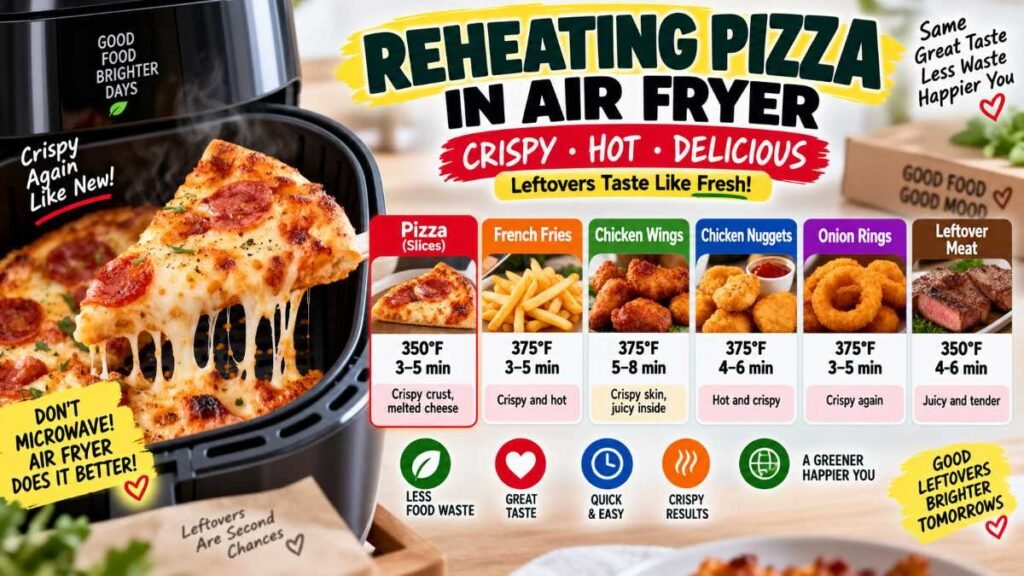
Reheating Food in an Air Fryer
An air fryer is particularly useful for reheating foods that lose their texture in a microwave. Pizza, fried chicken, fries, and roasted vegetables can regain some of their crispness when reheated at a moderate temperature.
Food | Temperature | Time |
Pizza | 350°F / 177°C | 3–6 minutes |
French fries | 350°F / 177°C | 3–6 minutes |
Chicken wings | 370°F / 188°C | 5–8 minutes |
Fried chicken | 375°F / 190°C | 8–12 minutes |
Bread or rolls | 300°F / 149°C | 2–4 minutes |
Roasted vegetables | 350°F / 177°C | 4–7 minutes |
Arrange food in a single layer whenever possible. If pizza has a thick topping or a very cold center, it may need another minute or two. Check it before extending the cooking time so the crust does not become too hard.
Leftovers containing meat, poultry, seafood, eggs, or rice should be reheated to 165°F / 74°C. The FDA’s safe food-handling guidance offers additional advice on storing, handling, and reheating leftovers.
Common Air Fryer Mistakes to Avoid
Even a dependable air fryer cooking times chart cannot correct problems caused by poor preparation. These mistakes are among the most common reasons food turns out uneven, dry, or less crispy than expected:
- Overcrowding the basket: Food may steam instead of becoming crisp.
- Using too much oil: Excess oil can make food greasy and may cause smoke.
- Skipping the shake or turn: One side may brown much faster than the other.
- Ignoring food thickness: Thick pieces need more time than thin pieces.
- Opening the basket repeatedly: Frequent checking releases heat and can extend cooking time.
- Trusting color alone: Food can brown before it reaches a safe internal temperature.
- Leaving ingredients wet: Excess moisture makes browning more difficult.
- Using parchment incorrectly: Loose parchment can move toward the heating element. Use it only as directed for your appliance and parchment product.
Another practical point is to avoid placing lightweight food directly under the heating element unless it is secured properly. Loose bread, parchment, or thin ingredients can move during cooking and create a safety problem.
8.Conclusion
Keep this air fryer cooking times chart nearby, check food before the minimum time, cook in batches when needed, and verify meat temperatures with a thermometer. These simple habits lead to crispier, safer, and more reliable meals.
Frequently Asked Questions
FAQ 1: How many minutes to cook in an air fryer?
Cooking times vary: veggies take 8–15 minutes, while chicken breasts need 18–25 minutes. A quick air fryer cooking times chart eliminates the guesswork for everyday meals.
FAQ 2: How to calculate cooking time for an air fryer?
Reduce conventional oven cooking time by about 20% to 25%. Checking a clear air fryer cooking times chart ensures better accuracy based on food thickness.
FAQ 3: What is the 25 rule for air fryers?
Drop your oven recipe’s temperature by 25°F and cut the cooking time by 25%. It’s a handy trick alongside your air fryer cooking times chart.
FAQ 4: What meat shouldn’t be cooked in an air fryer?
Avoid whole turkeys, overly wet marinades, or super-lean cuts that dry out easily. For standard cuts, consult your air fryer cooking times chart for safe temp guidance.
Editorial Safety Note
Food Safety First: Cooking times in this chart are estimates based on standard portion sizes and average air fryer wattage. Always verify that meats, poultry, and seafood reach safe minimum internal temperatures using an instant-read thermometer before serving. Refer to official guidelines from FoodSafety.gov and the USDA for complete food handling standards.
About the Author
About Dambar C.Rajbanshi
Dambar C. Rajbanshi is a hands-on home cook and tech enthusiast dedicated to simplifying everyday kitchen workflows. Through practical testing, real-world recipe tweaks, and appliance guides, he helps readers get consistent, crispy, and safe results from modern kitchen gadgets without the guesswork.