
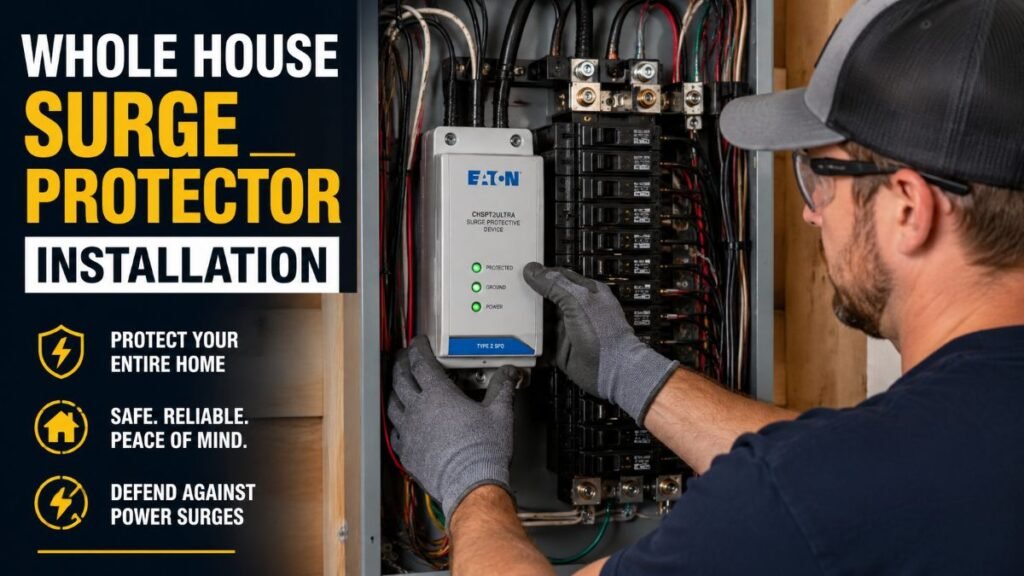
Your biggest electrical surge may not come from lightning—and the most expensive mistake may be choosing protection based on one impressive number.
Modern homes have routers, smart thermostats, security cameras, TVs, computers, garage-door controllers, and other electronics running every day. A whole house surge protector can add another layer of protection, but the right choice depends on your electrical system, the device’s certification, and how it will be installed.
What Does a Whole House Surge Protector Do?
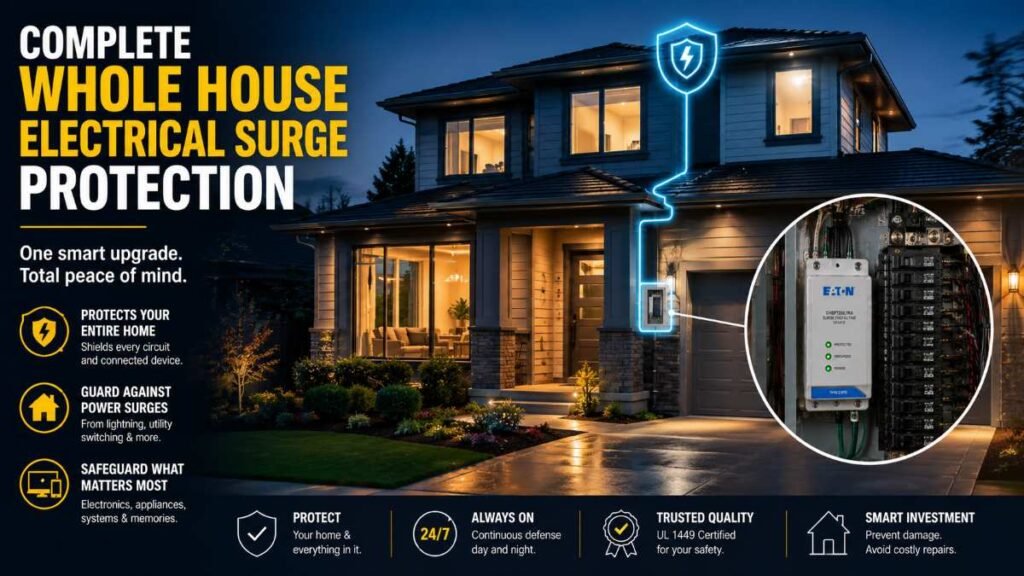
A whole-house surge protector is technically called a surge protective device (SPD). It connects to the home’s electrical system, usually at or near the main electrical panel, rather than protecting only one outlet.
Its job is to limit transient overvoltage and help divert surge energy away from downstream circuits and connected equipment.
That can be particularly useful in a connected home. A Wi-Fi router, smart thermostat, security camera, or garage-door controller may remain powered continuously, even when nobody is home.
An SPD can reduce electrical stress during transient events, but it is not a guarantee against equipment damage. It doesn’t replace circuit breakers, proper wiring, grounding and bonding, or established lightning-safety practices.
Where Do Electrical Surges Come From?
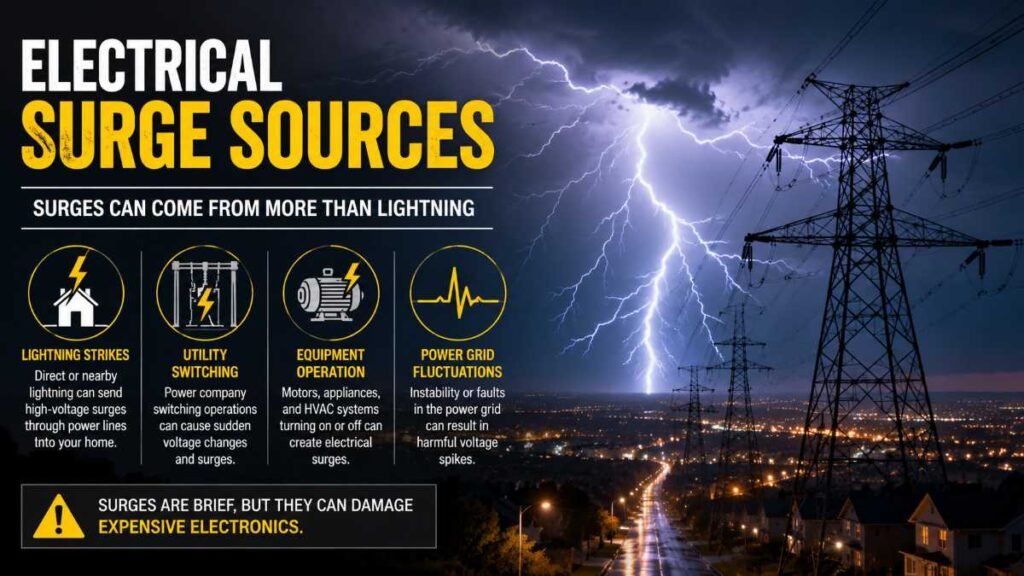
Lightning is the source most homeowners think about first. It is not the only one.
Utility switching events and electrical equipment starting or stopping can also produce transient conditions. Their severity varies according to the electrical system and the event itself, which is why no responsible surge-protection product should be presented as a guarantee against every type of electrical damage.
The National Weather Service’s lightning safety guidance explains why lightning can create hazards through electrical and plumbing systems even when people are indoors.
The practical view is straightforward: surge protection is a risk-reduction measure, not an insurance policy for every electronic device in the house.
Panel Protection vs. Plug-In Protection
Panel-level and point-of-use protection are not competing ideas. They address different parts of the electrical system.
Protection type | Typical location | Main purpose |
Panel-mounted SPD | Electrical panel or service equipment | Broader protection for connected circuits |
Plug-in surge protector | Individual outlet | Additional protection for selected equipment |
UPS | Between outlet and equipment | Backup power plus power-protection features |
For example, a home office may use panel-level protection while a computer, monitor, router, or networking equipment receives additional point-of-use protection.
A thoughtful home office setup can make it easier to identify which electronics are especially important.
One detail is easy to overlook: not every power strip is a surge protector. Some simply add outlets. Check the actual specifications and certification before relying on a product for surge protection.
Why the Highest kA Rating Isn't Automatically Better
The kA rating is often the first specification shoppers notice. It matters, but it should not make the purchasing decision by itself.
Manufacturers may also provide information about maximum continuous operating voltage, voltage protection ratings, nominal discharge current, protection modes, short-circuit ratings, and other characteristics.
Those specifications need to be considered together with the home’s electrical configuration.
A device with a very large maximum surge-current rating is therefore not automatically the right choice for a particular panel.
Certification Matters
For the U.S. market, UL 1449 is an important safety standard associated with surge protective devices. Homeowners should look for clear, verifiable certification and complete product documentation instead of relying on broad phrases such as “UL tested.”
The better buying question is not:
“Which protector has the biggest number?”
It is:
“Is this unit certified and right for my panel setup?”
That distinction can save homeowners from comparing products on marketing numbers alone.
Installation Is Part of the Protection
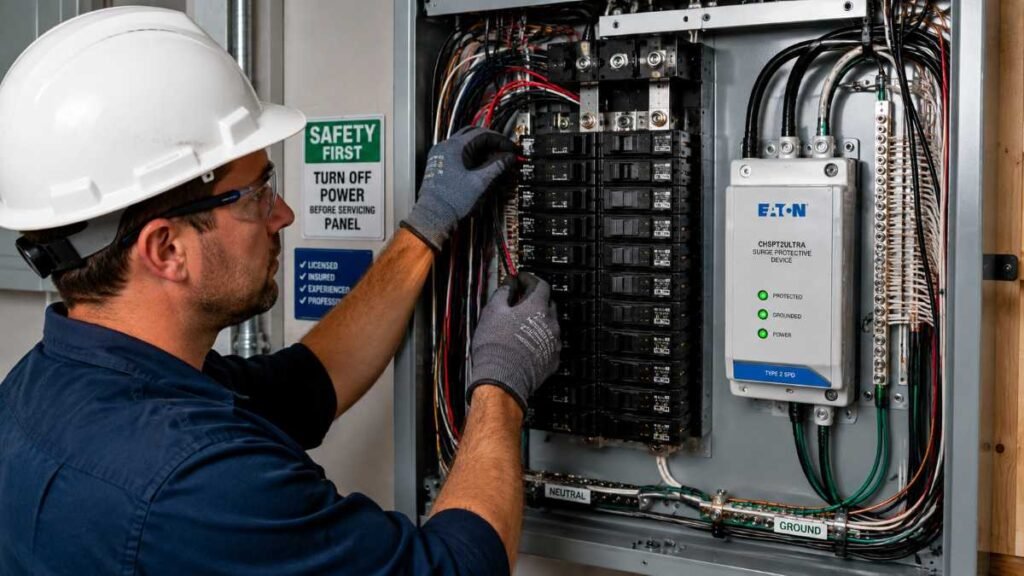
A panel-mounted SPD is not a plug-in accessory. It connects directly to the home’s electrical system, so installation involves considerations that do not apply to a basic outlet protector.
A qualified electrician can assess the panel configuration, available space, electrical service, grounding and bonding, installation location, and the manufacturer’s connection requirements.
The connection itself matters, too. Surge events occur extremely quickly, and the conductors connecting an SPD to the electrical system have electrical impedance. Manufacturers therefore provide specific instructions for conductor routing and connection.
Those instructions are part of the device’s intended installation—not optional details.
If you’re already replacing an electrical panel or planning a larger renovation, it can be a practical time to discuss protection with an electrician. It also fits naturally into broader smart home installation planning.
Does a Smart Home Need Surge Protection?
There is no universal rule that every smart home needs an SPD.
The case becomes more compelling when a property has a large number of permanently connected or sensitive electronic devices.
Think about equipment that may stay powered every day:
- Wi-Fi routers and networking hardware
- Smart thermostats
- Security cameras
- Smart locks
- TVs and streaming devices
- Computers and monitors
- Garage-door controllers
- Smart appliances
- Home-automation hubs
Replacing several connected devices after one electrical event can be considerably more inconvenient than replacing a single appliance.
For homeowners expanding their smart home automation, electrical protection is worth considering alongside the devices themselves. The same principle applies when selecting best smart home devices for a new or upgraded property.
The objective isn’t to buy the most expensive protection available. It’s to consider the electrical infrastructure supporting everything connected to the home.
How to Choose the Right SPD
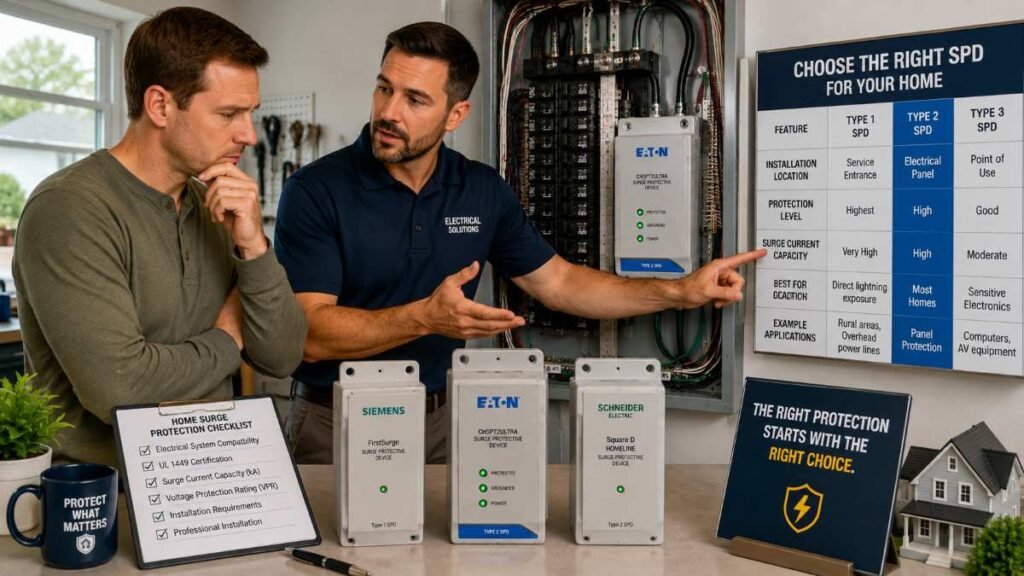
There is no single “best” device for every house. Start with the electrical system, then evaluate the product.
Check the Electrical Service
The SPD must be suitable for the home’s electrical configuration. Panel type, service characteristics, and system design all matter.
Confirm Installation Requirements
Review where the manufacturer permits installation and what connection requirements apply.
Verify Certification
Look for clear, verifiable certification and complete product documentation rather than relying on promotional claims.
Compare More Than kA
Review the relevant electrical ratings and protection characteristics together instead of choosing from one number.
Consider Sensitive Equipment
Panel-mounted protection does not necessarily eliminate the usefulness of appropriate point-of-use protection or a UPS for selected electronics.
Check Local Requirements
Electrical requirements vary by jurisdiction. In the United States, NFPA 70, the National Electrical Code provides the broader framework, but the code edition actually adopted by the local authority is what applies to a specific project.
For additional industry context, homeowners can also consult the National Electrical Manufacturers Association (NEMA).
When Is a Whole House Surge Protector Worth Considering?
A whole house surge protector is worth discussing with an electrician when you are:
- Replacing or upgrading an electrical panel
- Building or remodeling
- Adding substantial smart-home equipment
- Relying heavily on networking or home-office equipment
- Protecting expensive electronics
- Using sensitive HVAC controls
- Looking for another layer of protection against electrical transients
None of these situations automatically means an SPD is required. The decision should be based on the home’s electrical system, connected equipment, installation requirements, and applicable local rules.
For many homeowners, a panel upgrade or renovation is simply a convenient opportunity to ask the question.
What Surge Protection Cannot Do
A whole house surge protector can reduce risk, but it cannot make a home electrically invulnerable.
It does not replace:
- Circuit breakers
- Properly installed wiring
- Grounding and bonding
- Professional electrical inspection where needed
- Lightning-safety practices
It also cannot guarantee that every connected device will survive a severe electrical event.
That limitation is important. Good electrical protection is about reducing risk and using equipment appropriately—not promising that damage can never occur.
The Bottom Line
Buying the biggest number on the box won’t save your electronics. A proper whole house surge protector requires verified safety certifications, correct panel matching, and professional wiring. Prioritize genuine electrical system compatibility over massive marketing claims to reduce real-world risk.
Frequently Asked Questions
Do whole house surge protectors really work? Yes. A whole house surge protector diverts dangerous voltage spikes away from your electrical panel, significantly reducing the risk of internal circuit overload and protecting sensitive home electronics.
Can surge protectors cause problems? Only if installed incorrectly or mismatched with your panel. Choosing a certified whole house surge protector with proper wiring ensures safe operation without causing electrical issues.
What is a good size whole home surge protector? Rather than chasing high kA ratings, a good size matches your home’s electrical service capacity and features a verified UL 1449 safety certification.
Are surge protectors 100% effective? No protector offers absolute immunity, especially against direct lightning strikes. However, combining panel-level protection with point-of-use plug-ins creates a strong, reliable defense layer.
Authoritative References
Editorial Note
This article provides general homeowner information and is not a substitute for an electrical inspection or professional electrical advice. Electrical requirements vary by jurisdiction. Installation decisions should be based on the actual property, applicable local requirements, and the manufacturer’s instructions.
Author By: Dambar C. Rajbanshi About: A renovation strategist and home improvement enthusiast. Dambar specializes in budget-smart planning and functional kitchen design. He is dedicated to helping homeowners create spaces that perfectly balance beauty and practicality