
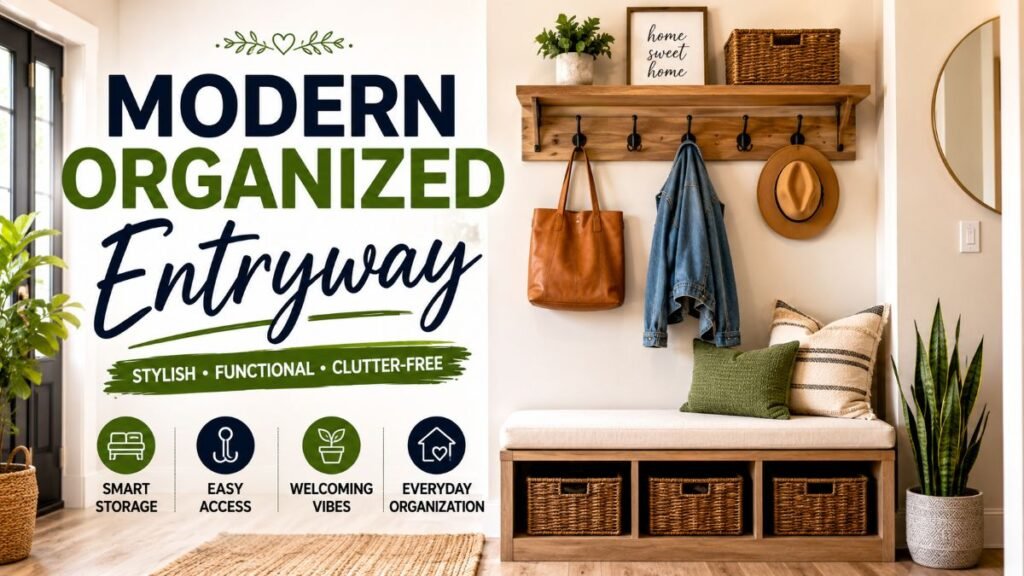
Your entryway might be the smallest part of the home, yet it handles some of the biggest daily messes—shoes by the door, bags on the floor, keys that vanish at the worst time, and mail piling up on the nearest surface. The best entryway organization ideas are not about creating a perfect-looking foyer. They are about making everyday arrivals and departures easier. A few smart storage zones can turn even a narrow entry into a cleaner, calmer part of your home.
Create a Simple Drop Zone
The smartest entryway organization ideas start with one question: What do you drop first when you walk through the door?
For most homes, it is shoes, coats, bags, keys, mail, sunglasses, umbrellas, or pet gear. Give those items a clear landing spot and much of the daily clutter disappears before it spreads into the house.
A practical entryway can be divided into four zones:
Zone | Everyday Items | Simple Solution |
Hang | Coats, jackets, bags | Hooks or rack |
Drop | Keys, wallet, mail | Tray or slim console |
Shoes | Daily footwear | Rack, bench, cabinet |
Grab & Go | Umbrella, leash, sunglasses | Basket or drawer |
Think of the entryway as a landing strip for daily life.
Do not store every seasonal coat or rarely worn pair of shoes beside the front door. Keep the essentials close and move occasional items elsewhere.
That same principle applies in bedrooms and closets. These small closet organization ideas can help free up storage that should not be competing with everyday entryway essentials.
Use the Wall First
Narrow entryways often become crowded because people add furniture before using the walls.
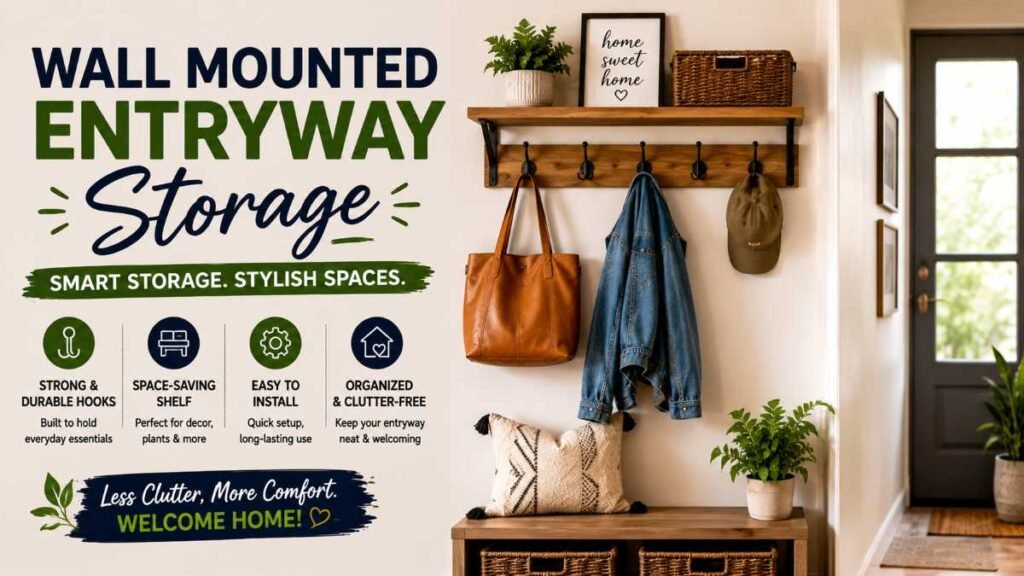
A row of sturdy hooks can hold jackets, backpacks, handbags and lightweight daily gear without taking up valuable floor space. Add a shelf above them for baskets, seasonal accessories or a few decorative pieces.
A family-friendly setup might look like this:
Top: adult coats and bags
Middle: keys, mail and small accessories
Lower: children’s backpacks and jackets
A slim mirror can complete the zone and give you a quick last look before leaving.
The trick is not to fill every inch. Leave enough open wall space so the arrangement still feels light.
Current U.S. home-design guidance also commonly recommends hooks, benches, baskets, console tables and mirrors as practical entryway solutions. (Lowe’s entryway ideas)
Give Shoes Their Own Zone
Shoes are often the fastest way to make an entryway look messy. One pair becomes three. Boots appear beside the mat. Sneakers disappear under a bench. Before long, the doorway feels smaller than it really is.
Good entryway organization ideas treat shoe storage as a dedicated zone.
Match the Storage to the Space
Very narrow: slim vertical rack or wall-mounted storage
Small apartment: compact shoe cabinet or narrow shelf
Family entry: bench with cubbies
Larger foyer: closed shoe cabinet or dedicated storage unit
Open shelving gives faster access, while closed storage keeps the room visually calmer. A bench with storage underneath is especially useful because it provides a seat and shoe storage in one footprint.
In snowy or rainy areas, keep wet footwear on a washable tray so moisture stays near the door.
And resist storing every shoe you own at the entrance. Keep the pairs you actually wear most often there.
Make Small Entries Work Harder
Small homes do not necessarily need less organization. They need less wasted space.
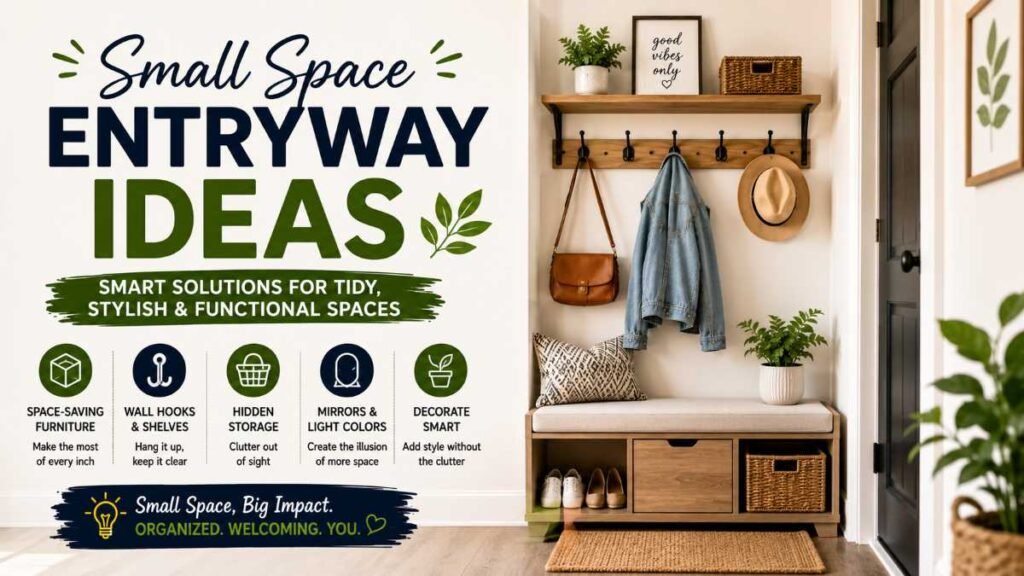
The best entryway organization ideas for small spaces usually rely on compact, multipurpose pieces rather than a full furniture collection.
A practical combination might be:
Slim console + hooks + narrow shoe storage + mirror
When floor space is extremely limited:
Floating shelf + hooks + compact shoe rack
If your front door opens directly into the living room, create a visual entry zone instead of trying to build a full foyer. A small rug, wall shelf, mirror and a few hooks can define the area without consuming much space.
For renters, freestanding furniture is often the easiest choice.
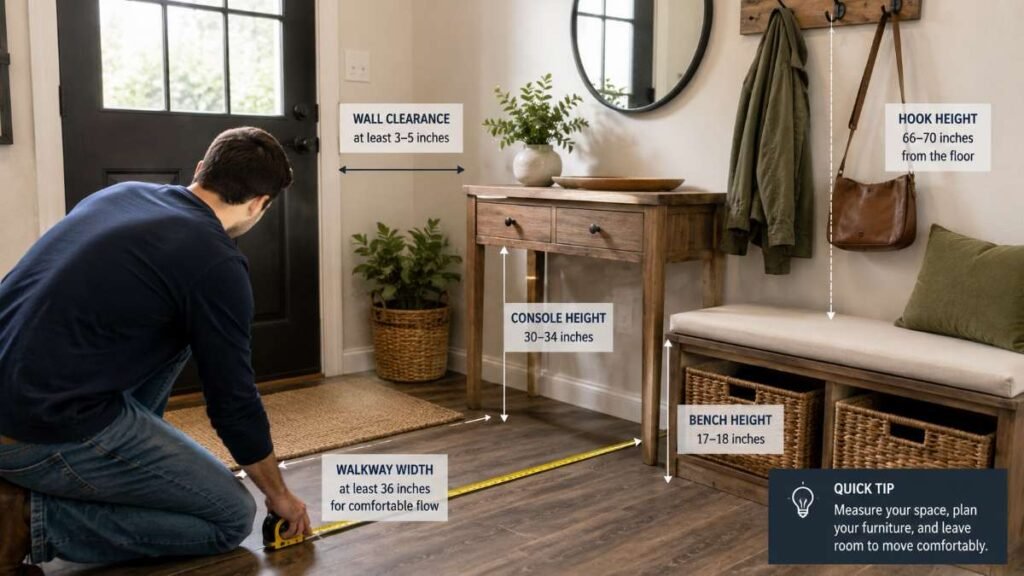
Before adding anything, stand at the doorway and picture someone carrying groceries. Can the door open fully? Can two people pass comfortably? Can shoes be removed without knocking something over?
If not, the storage is too large.
Do Not Forget the Hallway
Not every home has a traditional foyer. Sometimes the front door opens into a long corridor or directly into another room.
That is where hallway organization ideas can help.
Keep hallway storage shallow. Consider:
- Narrow wall shelves
- Peg rails
- Slim shoe cabinets
- Floating consoles
- Wall hooks
- Small baskets
- One well-placed mirror
Measure before installing anything. A hallway is first a walking route, not a storage room.
You need enough clearance for everyday traffic, grocery bags, furniture movement and nearby doors.
In a particularly narrow corridor, wall-mounted storage usually makes more sense than a deep console.
Build a Family Drop Zone
A family entryway has a different job.
Backpacks, sports bags, jackets, lunch bags and random objects will arrive every day whether your storage plan is ready or not.
The strongest entryway organization ideas for families make the correct action obvious.
Person | Simple Zone |
Adult | Hook + basket |
Adult | Hook + drawer |
Child | Low hook + shoe cubby |
Child | Low hook + shoe cubby |
Shared | Mail tray + umbrella basket |
Children rarely need complicated organization systems. They need one obvious place for a backpack and another for shoes.
For sports-heavy households, one durable basket can hold balls, gloves or small equipment without turning the entire entry into a locker room.
If work bags and personal items tend to spread beyond the entrance, these home office setup ideas can help create clearer zones elsewhere in the house.
Create a Home for Keys and Mail
Big items are easy to notice. Tiny things are what quietly create clutter.
Keys, receipts, sunglasses, loose change, earbuds, chargers and mail need a home too.
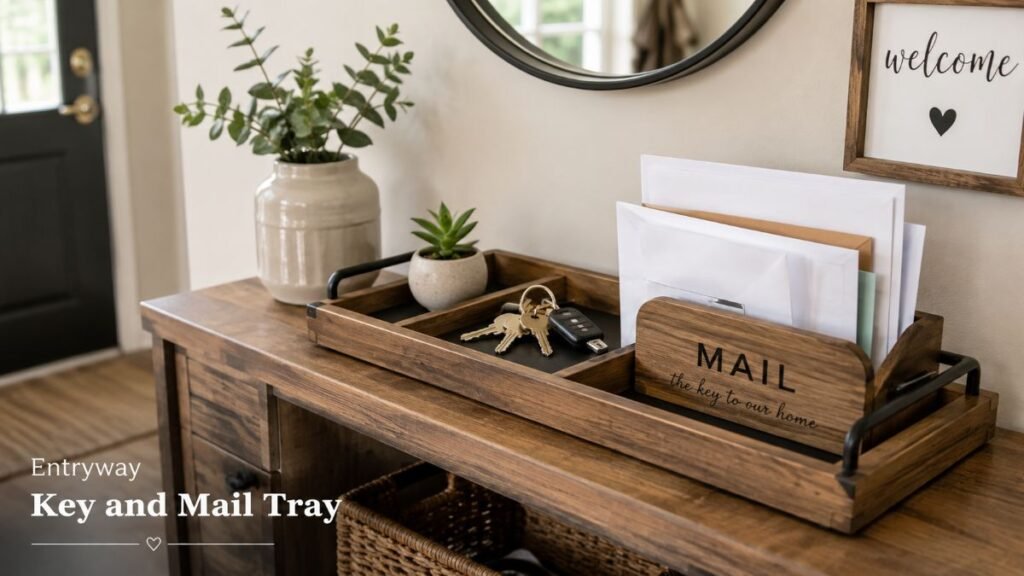
A simple three-container system works well:
Tray: keys, wallet, sunglasses
Basket: incoming mail and receipts
Drawer or box: spare keys, chargers and small extras
Keep the system simple. Too many categories turn organization into another chore.
Mail deserves special attention. Instead of letting it travel from the entryway to the kitchen counter and finally the dining table, create one process:
Keep → Action → Recycle
That one habit can stop paper clutter from spreading through the home.
If smart locks, doorbells or other connected devices are part of your entryway, plan charging and cable placement before adding decorative storage. This smart home installation guide can help when technology is becoming part of the entrance itself.
Keep Storage Stylish
Storage should look like part of the home, not a utility station.
The strongest entryway organization ideas balance function with the room’s existing style.
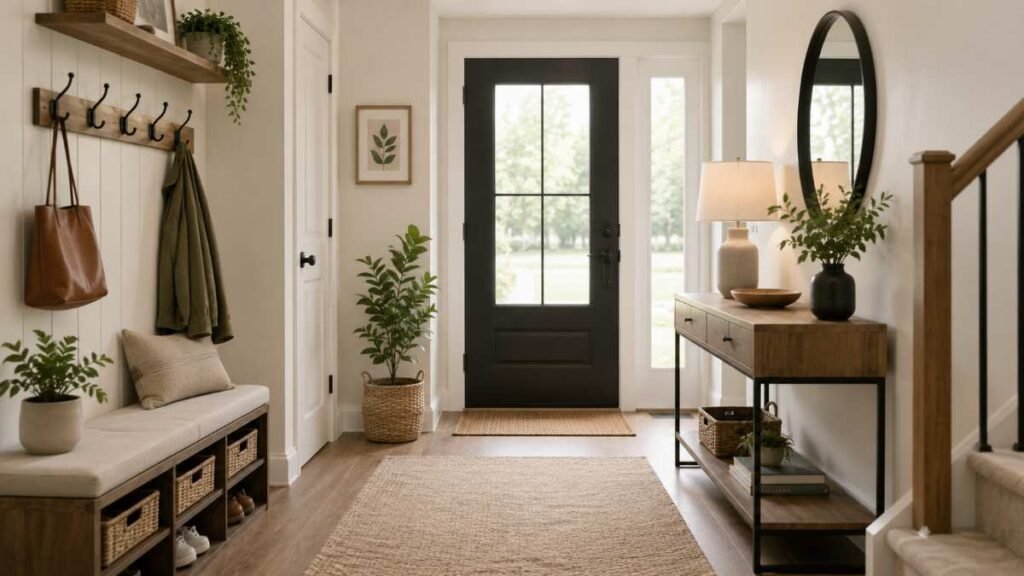
A traditional space may suit a wood console, framed mirror and woven baskets. A modern apartment may work better with a slim cabinet, simple hooks and clean-lined storage. A relaxed home can use natural wood, baskets and soft textiles.
Repeat two or three finishes to keep the area visually connected.
For example:
Light wood + woven baskets + black hooks
or
White + natural wood + neutral fabric
A small runner or durable mat can also define the entrance and help contain dirt before it travels further inside.
If the entryway is part of a larger home refresh, these interior painting ideas can help coordinate wall color and storage instead of treating them as separate projects.
Measure Before You Buy
One of the most common mistakes is shopping first and measuring later.
Before buying a bench, cabinet or console, check:
- Available width
- Furniture depth
- Door swing
- Walking clearance
- Outlet locations
- Wall height
- Shoe and basket dimensions
Then declutter.
Use four categories:
Keep: used regularly
Store: useful but occasional
Move: belongs elsewhere
Let Go: no longer needed
You may gain more usable space simply by removing things that should never have lived near the front door.
Common Mistakes
Too much furniture: blocks movement
Too many hooks: creates visual overload
Only open storage: keeps clutter visible
Decor before function: looks nice but works poorly
Buying without measuring: causes expensive mistakes
No maintenance plan: organization collapses quickly
A storage system should fit your habits. If nobody wants to use a complicated shoe cabinet, a simple rack may be the better choice.
🛡️ 10. Focus on Safety and Easy Upkeep
Safety matters when the entryway contains tall cabinets, shelving, mirrors or other heavy furniture.
The U.S. Consumer Product Safety Commission recommends anchoring appropriate furniture and TVs because children can climb, pull against or interact with unstable pieces, creating tip-over hazards. Follow the manufacturer’s installation instructions and use suitable hardware for the furniture and wall type. (CPSC furniture tip-over safety)
Maintenance should be simple too.
Once a week, spend a few minutes removing misplaced shoes, clearing the mail tray, returning bags to their hooks and checking that the storage still works.
You do not need a major organizing session.
The Entryway Test
Stand at the front door and ask:
- Can I walk in easily?
- Can I find my keys immediately?
- Can everyone reach their storage?
- Can I leave without searching for something?
A yes means your system works well.
Built for Real Life
Forget pristine studio setups. Practical entryway organization ideas fix those annoying daily trip-ups—like misplacing keys or tripping over sneakers. When every item has a dedicated spot, resetting your entrance takes seconds, keeping your home calm and functional.
People also search
FAQ 1: What is the best way to organize my entryway? Use vertical space: install wall hooks for coats, add a slim shoe rack, and keep a key tray near the door.
FAQ 2: What should I keep in my entryway? Keep only daily essentials: active shoes, jackets, keys, mail, and an umbrella. Move seasonal gear elsewhere.
FAQ 3: How do professionals organize an entryway? Pro organizers assign dedicated drop zones for each family member using hooks, labeled baskets, and hidden shoe storage.
FAQ 4: How can I make my entryway look nice? Combine smart entryway organization ideas with a sleek mirror, a durable rug, and a stylish catch-all tray.
Author By: Dambar C. Rajbanshi About: A renovation strategist and home improvement enthusiast. Dambar specializes in budget-smart planning and functional kitchen design. He is dedicated to helping homeowners create spaces that perfectly balance beauty and practicality