
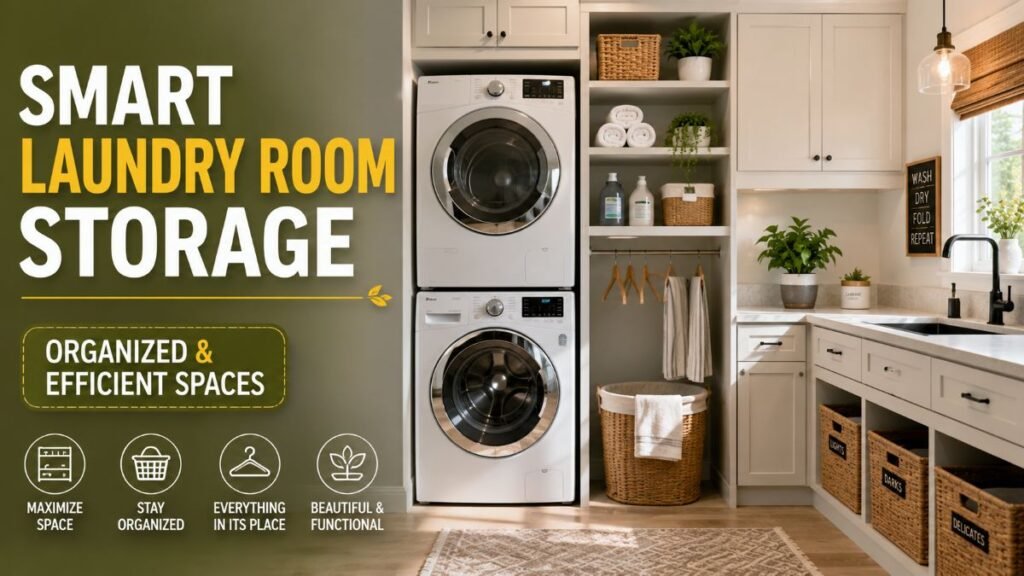
Laundry rooms often become chaotic dump zones for dirty clothes, stray detergents, and half-empty boxes. When counter space disappears and detergent bottles clutter the top of your washer, doing laundry turns into a tedious chore. Reclaiming control over this space requires a strategic approach to vertical organization, smart layout choices, and functional storage systems.
Whether you are working with a tight closet or a spacious utility zone, implementing targeted laundry room storage ideas turns a messy space into a seamless workspace.
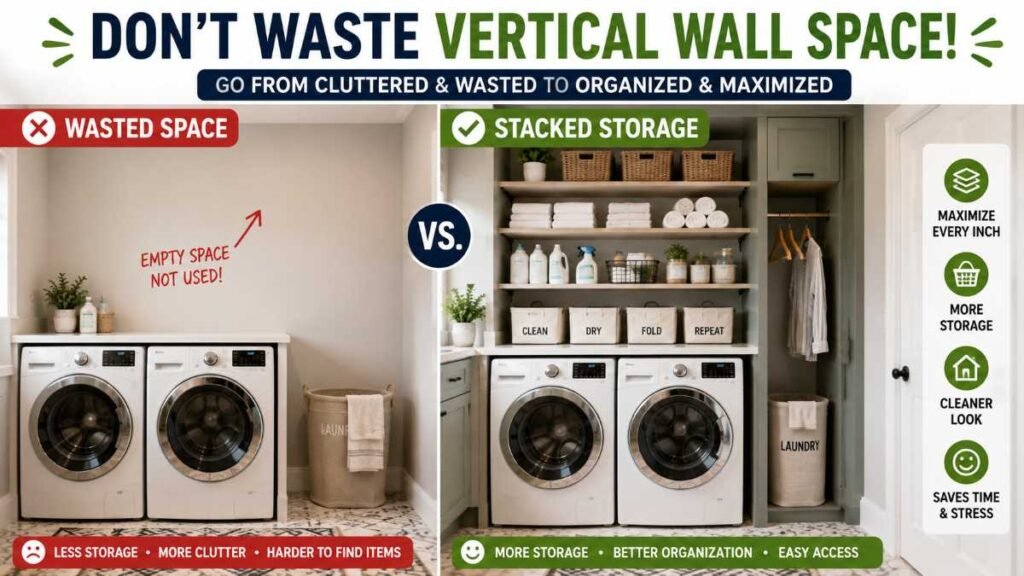
The Common Laundry Room Layout Mistake
Most homeowners focus entirely on visual style when updating a utility area, buying matching woven baskets or trendy labels before planning vertical real estate. The single biggest structural issue in modern laundry zones is underutilized wall space directly above and around washing machines.
When floor space is tight, every inch of vertical wall real estate counts. Stacking machines or mounting dedicated upper cabinetry opens up space for sorting bins, folding stations, and daily essentials. If you are planning a broader house renovation alongside your laundry project, avoiding core structural errors like those highlighted in our kitchen remodeling mistakes guide will save time, money, and hassle.
Core Storage Strategies for Every Room Size
Storage Strategy | Ideal Home Setup | Key Function & Benefit |
Airspace Cabinetry & Rails | Compact laundry nooks & tight closet spaces | Leverages open wall area to keep high-use detergents within easy reach |
Slim Crevice Trolleys | Narrow gaps between washer, dryer, or side walls | Turns forgotten tight spaces into organized racks for sprays and cleaners |
Over-Appliance Workstation | Side-by-side front-load washer and dryer pairs | Provides a wide, smooth flat top designed specifically for sorting and folding garments |
Collapsible Drying Frames | Small rooms needing temporary drying areas | Folds flat against the wall to free up floor space when laundry is done |
Overhead Wall Shelving & Enclosed Storage
Mounting sturdy open shelves or upper cabinets right above your washer or dryer ensures direct access to daily essentials like laundry detergents, fabric conditioners, and stain sprays. Smart laundry room storage ideas focus heavily on utilizing this overhead wall space to maintain clear counters without sacrificing movement.
- Open Floating Ledges: Ideal for holding heavy liquid containers while maintaining a light, open atmosphere.
- Wall-Mounted Cabinets: Great for concealing bulk household cleaning supplies, spare towels, and clutter.
- Adjustable Rail Systems: Allows quick height modifications whenever you change bottle sizes or container types.
For broader organization solutions across tight utility zones, explore our guide on selecting the right bathroom storage cabinet options to keep small rooms tidy.
Squeezing Value From Tight Appliance Gaps
The neglected 6-to-10-inch gap between your washing machine and adjacent walls is prime real estate. Inserting a multi-tier rolling cart into this narrow crevice instantly creates a concealed pantry for mesh laundry bags, spot removers, and bleach bottles. Applying these slim laundry room storage ideas transforms cramped utility nooks into remarkably functional spaces.
Integrated Countertops Across Front-Loaders
Placing a continuous wooden or composite countertop directly over side-by-side front-load units gives you an instant, ergonomic folding station. This prevents stray socks from slipping into rear gaps and provides a clean surface to sort laundry straight out of the dryer. According to energy efficiency guidelines from the U.S. Department of Energy, keeping laundry workspaces organized also prevents equipment overheating and improves airflow around appliances.
When selecting durable surfaces for high-moisture utility zones, material resilience is key. Check out our detailed breakdown on luxury vinyl flooring options built to withstand humidity and spills.
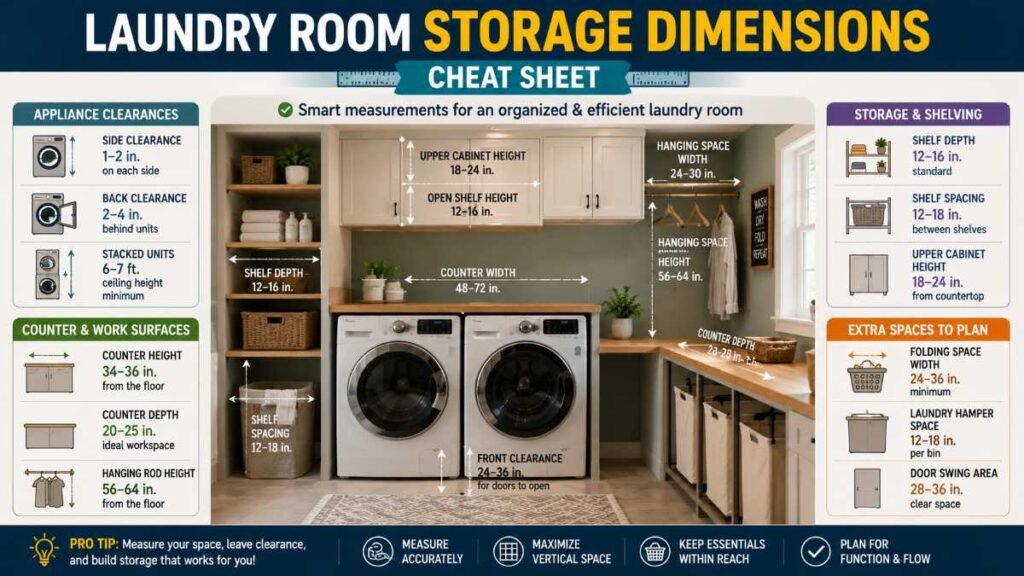
Laundry Room Storage Dimensions Cheat Sheet
To turn loose ideas into a fully functional workspace, precise measurements are critical. Use this standard sizing cheat sheet to plan your layout before purchasing hardware or building custom cabinets:
Parameter / Feature | Recommended Dimension | Key Consideration |
Shelf Depth | 12 to 14 inches | Keeps items accessible without overhang blocking light or workspace |
Countertop Height | 36 to 39 inches | Standard height over front-loading appliances for ergonomic folding |
Top-Load Clearance | 18 to 24 inches | Required vertical clearance above lid before placing the lowest shelf |
Front-Load Clearance | 12 to 15 inches | Space needed above machine top or countertop to upper cabinetry |
Hanging Rod Height | 60 to 66 inches | Mounted height from floor to prevent long shirts or pants from dragging |
Slim Cart Width | 5 to 8 inches | Standard width for slide-out gap carts between washer and adjacent walls |
Work Clearance | 36 to 42 inches | Clear floor space in front of appliances for door swings and laundry baskets |
4 Step-by-Step Layout Planning
Before buying shelves or baskets, measure your room and map out your workflow:
- Measure Appliance Clearances: Always check your appliance manufacturer’s specifications first. Account for door swings (both washer/dryer doors and room doors) and hose connections behind the units. Leave at least 3–4 inches behind appliances for ventilation and hose hookups.
- Establish Work Zones: Group items by task—stain pretreatment items near the sink, detergents within arm’s reach of the washer, and hangers near the dryer outlet. Practical laundry room storage ideas rely heavily on natural workflow zones.
- Incorporate Hanging Rods: A simple tension rod or brass pipe mounted beneath upper cabinets provides an immediate place to air-dry delicate garments directly out of the wash.
If your home updates extend into adjacent areas or entryway mudrooms, integrating clean flooring choices like those detailed in our kitchen flooring guide ensures a cohesive flow throughout your service areas.
Materials & Humidity Considerations
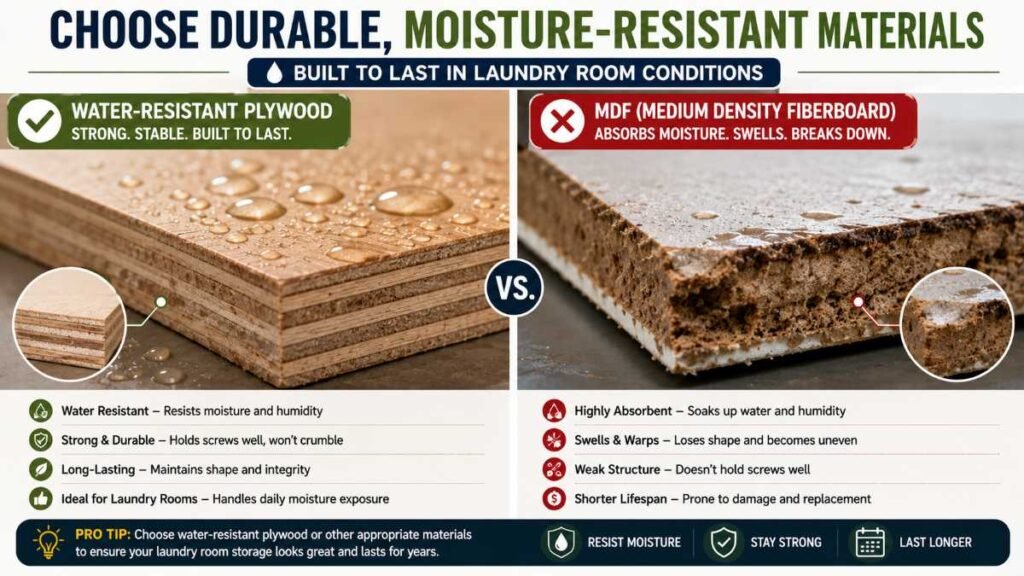
Laundry rooms experience sudden shifts in humidity and temperature. Choosing improper materials leads to warped wood, peeling paint, or rusted metal fixtures over time.
- Plywood vs. MDF: Solid plywood with a moisture-resistant veneer holds up significantly better against steam and water splashes than standard Medium-Density Fiberboard (MDF).
- Powder-Coated Steel: Metal wire baskets, brackets, and hanging rails should feature a powder-coated or stainless finish to prevent rust from damp laundry.
- Moisture-Resistant Surfaces & Paints: Wall surfaces behind appliances require semi-gloss or satin finishes combined with adequate ventilation to create washable, moisture-resistant surfaces. If you plan to update surrounding trim or cabinets yourself, learn proper surface prep from our step-by-step guide on how to paint kitchen cabinets.
For technical standards on indoor ventilation, building codes, and humidity management in laundry facilities, consult guidelines provided by the U.S. Department of Energy and home safety standards from the National Fire Protection Association.
Evaluating Storage Options
Built-In Millwork
- Pros: Seamless integration, maximum storage density, tailored precisely to your appliance dimensions, hides all clutter.
- Cons: Higher initial material and labor costs, fixed layout that cannot easily adapt if you buy larger appliances later.
Modular Wire Track Systems
- Pros: Highly budget-friendly, customizable, simple DIY installation, excellent airflow around damp items.
- Cons: Visual exposure requires decorative baskets to hide clutter, wire shelves can let small items tip over.
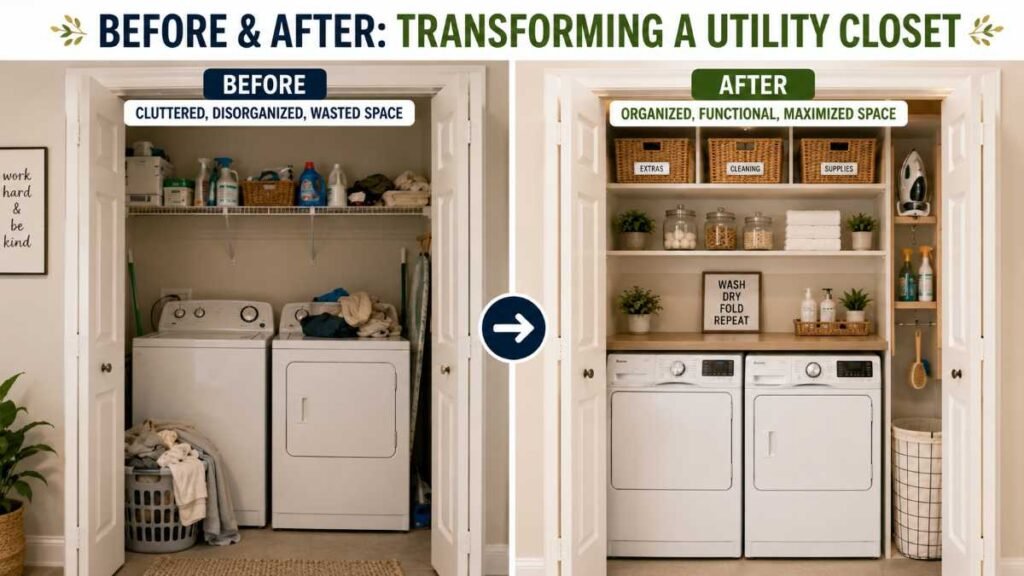
Practical Example: Transforming a 5x6 Foot Utility Closet
Consider how these layout adjustments work in a compact 30-square-foot laundry closet containing a side-by-side washer and dryer with no existing shelves. Homeowners often struggle with floor clutter, detergent boxes stacked on top of the dryer, and nowhere to hang clothes to dry.
The Layout Plan:
- Vertical Space: Install two heavy-duty adjustable wood shelves 18 inches above top-loading units (or 12 inches above front-loaders) for primary detergents and backup paper products.
- Hanging Area: Add a 30-inch stainless steel hanging rod directly underneath the bottom shelf for air-drying delicates.
- Crevice Utilization: Insert a 7-inch wide 3-tier slide-out cart between the washer and the side wall to hold bleach, stain sprays, and lint rollers.
- Sorting System: Replace floor baskets with two wall-mounted canvas laundry hampers that swing open for sorting darks and lights.
The Outcome:
By utilizing overhead space, vertical wall mounts, and the side gap, usable floor space increases dramatically while trimming weekly laundry prep time. Exploring tailored laundry room storage ideas for small footprints proves that compact spaces can deliver maximum efficiency.
Action Plan: Key Steps for a Streamlined Space
To transform your laundry room into an organized, stress-free space, focus on function first:
- Audit Your Inventory: Throw away expired products, combine duplicate bottles, and measure your primary detergent containers before buying bins or shelves.
- Start Vertical: Install at least one sturdy wall shelf or hanging bar directly above your washing machine before investing in major custom cabinetry.
- Choose Durable Materials: Stick to moisture-resistant plywood, powder-coated metals, and easy-to-clean paint finishes that withstand steam and frequent spills.
By organizing your layout around your daily routines and selecting durable, space-saving components, your utility room will remain orderly and efficient for years to come.
Frequently Asked Questions
FAQ-1: How to maximize space in a tiny laundry room? Mount overhead shelving and slide slim rolling carts into tight appliance gaps. Using smart laundry room storage ideas keeps floors clear and supplies within reach.
FAQ-2: How to create more storage in a small room? Leverage vertical wall space with floating racks, over-the-door caddies, and collapsible drying frames. These space-saving laundry room storage ideas double your utility without adding clutter.
FAQ-3: What storage is good for small spaces? Modular wall shelves, slide-out gap trolleys, and counter toppers over front-loaders are ideal. These functional laundry room storage ideas streamline organization in compact spaces.
FAQ-4: What is the smallest size for a laundry room? A functional setup needs just 3×5 feet for side-by-side units, or 3×3 feet for stacked appliances.
Conclusion
Implementing these practical laundry room storage ideas turns daily clutter into a sleek, functional workflow. Start upgrading your vertical space today to build a truly hassle-free home!
Author By: Dambar C. Rajbanshi About: A renovation strategist and home improvement enthusiast. Dambar specializes in budget-smart planning and functional kitchen design. He is dedicated to helping homeowners create spaces that perfectly balance beauty and practicality