
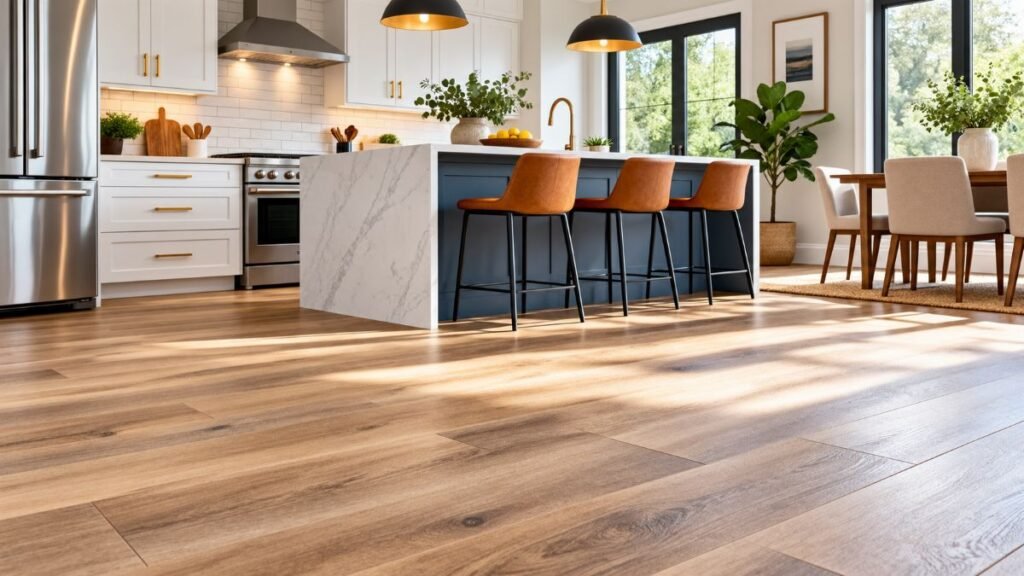
Stepping onto worn-out, creaky flooring every single morning can drain the joy right out of your home. A single scuff or stubborn stain makes an entire kitchen feel neglected, quietly whispering that it’s time to shell out thousands for genuine hardwood. But before you raid your emergency savings or fall headfirst into clever sales pitches from local contractors, pause and absorb the real truth: upgrading your base surfaces doesn’t require a financial meltdown. When approached with careful technical foresight, luxury vinyl flooring converts a tired, dated room into an upscale, durable living space. Skip the expensive mistakes that trap unsuspecting homeowners—here is the unfiltered reality retail showrooms hope you never discover.
What is Modern Luxury Vinyl, Really?
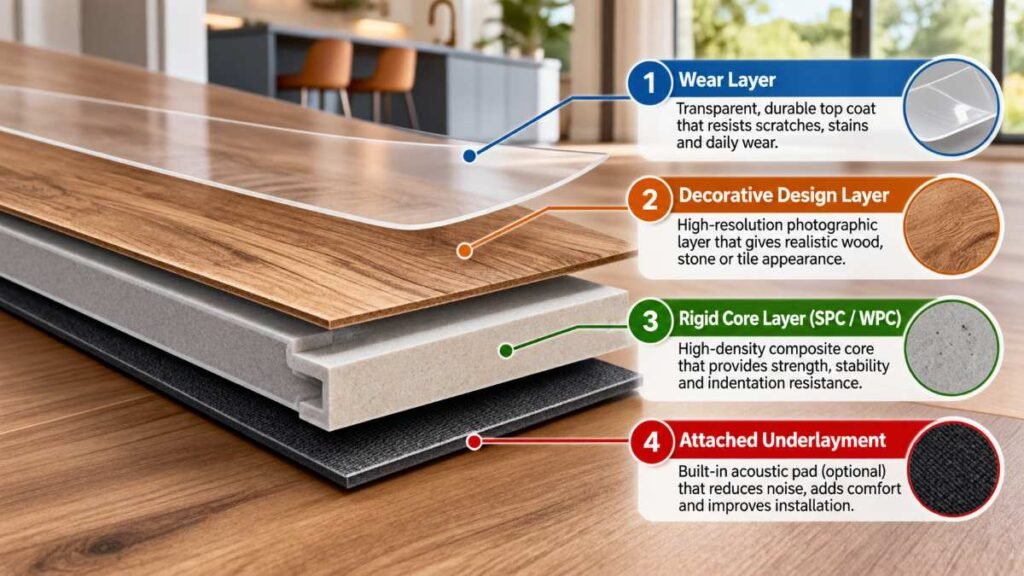
After years spent analyzing residential building materials and overseeing hands-on home remodeling projects, the single biggest misconception I encounter is the belief that vinyl is still that cheap, yellowing sheet flooring from the 1970s. That stereotype belongs in the past. Modern luxury vinyl flooring (encompassing LVT tiles and LVP planks) is an advanced, multi-layered engineered material built to withstand the messy realities of daily family life. It goes far beyond simple “plastic”—it is a precisely engineered composite built to handle everything from dropped heavy cookware to relentless paw-pacing without breaking a sweat.
The construction typically features a high-density core, a high-definition photographic print layer, and a clear protective wear layer designed to block daily wear and tear. Unlike solid hardwood, which expands and contracts wildly during seasonal humidity shifts, or cold ceramic tile that punishes your lower back and joints, premium vinyl strikes a brilliant ergonomic balance. It feels warm, forgiving, and comfortable under bare feet. If you are preparing for a broader interior overhaul, tying your flooring choice together with a fresh coat of paint using our detailed tutorial on how to paint kitchen cabinets ensures your overall room aesthetic flows with professional harmony.
Decoding the Options: Finding Your Ideal Vinyl Match
Let’s be completely transparent—not all vinyl products leave the factory with equal structural integrity. Overlooking the fine print or ignoring core specifications in a showroom can easily result in premature flooring failure and heavy replacement costs.
Format / Feature | Best Suited For | The Real-World Benefit |
Luxury Vinyl Plank (LVP) | Bedrooms & Family Lounges | Expertly captures the organic warmth and intricate grain patterns found in genuine hardwood timber. |
Luxury Vinyl Tile (LVT) | Bathrooms & Kitchens | Replicates the luxurious aesthetic of polished stone or slate while remaining moisture-safe. |
Rigid Core (SPC / WPC) | High-Traffic Zones | Built with a heavy composite core offering incredible indentation resistance against heavy furniture loads. |
If the base beneath your feet lacks absolute flatness, steer clear of thin, flexible glue-down planks that will instantly highlight every single dip and bump in your subfloor. Instead, pivot toward professional installation practices or consult engineering guidelines regarding surface tolerance standards (such as concrete flatness criteria outlined in industry benchmarks like ASTM F710). Dedicating time to properly flatten your subfloor ensures your luxury vinyl flooring remains stable and silent for decades.
Upfront Cost and Long-Term Value: How LVP Compares
When mapping out a home renovation budget, staring only at the initial price tag is a fast track to unexpected financial strain. Flooring represents a long-term commitment to your daily routine, meaning you must evaluate financial performance over years rather than just at the checkout counter.
Financial Assumptions Note: The figures outlined below represent typical U.S. regional material and professional installation ranges (drawn from aggregated contractor pricing databases like Angi) calculated for a standard 500-square-foot residential zone, assuming no major structural subfloor overhauls are required.
Flooring Category | Initial Budgetary Outlay (500 Sq. Ft. Material & Install) | Long-Term Care & Upkeep Reality | Cost-to-Value Efficiency Rating |
Traditional Hardwood | $6,000 – $10,000+ | Demands rigorous climate control, periodic sanding, and specialized professional refinishing cycles. | Premium upfront commitment, providing a strong traditional real estate market appeal. |
Engineered Luxury Vinyl (LVP / SPC) | $2,500 – $5,000 | Low upkeep intensity; simple routine sweeping and occasional damp mopping with pH-balanced solutions. | Outstanding structural durability and economic efficiency for busy modern households. |
Glazed Ceramic Tile | $4,000 – $7,500 | Moderate upkeep; routine grout line sealing and periodic repairs for tiles cracked by heavy impacts. | Highly impervious to moisture, but rigid and uncomfortably cold during winter months. |
Weighing these financial factors allows you to distribute your remodeling capital intelligently—balancing immediate installation expenses against the ongoing maintenance effort required to keep your rooms looking immaculate.
The Wear Layer Secret: Why Thickness Matters
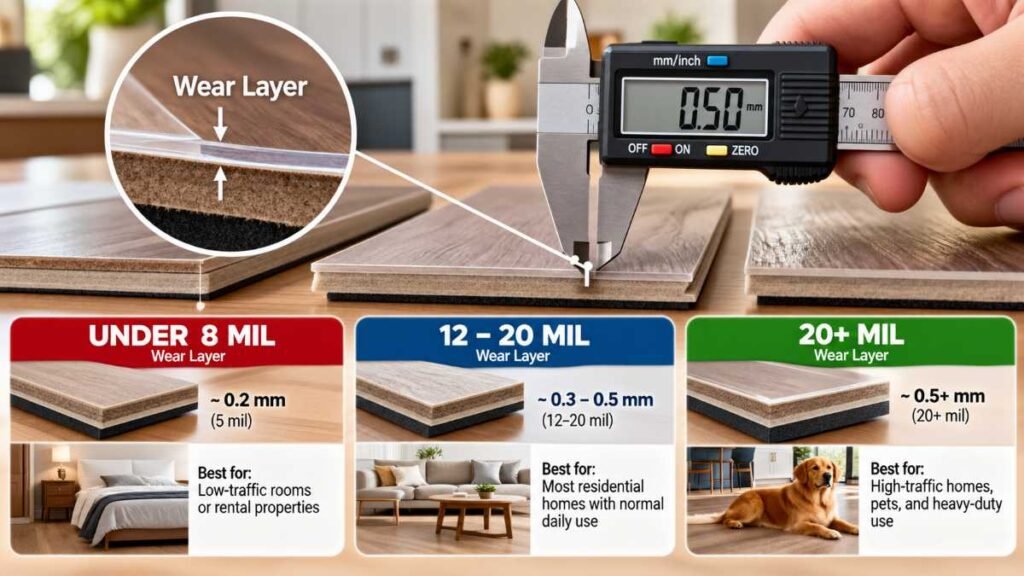
When assessing product durability, stop focusing strictly on the price per square foot and start investigating the wear layer specifications and manufacturer warranty clauses. This transparent top shield protects the decorative photographic layer from everyday abuse.
- Under 8 mil: Best restricted to low-traffic guest rooms or rental units on a tight budget; vulnerable to early scratching under active use.
- 12–20 mil: Considered the reliable sweet spot for residential houses, comfortably absorbing family foot traffic and pet activity.
- 20+ mil: Engineered for heavy commercial spaces, massive dog breeds, or active home offices with rolling desk chairs.
Cutting corners on wear layer thickness guarantees a faded, tired-looking floor long before its time. For a deeper dive into long-term material resilience across different zones, review our comprehensive kitchen remodeling mistakes guide.
Tailored Solutions: Matching Flooring to Household Realities
Every household faces unique daily pressures, meaning your material choice must align with your specific lifestyle environment:
- Houses with Energetic Pets & Children: If large dogs or playful kids dominate your space, bypass thin budget options and select a rigid-core (SPC) product featuring a 20 mil wear layer to withstand running claws and dropped toys.
- Spaces with Imperfect Subfloors: If an older plywood base or concrete slab exhibits minor dips, avoid flexible glue-down options that mirror surface flaws. Choose a dense rigid-core plank capable of bridging slight variations, paired with targeted leveling compounds where necessary.
- High-Humidity Basements or Laundry Rooms: Opt exclusively for floating click-lock systems combined with manufacturer-approved vapor barriers to prevent trapped moisture from triggering mold growth or edge curling.
Practical Buying Checklist: What to Check Before You Buy
Before finalizing your purchase order, run through this tactical inspection checklist to protect yourself against unforeseen expenses:
- Shielding Thickness & Finish: Always inspect the wear layer’s exact mil measurement alongside an ultraviolet-cured surface armor designed to resist daily scuffing.
- Core Engineering: Total plank thickness doesn’t guarantee acoustic performance. Evaluate the density of the core and review attached pad specifications.
- Locking Mechanism Profile: Inspect the milling quality of the click-lock edges to ensure tight, secure seams that block moisture penetration.
- Underlayment Requirements: Check whether the product includes an integrated cushion or mandates a separate vapor-retardant underlayment.
- Warranty Fine Print: Read the warranty terms closely to identify restrictions regarding commercial applications, rolling appliance loads, and mandatory moisture test logs.
- Subfloor Flatness Tolerances: Verify the exact millimeter or inch tolerance required by the maker to avoid voiding your installation warranty on uneven slabs.
Water Resistance vs. Waterproofing Realities
Let’s clear up a widespread industry myth: possessing a water-resistant core does not automatically translate into a fully waterproof installation if water manages to bypass perimeter gaps or locked joints. In wet areas like full bathrooms or laundry rooms, sealing edges correctly is mandatory.
Seek out premium floating click-lock configurations designed with tight mechanical tension to minimize liquid seepage risks; however, recognize that extreme moisture exposure can still bypass poorly sealed perimeters. Always adhere strictly to the maker’s guidelines regarding expansion spacing and perimeter caulking. As emphasized in technical briefings published by the World Floor Covering Association (WFCA), ignoring proper moisture mitigation protocols almost always leads to panel buckling or subfloor deterioration when indoor humidity swings.
Choosing a Natural-Looking Vinyl Floor
Modern internet styling guides frequently push monotonous grey tones for every square foot of a home, but a truly welcoming living space should complement your natural lighting and architecture rather than copy a generic retail display.
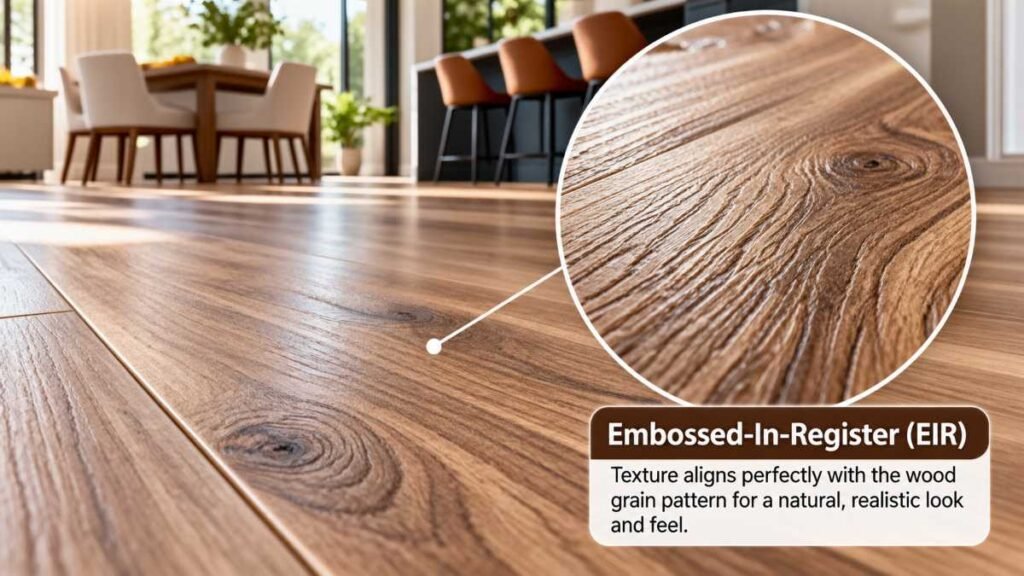
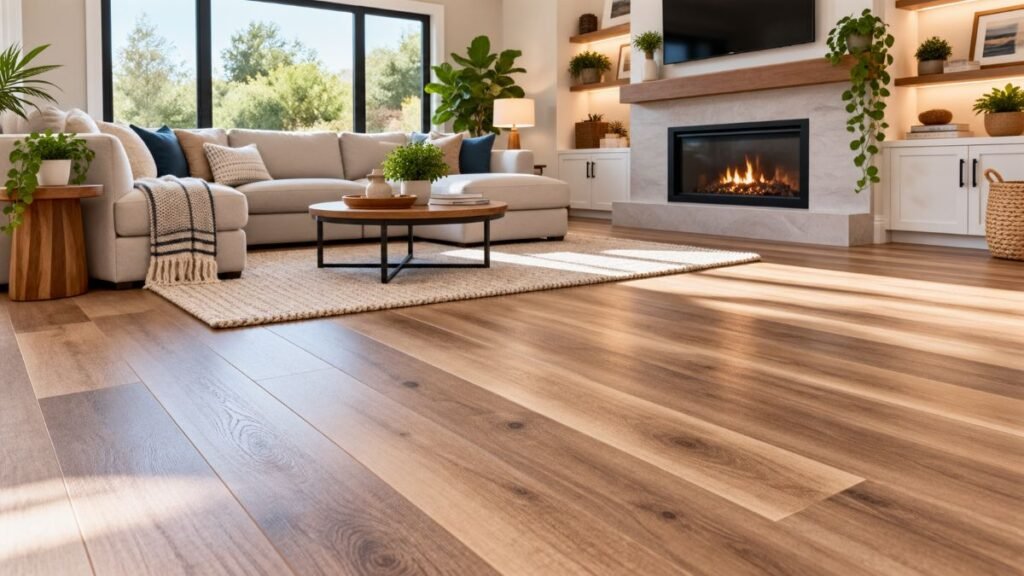
If you want your luxury vinyl flooring to radiate authentic architectural elegance, prioritize products crafted with embossed-in-register (EIR) texturing. This manufacturing process synchronizes physical surface embossing directly with the printed wood grain pattern underneath, generating a remarkably convincing timber feel underfoot. If you are working to maximize a compact room layout, blending these tactile planks with smart storage layouts from our small walk-in pantry ideas guide helps open up your floor plan visually.
Maintenance and Proper Cleaning Protocol
A common worry for property owners is whether regular damp mopping will damage their freshly laid floors. You can comfortably perform routine wet cleaning without fear, provided your day-to-day maintenance steers completely clear of harsh chemical solvents and standing pools of water. Pouring excessive soap directly onto the surface creates an invisible, sticky film that acts like a magnet for airborne dust, leaving your planks looking cloudy and worn prematurely.
Instead, stick strictly to manufacturer-approved neutral cleaners or warm water mixed with mild, pH-balanced solutions. Avoid unverified DIY acidic hacks like daily splashes of pure vinegar, as they slowly erode the factory-applied protective top layers. If you are also managing other moisture-sensitive zones around your house, ensuring your layout and cleaning protocols align with expert recommendations from our guide on bathroom remodeling helps keep your entire living space fully safeguarded against humidity.
Furthermore, place heavy-duty bristle mats at all primary exterior thresholds to trap abrasive dirt before it grinds against your beautiful surfaces like sandpaper. For broader insights into selecting durable materials and keeping your heavy-traffic areas pristine, you can review our detailed breakdown on entryway organization ideas.
Frequently Asked Questions
Q1. Is luxury vinyl flooring truly waterproof or just water-resistant?
Answer: While rigid core styles offer great protection, a luxury vinyl flooring installation relies heavily on secure perimeter caulking to stop standing water from seeping through joints.
Q2. How thick should the wear layer be for heavy family foot traffic?
Answer: For busy homes with kids or pets, choose luxury vinyl flooring with a 20 mil or thicker transparent topcoat to prevent deep scratches and everyday wear.
Q3. Does luxury vinyl flooring require specialized professional cleaning products?
Answer: No, maintaining luxury vinyl flooring is simple. Routine sweeping and damp mopping with warm water or a pH-neutral cleaner keep your floors completely pristine.
Q4. How does luxury vinyl flooring compare to traditional solid hardwood in cost?
Answer: luxury vinyl flooring provides massive savings over solid timber, delivering exceptional structural resilience and authentic wood aesthetics at a fraction of the price.
Final Verdict & Next Steps
When prioritizing structural resilience, everyday family durability, and smart financial allocation, luxury vinyl flooring proves to be an exceptionally sensible long-term investment. By honoring subfloor flatness standards, selecting the ideal wear layer thickness, and executing a clean click-lock installation, you establish a rock-solid foundation for your household.
Ready to stop guessing and elevate your home with confidence? Take the next step toward a flawless finish—get matched with vetted general contractors for free to secure competitive, transparent bids and launch your project the right way.
External Resources & Industry Standards
- Subfloor Specifications: For concrete and plywood preparation standards, review the official guidelines provided by ASTM International.
- Moisture & Maintenance: To explore humidity control and warranty protection, consult technical bulletins from the World Floor Covering Association (WFCA).
- Renovation Sequencing: For professional timelines on material coordination, visit The National Kitchen & Bath Association (NKBA).
Editorial Disclaimer
Product specifications, material tolerances, and manufacturer installation guidelines vary by brand. Always review individual product documentation and local building codes before beginning a major home improvement project.
About the Author:
Dambar C.P. Rajbanshi is a renovation strategist and home improvement enthusiast specializing in budget-smart planning, structural material analysis, and functional interior design. He is dedicated to helping homeowners make informed, confident choices that perfectly balance everyday practicality with lasting aesthetic value.