
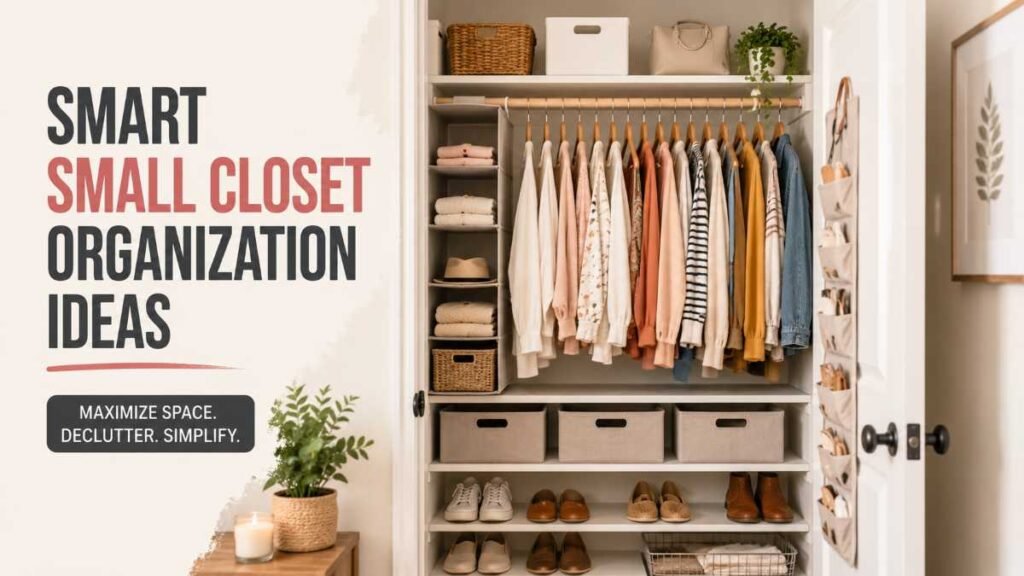
Opening a cramped closet every morning to find clothes crammed together, wrinkled shirts, and shoes piled in a messy mound instantly starts your day with unnecessary frustration. Most reach-in closets and tiny bedroom storage spaces fail not because they lack square footage, but because their single-rod-and-shelf design leaves a substantial portion of usable vertical space underutilized.
Transforming a cluttered nook into an efficient wardrobe system requires rethinking how you stack, hang, and store your everyday essentials. Implementing targeted small closet organization ideas significantly increases your accessible storage capacity without requiring structural wall removal.
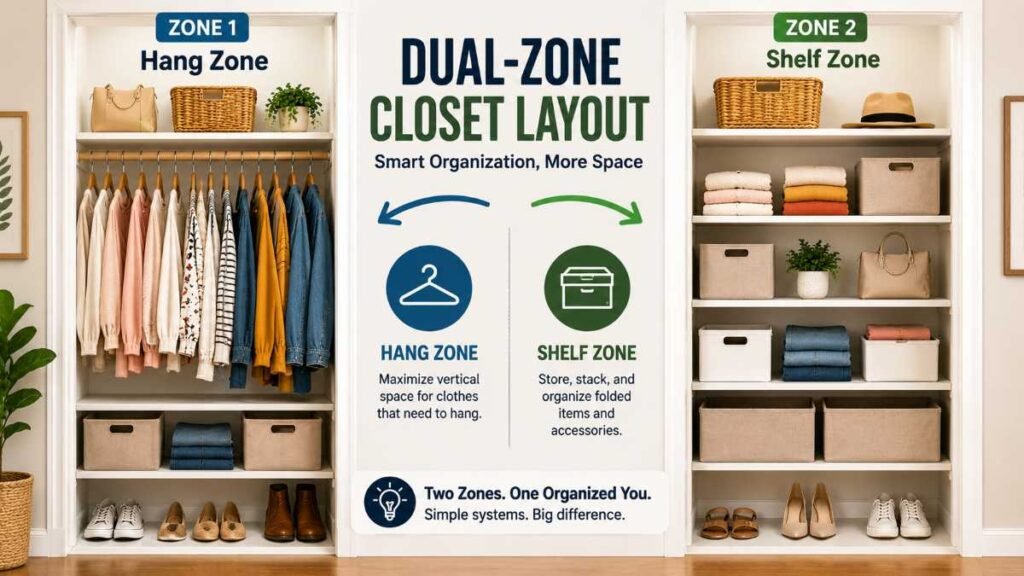
Architectural Breakdown: Builder-Grade vs. Dual-Zone Layout
Standard single-bar closets force full-length coats and casual shirts to share identical hanging rails, which leaves the lower floor space completely chaotic and cluttered with stacked footwear. Reorganizing that open vertical clearance with multi-tiered hanging rods and customizable storage units turns unused airspace into a smooth, accessible closet layout.
Layout Component | Standard Builder-Grade Setup | Optimized Dual-Zone Architecture |
Top Shelf Area | Out-of-reach shelf prone to gathering random junk | Organized storage bins for off-season garments and extra bedding |
Hanging Zones | Single mid-height rail causing awkward floor gaps | Staggered upper and lower bars for tops and trousers |
Mid-Section Storage | Empty space directly under hanging clothes | Central shelving tower fitted with modular drawers |
Lower Floor Zone | Scattered shoe piles blocking room acces |
If your home storage upgrade spans multiple utility areas, integrating modular cabinetry methods similar to those in our bathroom storage cabinet guide creates a clean, uniform look across your home.
Core Small Closet Storage Strategies
Organization Strategy | Ideal Clothing Type | Core Space Benefit |
Double-Hanging Rods | Shirts, folded pants, skirts | Instantly doubles short-hang capacity |
Slim Velvet Hangers | All hanging garments | Reclaims up to 30% of horizontal rod space |
Vertical Shelf Dividers | Sweaters, denim, handbags | Prevents stacks from tipping over |
Over-the-Door Organizers | Shoes, accessories, scarves | Converts unused door surfaces into storage |
Clear Drop-Front Bins | Shoes, seasonal knitwear | Protects items while keeping contents visible |
Staggered Hanging Infrastructure
Replacing one long hanging bar with stacked upper and lower rods is the fastest way to double short-item storage. Mount the top rod at 80–84 inches from the floor for blouses and jackets, and place the secondary rod at 40–42 inches for folded trousers and skirts. Proven small closet organization ideas count on these precise vertical splits to maximize every inch.
For dresses, coats, or long jumpsuits, reserve a narrow 12-to-15-inch side section as a full-length hanging zone (60–66 inches from the floor).
High-Density Slim Hangers
Traditional wooden or plastic tubular hangers take up between 0.5 and 0.75 inches of rod space per garment. Ultra-slim velvet hangers measure less than 0.2 inches thick. Replacing 50 bulky plastic hangers with slim velvet models reclaims substantial horizontal hanging space on the same rod. The non-slip texture also keeps silk blouses and wide-neck tops from dropping onto the floor.
Vertical Shelf Division
Open upper shelves usually turn into leaning towers of folded jeans and bulky sweaters. Slide-on acrylic or coated-wire shelf dividers create rigid vertical lanes. Space dividers 10 to 12 inches apart to keep sweater stacks standing straight, making it easy to pull a bottom shirt out without disturbing the entire pile. Effective small closet organization ideas make sorting folded knits completely hassle-free.
To coordinate surrounding bedroom or hallway finishes, choosing resilient surface materials detailed in our luxury vinyl flooring guide ensures high-traffic closet floors stay scratch-free.
Critical Clearance & Sizing Standards
Before buying organizers, measure your closet depth, door opening width, and ceiling height. Follow these essential sizing benchmarks to avoid layout and clearance problems:
Parameter | Recommended Dimension | Functional Purpose |
Minimum Closet Depth | 24 inches | Prevents hanger shoulders from rubbing against closing doors |
Upper Rod Height | 80 to 84 inches | Accessible height for short garments on upper tier |
Lower Rod Height | 40 to 42 inches | Ideal height for shirts and folded pants below upper tier |
Long-Hang Rod Height | 60 to 66 inches | Prevents dresses and coats from pooling on the floor |
Shelf Depth | 12 to 14 inches | Fits folded clothes and shoe boxes without blocking light |
Shoe Shelf Clearance | 7 to 8 inches | Standard vertical height per pair of flats or sneakers |
Door Swing Clearance | 30 to 36 inches | Clear floor space in front of hinged wardrobe doors |
Step-by-Step Workflow Blueprint
A successful closet layout starts with taking inventory rather than buying storage bins upfront:
- Purge and Categorize: Remove everything from the closet. Group clothes into categories: short-hang (shirts, short jackets), long-hang (dresses, coats), foldables (sweaters, tees), and accessories. Clear out or give away clothes that have stayed untouched over the past twelve months.
- Calculate Hanging Ratio: Measure the linear inches your short-hang items require compared to your long-hang pieces. For many personal wardrobes, short-hang garments make up the vast majority of items, making a double-rod setup ideal for daily needs. Integrating smart small closet organization ideas begins with matching storage hardware to your specific wardrobe mix.
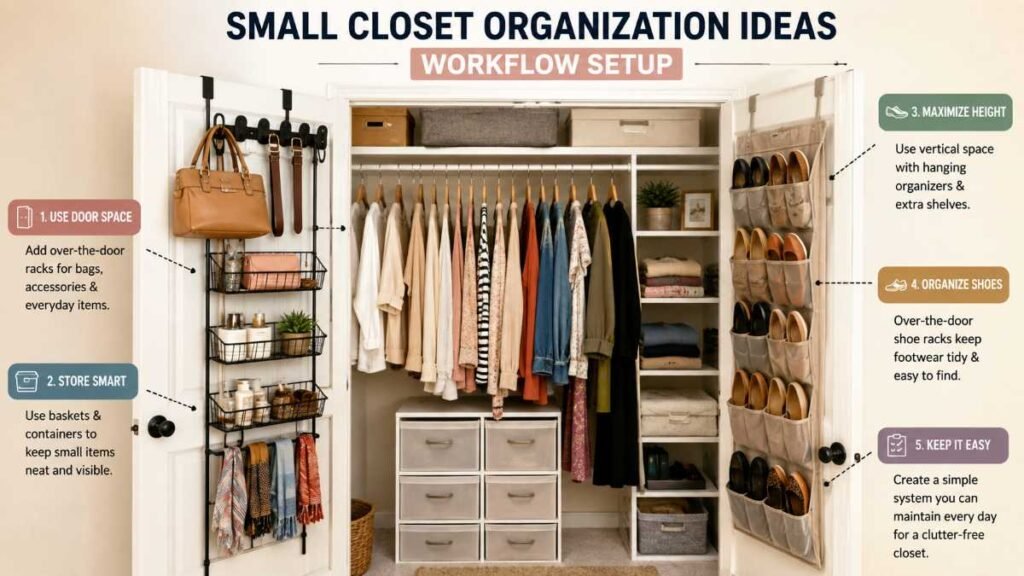
- Utilize Vertical Door Real Estate: Attach an over-the-door rack or track system to hinged closet doors. Use this space for shoes, lint rollers, umbrellas, or cross-body bags to keep inner shelves clear.
- Install Base Shoe Racks: Elevate shoes off the floor using angled wire racks or stackable drop-front shoe boxes. Raising footwear 6 inches off the floor makes sweeping easier and prevents dust accumulation.
If your closet update is part of a larger room refresh, avoiding structural oversights like those discussed in our kitchen remodeling mistakes guide helps keep your home renovation project on schedule.
Structural Integrity & Weight Factors
Small closets carry surprisingly heavy loads. A 36-inch clothing rod packed with wet coats or heavy denim can exceed 100 pounds.
- Solid Wood vs. Hollow Wire: Coated steel wire systems offer ventilation and lower costs, but thin wire shelves leave deep indentations in delicate knits. Solid plywood or laminate shelves with melamine veneers provide a flat surface that supports heavier stacks without sagging.
- Drywall Anchors vs. Wall Studs: Never anchor heavy clothing rods or track standards into plain drywall using plastic expansion plugs. Always secure primary hanging tracks directly into wooden wall studs using 2.5-inch lag screws. If stud alignment forces an anchor in hollow drywall, use heavy-duty toggle bolts rated for at least 75 pounds each.
- Moisture Control: Enclosed bedroom closets often suffer from restricted airflow, which can trap ambient moisture and cause lingering odors. Avoid storing damp garments, and consider hanging small moisture-absorber packs or cedar blocks to protect wool and cotton fabrics.
For construction guidelines on residential storage framing and load limits, refer to structural safety standards maintained by the International Code Council and building material specifications from the U.S. Forest Products Laboratory.
Storage Hardware Comparison
Wall-Mounted Track Systems
- Pros: Highly adjustable, easy to reposition shelves as seasonal wardrobes shift, keeps hardware elevated off the floor.
- Cons: Visible metal standards look utility-focused unless covered by specialized trim covers.
Built-In Floor-Mounted Modular Units
- Pros: Custom furniture look, offers integrated soft-close drawers, maximizes every inch of perimeter wall space.
- Cons: Higher material costs, permanent installation that cannot be easily reconfigured without damaging drywall.
Case Study: Transforming a 4-Foot Reach-In Closet
Consider how these layout adjustments transform a standard 48-inch-wide, 24-inch-deep reach-in bedroom closet featuring a single top rod.
The Original Setup:
- Single rod holding 45 mismatched plastic hangers.
- Top shelf overflowing with loose purses and soft blankets.
- Floor covered with 12 pairs of loose shoes and a laundry hamper.
The Redesign Plan:
- Split System: Divided the 48-inch width into two 24-inch sections using a central vertical divider tower.
- Left Section (Double Hang): Installed two stacked 24-inch hanging rods for dress shirts, blouses, and folded slacks.
- Right Section (Shelves & Drawers): Built a 24-inch storage column with three slim pull-out drawers for socks and undergarments, topped by three open tiers for stacked jeans and sweaters.
- Door System: Mounted a canvas pocket organizer on the inside of the door to store 12 pairs of shoes off the main floor.
- Upper Shelf: Placed clear fabric bins on the top shelf to hold out-of-season clothing neatly.
The Result:
Usable storage capacity expanded significantly within the exact same 4-foot footprint, while shoe clutter vanished from the bedroom floor. Executing tailored small closet organization ideas proves that smart spatial design matters far more than raw square footage.
Action Plan for Long-Term Storage Success
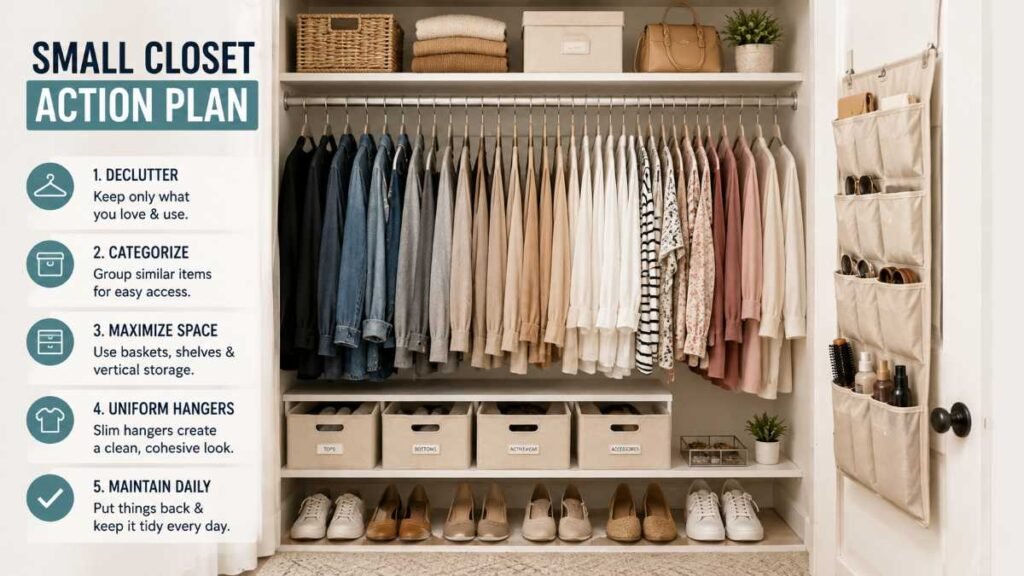
To build an organized wardrobe space that stays tidy over the long haul, follow this step-by-step approach:
- Upgrade Hangers First: Swap bulky hangers for slim velvet or rubberized models—this creates instant breathing room on your main rod without any tool installation.
- Install a Secondary Rod: Add a hanging rod extender or lower bar to immediately double your short-garment storage capacity.
- Measure Before Buying Bins: Measure your shelf depth, height, and door clearances before buying storage boxes or drawers to ensure every piece fits cleanly.
By aligning your closet design with your daily routine and using durable vertical storage components, even the smallest wardrobe space will stay functional, accessible, and clutter-free year-round.
Author By: Dambar C. Rajbanshi About: A renovation strategist and home improvement enthusiast. Dambar specializes in budget-smart planning and functional kitchen design. He is dedicated to helping homeowners create spaces that perfectly balance beauty and practicality